
side notes
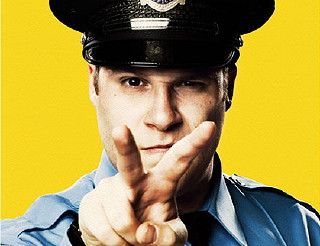 An ‘Observe and Report’ review, a ‘Sit Down, Shut Up’ Preview, and a Scandal Overview
Considering the split opinions on this particular film — and the fact that the Under Culture team went out to catch it this week — it seemed appropriate to offer up at least a brief review in case you’re split on whether or not to go see the more maniacal of the year’s mall cop movies. It may be less in-depth than what we normally post here, but in the interest of aiding those on the fence, timeliness may be of the essence. So here goes:
Observe and Report is not an easy movie to watch. This latest strange stab at comedy from writer/director Jody Hill, following Eastbound & Down and Foot Fist Way, continues his pattern of creating humor out of discomfort and shock. His characters are not of the lovable goof or witty outsider mold. They don’t win over their audiences or triumph over obstacles. Hill leads us to alternately despise, pity and sympathize with his protagonists, and as a result, resist either hating or loving them for fear of what that says about us as viewers.
This time around, Hill’s ability to unsettle is at its most evolved: Seth Rogen’s portrayal of a bipolar security guard is at times nasty or violent, at others tender or vulnerable, and sometimes sadly clueless. Observe and Report is not an end-to-end hilarious classic the way Anchorman or 40 Year Old Virgin were, primarily because it does not live fully in the light-hearted realm of comedy. Like Eastbound & Down, it’s more of a character study focused on one pathetic individual’s fight against his own mediocrity. The majority of the humor comes out of deciding whether it’s okay to laugh or not as he blunders through or lashes out at the world he’s trapped in. This isn’t a film of punch lines, it’s an exercise in testing our boundaries and questioning what’s okay to find funny.
So although it’s difficult to come away entirely satisfied having had a purely good time and picked up some quotable new lines, Observe and Report remains a film worth seeing. It’s definitely going to make you laugh, but it also makes you wonder why. It’s a challenging comedy, an absurd drama, and possibly a dangerous experiment to see exactly how funny brutality and meanness and crushed dreams and victorious lunatics can really be.
For more debate and insight, the Onion A.V Club featured both an interesting panel discussion and lengthy interview with director Jody Hill. Both shed more light on why you may not have loved the movie, but will be glad you saw it — assuming you dared to take the plunge, of course.
……….
Speaking of things that not might be as funny as we’d like them to be: the new project from Arrested Development creator Mitch Hurwitz debuts this Sunday night.
Sit Down Shut Up is an animated comedy featuring the voices of AD alums Jason Bateman, Will Arnett, and Henry Winkler (promising), plus SNL veterans Will Forte, Kenan Thompson, and Cheri Oteri (troubling), where a gang of quirky cartoon schoolteachers are drawn on filmed real-world backdrops (questionable).
Here’s a video preview to pique your interest, or if you miss Sunday’s pilot episode, it should be available on the Fox site.
As much as I adore about 85% of the three-season run of Arrested Development, this does not get my hopes up. Where that show was subtle and eccentric and different, the jokes in this clip seem largely obvious and typical. Of course, I skipped out on watching the first several seasons of Family Guy because of poorly chosen promo clips, so I’ll be more than happy to be proven wrong and willing to give it a try. Maybe I’ll end up writing again in a week gushing about how you have to see this show, but sadly, my hopes are not high.
……….
Wrapping up on something that wouldn’t be funny at all if it weren’t for the usual spectacular writing, Matt Taibbi’s ‘The Big Takeover’ article from last month should be mandatory reading. If you have some spare time to understand how screwed up the financial mess really is, especially in light of the misguided ‘we hate taxes!’ protests this week’s teabaggers were so up in arms about, you will find yourself bewildered.
There’s currently only a teaser up at Rolling Stone, but for now at least the full article can be read on Scribd.
People are pissed off about this financial crisis, and about this bailout, but they’re not pissed off enough. The reality is that the worldwide economic meltdown and the bailout that followed were together a kind of revolution, a coup d’état. They cemented and formalized a political trend that has been snowballing for decades: the gradual takeover of the government by a small class of connected insiders, who used money to control elections, buy influence and systematically weaken financial regulations.
The crisis was the coup de grâce: Given virtually free rein over the economy, these same insiders first wrecked the financial world, then cunningly granted themselves nearly unlimited emergency powers to clean up their own mess. And so the gambling-addict leaders of companies like AIG end up not penniless and in jail, but with an Alien-style death grip on the Treasury and the Federal Reserve — “our partners in the government,” as Liddy put it with a shockingly casual matter-of-factness after the most recent bailout.
It’s both educational and infuriating to read some real reporting on all the nefarious things corporations are up to that we haven’t the first clue about. It’s sort of sad that so many of us are so out of the loop regarding our own government that we don’t even know what to be genuinely angry about, but luckily there are at least a few people like Taibbi trying to cleave through the jungle of BS.
If you’re hungry for more, he’s also got a new Taibblog as well for other stories to make you red with anger.
1 commentlistening
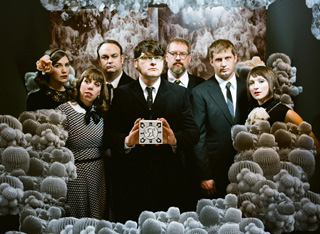 The Decemberists (and Their Army) Rage Against the Dying of the Album
I’m halfway through my first headphone spin of The Decemberists’ new album, The Hazards of Love, on the afternoon my pre-order finally shows up. Suddenly, I realize I have no idea which track I’m listening to, or how many have passed since I began; for the most part, there’s almost no telling where one stops or the next one starts. Endings flow into beginnings, musical elements are repeated and reworked like Oregonian leitmotifs, and since I was only listening in the background while on the computer, the tracks had washed over me like Portland rainclouds.
The concept of the album was no surprise, as I’d heard it was a continuous story. Green Day’s American Idiot was dubbed a concept album too though, and that spawned several distinct three-and-a-half minute singles. Hazards of Love takes its concept much more earnestly: it isn’t far from being one epic, hour-long musical drama. When you pop in this album you’re committing to something big, to the point where it’s less enjoyable if you don’t have time to sit through the whole story.
It takes stones to make an album like this. Faced with the iPod-ification of the music industry, leading to massive single-only digital sales and a rampant piracy problem that’s decimated the number of physical albums sold, this band made an album devoid of the pop conventions that would make it easy to break up in bits and pieces. All the evidence suggests that now is not the time for a project like this, but they did it anyway.
The move is even more surprising since this is their second release for major label Capitol records, with whom they had some success on their previous entry, The Crane Wife. That album lead to arena-sized, symphony-supported shows and even a mock feud with Stephen Colbert. Their corporate partners could have pressured them into releasing something even more pop-ified and listener-friendly. Instead, they follow up with a mythical tale of bestial love affairs, child-murdering rapists, and a control-freak forest queen who would rather see a pregnant woman killed than share her son’s affection. Not exactly focus-group friendly. If this idea ever was work-shopped in the boardroom, the notes would be priceless — “Let’s make the Rake character dangerous… but warm. And edgy-cute.”
Yet somehow that didn’t happen. Without a widely-played single to speak of, The Decemberists managed to debut at #14 on the Billboard top 40, before physical CDs were even available in stores and besting all their previous albums (The Crane Wife peaked at #38).
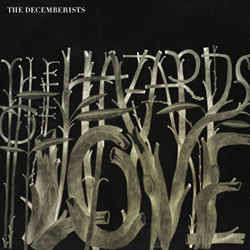 This is partly due to the fact that, for those willing to embrace the album as a whole, it’s a gorgeous piece of work. The band’s tendency for grand multi-instrument arrangements is at its most sweeping and dynamic, traversing heavy metal peaks and soft acoustic valleys with equal skill. Once properly digested, it’s high drama with a wrenching soundtrack. Each sequence — it’s almost wrong to call them individual songs — matches perfectly with the scene it’s trying to set. Guest female vocalists from Lavender Diamond and My Brightest Diamond assume the roles of young Margaret and the Queen, one’s innocent lilt and the other’s sultry power making it seem as if they were cast to parts, not just recorded as guest artists. It may not have the instantly gratifying hooks the band is capable of, but as a complete listening experience it’s an impressive and satisfying work, which feels as if it’s taken you on an emotional journey beginning to end.
But their success may be more attributable to how they’ve evolved as a band — not in terms of sound, but in terms of following. Only bands like The Decemberists can get away with a concept album like this. By growing organically over their nearly 10-year run, not grabbing at a rapid rise to fame, the fans that do stick with them are the kind of fans that have the patience for experiments. They’re more invested in the artists’ ideas, not just a single hit that happened to catch their ear. That makes them willing to engage with an entire work, to dig into its concepts — as well as its liner notes, which helps — and uncover its merits. To those kind of fans, this isn’t the pretentious vanity project some critics may see it as, because they know no one is pretending here. Meloy and crew are just doing what they love, what they’ve always done: epic literary prog-folk rock. And that’s just fine with their audience.
Luckily, that audience just happens to be big enough to support the whole enterprise. Similar to another crew with a concept album this month, Mastodon, they’ve got a wide enough fan base to be successful, but not so big that outsiders are trying to swoop in, take over, and ruin the fun. Bands like this exist just the right distance out on the fringes so they can do what they want and still find a big enough audience to make it work. It’s an ideal situation in any medium really, the same way Kevin Smith or Quentin Tarantino operate almost entirely to serve a certain just-big-enough set of geeks. Hell, basically the entire graphic novel (a.k.a. ‘comics for grown-ups’) industry operates on this premise.
It’s a great set-up. An artist can make something of beauty like The Hazards of Love and accept that maybe this isn’t the one that’ll win them a slew of new fans. And just being able to accept that means they’ve already won. The band gets to make the album they want to make, and the people who follow them get something that’s unapologetically true to that band’s ideals.
It’s a pretty punk/metal ethic. It’s no coincidence that metal is the genre traditionally known for its epic concept records. If writing whole albums based on medieval fables is metal, so is deciding you’re not trying to write songs that everyone likes, but just doing what you love. Look at a band like Coheed and Cambria, a prog-rock group whose entire output is based on one drawn-out storyline. Their music certainly isn’t for everyone, but at the very least you have to respect their commitment and ambition.
Because in the future it could very well be that bands like this with fans loyal enough to stand by them — and pay for their music — are the only ones left standing as the labels crumble and sales plummet. A landscape full of bands whose idea of ‘making it’ isn’t playing Madison Square Garden and selling $500 tickets, but just having enough supporters to keep doing their thing.
I’ve always hated reviews whose premises are simply, ‘If you like this band, you’ll like their new record too’, and gloss over the real merits of a release. It’s certainly true that I don’t think any of my friends, who simply don’t understand my crush on this band, will turn around and change their tune with The Hazards of Love. It’s still bookish, it’s still melodramatic, and if you don’t like Colin Meloy’s voice there’s just no helping you at this point. So to a certain extent, that statement is valid, as is the converse. But what’s more interesting is that there are obviously enough others out there like me who love bookish melodrama, and buy this geeky Portland band’s album as soon as it’s available. We may not be everywhere, but we are legion, and we’ll be just fine off on our own.
……….
4 commentsa few footnotes:
For anyone who counts themself among the aforementioned legion, The Onion AV Club did an excellent and extensive interview with Colin Meloy leading up to the album’s release.
For evidence that some people get it, some people don’t, contrast the Pitchfork and Popmatters reviews of the album. Both make valid assessments, and yet one writer considers it a failure, the other a success. Sometimes the best art is the art that polarizes.
playing
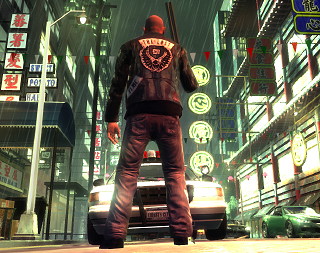 The City That Never Sleeps: GTA Grows Up with ‘The Lost and Damned’
Don’t get me wrong, Grand Theft Auto IV was easily one of last year’s best games. The team at Rockstar deserve full credit for attempting a more sophisticated story than their previous entries, and mostly succeeding. Especially by forcing players to make tough choices — by murdering one of two people they’d recently befriended (surely the spoiler clock has run out, right?) — the series grew in new directions. But let’s also be honest. There wasn’t much evolution in terms of mechanics. The well-intentioned ‘socializing’ system was tedious. And to put it bluntly, bigger is not always better. Under pressure to create something ‘epic’ in scale, the team lost sight of the all-important art of editing, and the game lost some momentum by its end.
Less than six months later, we were gifted with a return to Liberty City in The Lost and Damned, and my, how sweet it was. The moral choice moments were the only noteworthy omission, and the boring man-dates were turned optional. Otherwise, it’s exactly what ‘more GTA’ should be: a new and compact experience that even improves upon some of the prior issues. It features a tight story about dying American dreams, dense enough with action so that it never drags, and short enough so that it doesn’t need a giant new gameplay twist to keep you hooked. Even so, it introduces a team dynamic that’s handy in a fight and forges a deeper connection between you and the supporting characters. All in all, The Lost and Damned is the best ‘real’ downloadable game I’ve played yet in terms of full-fledged graphics and a complete, satisfying story.
[No knock to Braid, Penny Arcade Adventures, Flower, Eden, etc, which I’m not implying are not ‘real’ games — I love all of them; some more than TLAD. But those are different beasts who don’t really fall in the same category, a tangent which I will save for another time.]
……….
What makes The Lost and Damned truly stand out though is the way it explores the city and residents we’ve come to know from a totally different perspective. The crossover missions with Nico from the prior game go a long way to making players feel a part of something bigger, not just a biker gang member in a biker gang universe. At one point you, as Johnny, find out your friend is dead — not a spoiler if you played through GTA IV proper — in between missions where you unknowingly team up with his killer. In another, you’re dropping off diamonds in trash bins you’ll remember picking up in a stolen garbage truck as Nico.
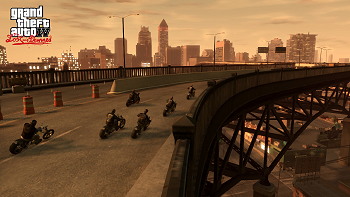 But it wasn’t until the credits rolled that the potential really dawned on me. A scene you don’t even play in TLAD (or don’t realize you’re playing), in which your gang innocently drives past the docks, pans over to reveal that you’ve just crossed behind Nico executing Vlad in cold blood. Two sociopaths passing in the night — or broad daylight, as it were. Next, helicopter shots of car chases show not only the small crimes and getaways you were in the thick of during the game, but the neighborhood that it’s affecting, causing havoc in the streets and destruction everywhere you turn. Who’s to say in the next chapter you won’t be one of those people fleeing in terror?
This is the major accomplishment in choosing to set another GTA game not before or after the events of the previous chapter, but concurrent with them. Adding the element of cause-and-effect deepens the impact of the entire story to anyone who stops to consider it. Seeing the chaos you cause in Liberty City from only one point of view makes it easy to simply delight in the mayhem. Players view the world as they did in the PS2 days: a giant violent sandbox to play in, where the only effect was having to run from the cops. However, seeing it through another person’s eyes — one who’s affected by the decisions other characters make — brings the uncomfortable idea of consequences into the mix, and forces you to face them head on. It’s no longer a world without repercussions. It’s a harsh grown-up world where one man’s success means another man’s failure, and one man’s defeated enemy is another’s lost friend. This is a step towards a more mature, meaningful Grand Theft Auto — dick jokes notwithstanding.
……….
The easy comparison to make is HBO’s The Wire, where the city of Baltimore is explored through the lens of a new cast of citizens each season, and character’s lives overlap in new ways as the world is expanded. (Also, a lot of people die.) It’s a valid connection to make, and certainly something for Rockstar to aspire to, but it might be too soon to suggest GTA‘s portrayal of urban decay will be as powerful as The Wire‘s any time in the near future.
Perhaps a more interesting analogy would be The Simpsons, another show with a massive cast of characters built up and interconnected over time. The more stories they tell, the more you get to know each member of its town. By this point, any one of them can appear in a story and you understand their place in it immediately. Not only that, but the wide variety of characters allows them to satirize every aspect of society, from show biz (Krusty) to politics (Mayor Quimby) to the wealthy (Mr Burns) to the poor (Cletus). They can take a minor, seemingly one-sided person like Smithers and show a new side of him as he’s rollerblading through ‘West Springfield’, which recontextualizes all the things you remember him doing before. It’s a genius construction that’s allowed them to keep going for as long as they have.
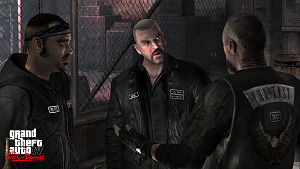 That’s why The Lost and Damned is exciting beyond the fact that we get to play more GTA for only $20, less than a year after the full game release. It’s the fact that totally new and different stories can be told in this wonderfully crafted city, from any perspective imaginable, and further extensions are nearly limitless. The no-brainer option and possibly most immediately compelling would be a crooked cop’s descent from protector to criminal, an interesting reversal on the previous games. But it could go so much farther. Imagine a white-collar criminal, getting in deeper and deeper for money he owes to his coke dealer, as a commentary on the excess of today’s financial system. Picture a paparazzo who stalks celebrities for money, hoping to pay off hitmen to get rid of his sister’s abusive husband, as a reflection on the depths of shamelessness we’ll go to for greed or family. We could become a prosecutor who has to scour the city for evidence trying to put mob bosses away, or choosing to let them escape and facing the bloody aftermath. And dare we hope for a dark coming-of-age story that crosses Bully with Goodfellas? I could keep going, but I’d rather stop guessing on the off chance that I’ll spoil the surprise of what could come next.
A strong foundation to start telling these kinds of stories was laid by GTA IV, and The Lost and Damned shows their ability to build upon it in compelling ways. If they continue in this direction, they could fill a whole virtual city of simultaneous and intertwining stories — not unlike the often cited best Simpsons episode, ’22 Short Films About Springfield’ — each with its own skewed take on life, liberty, and the pursuit of happiness. If the next chapter takes an even bolder step than this one, we’ll be witnessing ground-breaking developments in game storytelling. If it’s just another gang shooting at other gangs, well, at least it’ll be short and sweet and badass like this one, and even that ain’t so bad.
2 commentsside notes
 Eggers on Screens, Game Creators on Their Bests, Batman on Consoles
If success for an online movie trailer debut can be measured in any meaningful way, one might extrapolate potential ticket sales from the deluge of excited messages via various social technologies to the tune of:
“Did you see this Where the Wild Things Are trailer yet? Oh man it looks so cool!!!”
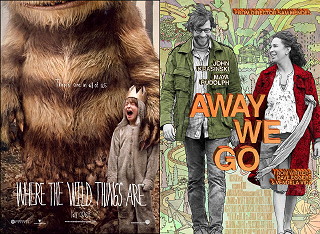
In which case, the award for 2009 goes to you, Spike Jonze and team, because I’ve never been so unanimously recommended an internet video link that didn’t involve someone hurting themselves. I’m not convinced that the much-needed release of tension, built up over years of anticipation of finally getting a peek at Jonze’s long-awaited next movie, is the same as excitement for the movie itself. As fondly as we remember the book, or Jonze’s previous films (and put me in the latter camp; I loved Adaptation and Malkovich, but honestly, are we maybe over-enthusing about a kids’ book we don’t really remember other than some nifty character illustrations?), it’s hard to predict if the result will be a quality film beyond the well-deserved, “Whoa, those monsters are neat looking”.
More interesting — and until seeing the trailer, previously unknown to me — was the less-publicized fact that it was co-written by Dave Eggers of McSweeneys fame. How did that slip by?
Not only that, but he wrote another movie called Away We Go, also coming out this year?
Now I am genuinely excited about both. Pairing a talented writer with talented directors (Sam Mendes on Away We Go, also co-written by Eggers’ wife) makes doubly sure neither of their skills go to waste. Eggers’ ability to capture both sad and sweet moments with honesty and humor should serve both these movies well. Assuming, of course, neither the animatronic beasts nor Jim from The Office‘s mugging distract too heavily from the heart of the respective stories. For fans of Heartbreaking Work… or You Shall Know Our Velocity, his short stories or his fantasy-fronted writing workshops, a kids’ adventure movie and a couple’s finding-themselves road trip are not hard to imagine him pulling off. As one of those fans, I hope Eggers continues his hot streak, so neither of these films end up just quirky oddities when they could be much more.
……….
 Last week all the major personalities that create games, and the people whose full-time job it is to cover the industry (Under Culture can only dream), gathered in San Francisco for the annual Game Developers Conference. Aside from a bunch of panels normal people may not understand or be interested in about the actual making of games, they also take the time to recognize the best of their peers’ work at the Game Developers’ Choice Awards.
This year’s big winners were Fallout 3 for Best Game and Best Writing, LittleBigPlanet for Best Innovation among several others, and World of Goo for Best Downloadable.
Congrats to all for the well-deserved kudos. If you look down the roster of nominees, more than any laughable Spike TV awards show or nebulous magazine/website-based ‘Games of the Year’ list, these really are the games people need to be playing. This is the one occasion where the people most involved in the industry pick the games that impressed them the most. Though a lavish spectacle on the order of the Oscars is probably neither wanted or needed for the games industry, I would love to see this event become a little more accessible to audiences. Surely enough game players would love to see the minds behind their favorite titles stand up and get credit, and these are not the nerdy non-personalities you’d expect. These are clever, fascinating people. With a little production help from a G4 or SyFy network (still going to laugh every time I see that), it could be an enjoyable and inspiring couple hours of television, seeing and hearing from some extremely bright and creative figures.
Either way, check out the list and play these games. Despite a minor grievance discussed in our Fallout 3 review, it was definitely in my top 3 of last year and you’d be neglecting an incredible experience if you haven’t played it yet. Sad to see Mirror’s Edge didn’t appear anywhere here, because that’s one game that seemed both innovative and overlooked. And though I have yet to finish it, I can say that World of Goo is an excellent package that is worth your dollars. For my part, the list confirms that I do indeed need to loop back and pick up Far Cry 2 at some point this summer when the dry spell hits.
……….
Speaking of the dry spell, one game which may help pass the slow months they year is the next attempt at the fabled ‘Good Batman Video Game’, a mythical piece of interactive entertainment which has been theorized about but never captured alive.
This one’s called Batman: Arkham Asylum, and MTV Multiplayer has the exclusive new trailer:
Though sharing a title, this game is not based on the Grant Morrison Batman story of the same name, which is probably good since that book is mostly psychological and involves a cross-dressing Joker (though the art by Dave Mckean is spectacular and would make for a bizarre and interesting aesthetic in motion). Neither is it related story-wise to the wonderful Nolan films, which in terms of freedom to create an independent, self-sustaining game world is probably also a good thing. Especially if you’ve ever tried to play one of the dozens of half-assed movie tie-in games.
It does, however, feature the voice talents of Kevin Conroy and Mark Hamill, whose work on the animated series, as Batman and Joker respectively, essentially redefined the characters in our lifetimes. This is a good start. But judging by another piece by MTV’s Totilo on why he’s excited about this game, it’s the approach to Batman that might make this one work.
Taken with a grain of salt of course, as very little playtime has been granted anyone at this point, the tactic seems to be a focus on not just ‘doing the cool shit Batman does’, but making players think like Batman. This is they key ingredient that’s always been missing. It’s not difficult to drive a cool car, swing from things, swoop down on bad guys, or throw batarangs at shit. All previous attempts have done those and resulted in thoroughly average games. Creating a play environment where people have to actually become Batman — plan out their sneaking attacks, not just kick ass but inspire fear as a tactic, use all the tools in his arsenal to be the most Batman they can be — could end up breaking the curse that has plagued the license like a childhood trauma. Plus, putting it in Arkham means cameos by all the rogues’ gallery greats (including Harley!). I’m too cautious to get my hopes up fully, but will definitely be keeping an eye on this one.
Leave a commentlistening
 Still MSTRing their KRFT: ‘Fist of God’ Shows Heavyweight Promise
I’ve had an interesting relationship with MSTRKRFT, the white-hot hipster dance club duo from Toronto. Love/hate may be too strong a term for a band unless you’re the kid from Almost Famous (or banging them backstage), but there have definitely been ups and downs, leading to several reversals of opinion about their place in my music library. No matter how popular they seemed to be getting, I could never decide if I wanted to go along for the ride. With their latest album, Fist of God (out now on Last Gang records), it’s starting to fall into place.
[audio:MSTRKRFT-Click_Click_Featuring_E-40.mp3]
MSTRKRFT – Click Click (Featuring E-40)
MSTRKRFT first came to my attention via their remixes for bands like Wolfmother, Bloc Party, even member Jesse Keeler’s previous band, Death From Above 1979, which took catchy pop/rock grooves and turned them into pounding dance floor dynamite. Some of their best work has been in that vein, a few recent examples of which are on their MySpace page alongside their latest singles.
But then I caught a live show in support of their first album, The Looks. At first their distortion-heavy throb was energizing, but before long I’d started to space out to the heavy house drone. I was to the point of checking my watch until they pulled in more samples toward the end — instinctively snapping back to attention once Daft Punk and/or Justice entered the equation — and walked away thinking maybe I’d misjudged. As clear as it was that they were drawing from the same well as their peers, some magical element seemed to be missing in a live show dedicated to their original material.
What, you might ask, does this have to do with Fist of God? Last year’s single ‘Bounce’ — with the b-side ‘Vuvuvu’ and both of which appear on the new album — is actually the perfect microcosm to use as an example. These two tracks capture the duality of the band, and an internal conflict they seem to be working through on this album. On one hand are the several tracks featuring guest vocalists adding rhymes or vocal hooks, with ‘Bounce’ remaining one of their best. They give those like me who missed the rave years something to lean on while getting lost in the beat, and some lines to get stuck in my head; the number of times I’ve found myself randomly declaring that ‘All I do is party’ since last April are too numerous to count. ‘Vuvuvu’, on the other hand, may drive my big beat buddies wild, but leaves me relatively bored, bringing back flashbacks of that live show where I spent too much money on drinks to pass the time and doubting my relative hipness to the asymetrically-coiffed crowd.
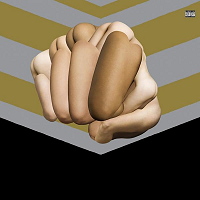 Luckily, the yin and yang are well balanced here, and bouncing back and forth between the two brings out the strengths of both types of track. Second single ‘Click Click’ with E-40 reaches the same energy level as N.O.R.E. on ‘Bounce’, just faster and more frenzied, offering the cocaine tweak to the previous track’s ecstasy bounce. ‘Heartbreaker’, featuring John Legend, shows a new side of their repertoire with less of their trademark buzzsaw synths and a more organic piano loop (though I’m more partial to their mix of Legend’s ‘Green Light’). ‘1000 Cigarettes’ is a driving force in its instrumental form, and made more exciting when reprised with lyrics from Freeway. Overall, the featured vocalists go a long way to giving the songs texture, but some of them are underused — it seems like a waste to have a heavyweight like Ghostface Killah on just for a few sampled phrases instead of contributing a full verse. The instrumental tracks are less repetitive and more propulsive, and work well as interludes instead of the main event. As a whole, the songs are shorter and tighter, and indicative of a band growing into a more approachable electro-pop sensibility while still trying to maintain their chunky, rough-edged sound.
It must be tough for someone coming from a band to make the transition to the decks without suffering a bit of disorientation. Rock bands essentially sing directly to their audiences, pouring out their souls on stage. Electronic musicians need another way to connect with their crowds, to have that moment akin to the sing-along chorus or the guitar solo. The easiest way, if you’ve ever been to the Coachella dance tent or an all-night warehouse dance party, is the trite standby of dropping the bass out and bringing it back for a collective cheer, but cheap tricks can only get you so far. MSTRKRFT’s thick beats and expert production got them to the party, and with Fist of God they seem to be working through how to make that connection with the audience now that they’ve arrived. It’s not a flawless album end to end, yet any one of these tracks would make a solid entry on a party playlist. If nothing else, it’s decided the question of whether or not they were worth keeping up with, and the answer is yes.
3 commentsside notes
 ‘Battlestar’ Spins Off, ‘Ong Bak 2’ Slices Up, Japandroids Pare Down
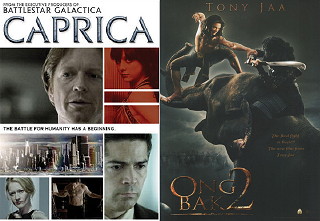
This week we leave our beloved Battlestar Galactica behind with what we only hope will be a fitting final episode. Tears may be shed, questions may be answered, something will almost certainly explode. Whether or not it’s a satisfying conclusion remains to be seen. But love or hate how it all wraps up, where do we turn next for a sci-fi show of the same caliber? (Or is that Syfy?) I’m sure its makers are hoping we stay tuned for the upcoming spin-off, Caprica.
Get your first taste of the future-past with this trailer on SciFi.com if you haven’t already.
Two potential issues come to mind immediately. It isn’t slated to begin until some time in 2010 — which already sounds like the future, doesn’t it? Are any cylons reading this right now? — with only a feature-length prequel DVD coming out next month to win us over. Fans will probably all buy, download or Netflix it to see if the creators can deliver in a way that fulfills the colossal expectations they’ve built up with Battlestar. If the debut doesn’t fire on all cylinders though, the former faithful may not wait til next year to write it off. Especially since the key elements of cool space battles and man vs. robot firefights would appear to be wholly absent. Without the traditional mainstays of science fiction action sequences, some of the draw may be missing as well.
Of course, the more important elements that pushed Battlestar from simply fun to legitimately fantastic were not the superficial pyrotechnics, and fans have proved that patience isn’t an issue. What made the current series stand out were the ways it created a believable and complex alternate universe, and then filled it with compelling human stories involving characters with depth. Basically, the things you need to do sci-fi right. The military/terrorist themes can be traded for more intimate family drama, the starfighter conflicts can be replaced by mystery and suspense on a more personal level. And not being limited to the inside of a fleet of ships will certainly expand on the potential cast and setting options.
It won’t be the same show, by any means, but that doesn’t necessarily mean it’s doomed to be disappointing. As long as it stays smart and sophisticated, and doesn’t strain too hard to constantly nudge-and-wink at what came before/after in the fiction, it could be a welcome evolution instead of just a cash-in proposition. Mature and thoughtful sci-fi could certainly use another shining example, and I for one am willing to trust this team for another go.
……….
Speaking of another go, very few sequels are an instant ‘I must watch this‘. Most movies don’t deserve a sequel, the ones that we want to see more of are rarely improved upon when one is made, and we all know this and accept it as true. Let’s not even talk about prequels.
Looking nothing like the previous film but possibly several times as kickass, is Ong Bak 2, whose trailer you can see at Trailer Addict.
Honestly, I don’t know how Tony Jaa isn’t a household name by now. Ong Bak and The Protector are not great movies — in the same way 95% of action classics are not great movies — but goddamn if they’re not amazing. As in, full of jaw-dropping action sequences that defy belief. Scenes that are flat-out difficult to watch without screaming, ‘Oh Shit!’ at the screen. Jaa applies knees to faces the way Rambo applies bullets to southeast Asian militias: often, with relish, and the greatest of ease. He’s of the ‘real fight’ school, where wires aren’t allowed and things are orchestrated to pinpoint, balls-barely-clearing-the-moving-vehicle-he-just-jumped-over precision. And this time he has swords.
 From Motion/Captured’s report from SXSW, this sounds like more of the glorious action Jaa’s delivered in the past. For added intrigue, apparently just getting this made was a crazy story: he broke down halfway through production, cried on national television surrounded by rumors of practicing black magic — no, I’m not making this up — fled to meditate in the jungle, and returned months later claiming strange men were following him, then completed the movie anyway. Not only does he do his own stunts, he works through his own paranoid breakdowns. This is one guy you do not want to mess with, on screen or off.
Unfortunately, he is not a household name, and we will have to wait until the fall to even get a limited release for this baby. Those living in cities with open-minded theatre owners, flip to the October page of your calendars right now and write a note, preferably in blood, reminding yourselves to go check out Ong Bak 2 when it releases. If enough people go, we might have a chance of seeing the third installent before Tony Jaa does something even crazier — like join Scientology.
……….
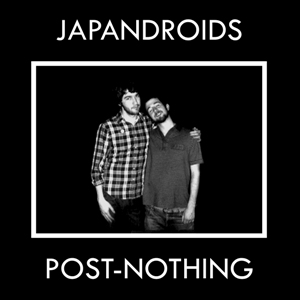 Last up, a quick ‘where did these guys come from?’ note (spoiler alert, the answer is Canada) on a band I discovered recently listening to the infinitely recommendable KEXP: Music That Matters podcast. Every once in a while they feature a band that makes me drop whatever I’m doing to find out more, which in this post-radio, mp3-blog-buffet culture is an increasingly rare and wonderful moment.
This particular band is called Japandroids, and their song ‘Young Hearts Spark Fire’ was also featured as a KEXP Song of the Day.
[audio:japandroids-young-hearts-spark-fire.mp3]
Japandroids – Young Hearts Spark Fire
What stopped me in my tracks was the lo-fi simplicity and throwback emo vibe. Think 90’s Promise Ring, not 00’s My Chem. The earnest and impassioned lyrics, not to mention the almost bombastic drumming, gives the song a timeless appeal whether you feel a pang of nostalgia for the jangle-and-fuzz guitar sounds or not. You’ll be as surprised as I was that all this energy is coming from only a duo of Vancouver rockers, showing that sometimes two guys and some good ideas can go just as far as a menagerie of artsy indie kids with eclectic instrument collections.
Their album, Post-Nothing (great title), comes out April 28th on Unfamiliar Records, but if you can’t wait like I couldn’t, it’s currently streaming in its entirety on the CBC radio site along with some of their previous songs.
2 commentswatching
 Needy Nerd Syndrome: Loving ‘Watchmen’ For What It Is
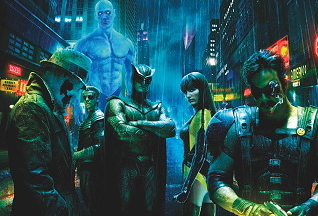
This weekend we nerds all flocked to pay homage, many of us pale shapes disrupting sleep for the hallowed midnight screening of the biggest comic book movie of all time. Not necessarily the biggest in budget, nor likely in box office success. However, the amount of expectation among the geek classes for the movie release of Watchmen surpassed even Batman or Spider-Man levels. After all, those properties have received treatment in other media. We’d seen their cartoons and worn their Underoos. Watchmen is a wholly different beast. One who has been lurking in the shadows for years, awaiting its chance to come out into the light and show the world its awesome power. It’s a story that belongs fully to the graphic novel evangelists, and their chance to show everyone else what they’ve been raving about. At least that’s what we’ve made it out to be.
Unlike The Dark Knight — the sequel to a very satisfying movie based on a comic book series, adding in the popular and complex Joker character which no one doubted would result in a thoroughly enjoyable film — Watchmen‘s transformation to the screen is under much more pressure. Widely held up as one of the masterpieces of an entire medium, a fun action flick, with grown-up characters and themes in the vein of Nolan’s Batman reboot, just isn’t good enough. The inner circle of comic fans needs it to be a masterwork that legitimizes the concept of adult graphic novels to all the outsiders who doubt them. It has to prove that their illustrated stories can be deep and thought-provoking, not just fodder for popcorn blockbusters. Non-fans expect all the hype around ‘the most beloved graphic novel of all time’ to mean the film version will be some earth-shattering new level of super-human fiction that makes all that come before look frivolous in comparison. If it doesn’t, they get a free pass on reverting to calling the nerds out on their silly, immature passion for funny books.
A perfect storm of assumptions combined to doom Watchmen to disappointing both audiences, unfortunately. Instead of allowing it to be simply a high quality genre film — Zack Snyder’s strong suit, looking at his other high-caliber niche movies like Dawn of the Dead and 300; and what Watchmen really delivered — professional critics are free to call bullshit on the whole enterprise. Hollywood Reporter‘s Kirk Honeycutt gets to dub it “The first real flop of 2009”. The New Yorker‘s Anthony Lane can claim that, “It grinds and squelches on for two and a half hours, like a major operation,” without regard for those of us who aren’t as squeamish about comic book violence and able to see through to the story, brutality included. The New York Times‘ A.O. Scott gets to take it furthest, commenting that, “Perhaps there is some pleasure to be found in regressing into this belligerent, adolescent state of mind. But maybe it’s better to grow up.” Meanwhile, all the comic book fans hoping this was their moment to shine collectively throw up their hands and moan that the rest of the world still just doesn’t get it.
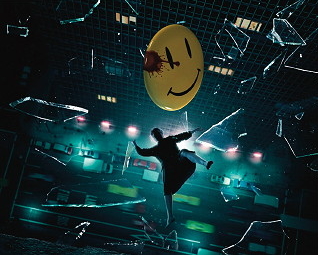 Sidestepping the not-so-soft bigotry of inflated expectations, Watchmen is still a major accomplishment. It faithfully translates the spirit of the original, posing that the real-world impact of costumed justice fighters would be less rosy than a reduction in street muggings and bank robberies. It examines the psyche of the individuals who would enter the field, willingly or unwillingly, and questions our need for hero figures to love in good times and blame in bad. It illustrates that a genuine super-being might not feel any need to help a world that’s clearly beneath him. On a technical side, the movie is slick, gorgeous, and intense, bringing the book’s characters and action sequences to screen in all their dark detail. Certainly, another pass at editing it down to a tighter running time, or a soundtrack less burdened by cliched, obvious song choices wouldn’t have hurt. But the film doesn’t fail because of its violence or over-the-top premise, nor does it suffer greatly by all the things that were left out from the full text of the original. It’s a spectacular piece of genre film that only fails at the unreasonable task we set before it.
Perhaps we’re all better off for having got Watchmen out of our systems (at least until Dreamworks animation tries to adapt Maus into a heartwarming CGI family story, featuring the voice talents of Jason Alexander and Mel Brooks, and over the dead bodies of Art Spiegelman and Scott McCloud). Like a teenage geek trying to win over his beautiful crush, we tried to lure them in with a twee indie-pop mix cd, convinced that if we could just introduce the world to the right obscure gems, they’d realize they were wrong all along and we have a whole new world to offer them. But if you’ve seen that episode of The O.C., you know it doesn’t work that way. In the same way, we might want one wonderful video game to convert our friends and family to the joys of gaming (like, say, PS3’s Flower), when what really ends up doing it is something watered down that the true believers aren’t that interested in anymore (like, say, Wii Sports). Yes, Watchmen could have done a better job coming to the screen in a form the wider film community approved of. But if it had, the very people who wanted so badly to see it happen might not have liked what they ended up with.
The bloody, hard-boiled, fantastical commentary on superhero tropes of Watchmen, in bound or big-screen form, is ultimately a success for those of us blissfully steeped in geek culture, and possibly a little too much to digest for some of those who aren’t. At the very least, the endless billboards and stacks of graphic novels in bookstore entryways for the last few months have probably put the original work in more peoples’ hands, which is a better way to win them over anyway. But if we let go of our needy nerd syndrome, the desire for ‘everyone else’ to be won over by the things we love so dearly and thereby validate our pet genres, we’d all be much happier. My girlfriend may never want to listen to Slayer, sit down for an anime marathon, or strap on a headset to play Left 4 Dead. The New Yorker may not appreciate V for Vendetta, or Sin City, or even Watchmen the same way I do, and A.O. Scott may think I should just grow up. But part of growing up is realizing you don’t need the approval of others to do what you enjoy. Zack Snyder obviously doesn’t, and neither do I. This was a Watchmen for us, not them, and that’s not a bad thing. There are a lot of us out there. At the end of the day, we got the Watchmen movie we deserved.
5 comments
playing
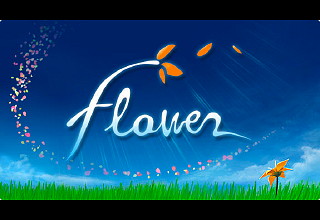 Tender Age In Bloom: ‘Flower’ Takes Games To New Places
Flower plays like a game version of the famous Bravia TV ads; you swoop around bringing the joy of color to a world that lacks it. By taking the role of the wind, your goal is to pollinate flowers and help them bloom, with every pass over the hills awakening pockets of life. Flower‘s tilt-and-go controls are extremely basic and immediately satisfying, allowing players to master them quickly while contributing to its purity of purpose. The experience is short and sweet — taking only a few hours to finish — but engaging for every second and never repeating itself. It’s a welcome slice of artful originality in a world of games racing to out-refine a handful of the same old premises.
The review in brief pretty much ends there. This is a dazzling burst of a game, and highly recommended to any PS3 owner. But Flower achieves more than just thumbs up for ‘different’ and ‘beautiful’. It builds on fundamental ideas that bring a refreshing perspective to game design.
Flower‘s most groundbreaking accomplishment is a sense of movement that’s somehow both exhilarating and calming at the same time. Playing as the wind, whipping along the grass to gather petals, the action feels as thrilling as riding an invisible speeder bike — a petal-stream version of our childhood dreams of racing through the forests of Endor. And yet the serene backdrops and soft orchestral sounds are as soothing as sitting down to admire the natural beauty of a national park. The fact that there’s no danger of doing it wrong makes this paradox possible: you can’t be hurt or die or lose in Flower. If you miss something, you can always just loop back and take another pass. And with a game this gorgeous, you’d almost rather spend the extra time soaking in every corner of its world than race through once on a single perfect path.
In games, as in life, so much excitement is born out of risk or fear. Snowboarding is exciting because we could lose control at any minute. Roller coasters are exciting because they simulate plunging to our deaths. Sports make our stomachs clench when our team is on the brink of defeat. An overwhelming majority of games rely on tension born out of danger, using the chance of death or loss to get our adrenaline flowing. Flower does something rare by giving players a rush despite lacking a fail state. By enabling a joyful sense of flight without the complementary fear of falling, it brings us closer to the natural motion of the birds we all wish we could experience. This is no small feat.
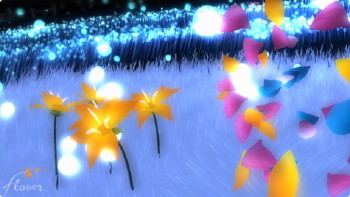 Similarly, the game as a whole sidesteps the adversarial nature of most of its peers, in which you are an ostensibly ‘good’ character trying to defeat evil. In contrast, Flower tells a story that isn’t this or that when it comes to nature versus civilization, urban versus pastoral. The city is not the enemy, a scourge to be vanquished by the righteous force of nature. The goal is balance between the two: a place where light and color are welcomed instead of drowned out, and flora and fauna coexist with forward progress.
The game culminates with its most exciting and uplifting sequence, a breathtaking swirl of color and motion as you speed along highways and down avenues literally changing the world. Each turn brings life to the drab cityscape, transforming municipal grays into bright and vital hues. The final note of the story, if it can be called that, seems to be that the flowers’ dream you spend the game inhabiting is in fact possible, if only we recognize the value of harmony. You finish feeling rejuvenated and at peace — just like the world you’ve traveled across to revive — in a way no other game this year is likely to match.
Flower‘s single problem (other than the fact you don’t want it to end) is such a minor detail it seems silly to discuss, if not for the fact that it undermines the whole wonderful experience that comes before. The one game-like element built into the otherwise poetic flow of the game is a series of secret special flowers, three per stage. If you haven’t found them all, finishing the final level returns you to the home screen/apartment as a bright, welcoming urban dwelling, in line with the apparent moral of the game’s closing scenes. But, if you return to the levels to collect all their secret blossoms, your apartment transforms. It’s now depicted as a country home, opening on to a pasture of flowers with no other human presence on the horizon, and the in-game trophy for doing this is labeled ‘Dream’, implying this is the flowers’ genuine wish. This small quirk runs counter to the message of the game’s climax: instead of the ideal state being a balance of man and nature, the ‘true’ ideal held up is suddenly a life on Walden pond. As a city dweller who would love more parks and trees, but is in no rush to take up farming, the sudden switch was a disappointing moment to end on.
As frustrating as that final twist may be in understanding the meaning of Flower, let us at least give thanks that more games are being made with any meaning at all, much less ones worth being absorbed and discussed. And however you feel about its particular message, we are all better off for having a game that makes us feel something this different.
2 commentsA few footnotes:
There are a few interesting video segments with thatgamecompany co-founder and Flower co-creator Jenova Chen over at Gamespot worth checking out. His explanation of their design philosophy makes it obvious why they’re such a special studio.
From their site, TGC’s mission: “At TGC (thatgamecompany) our goal is to make commercial video games that communicate different emotional experiences the current video game market is not offering. We encourage innovation and experimentation and believe that our creative games will appeal to new, yet untapped, audiences.” Admirable, no?
Chris Suellentrop’s Slate review was also right on the money, and Area 5’s Co-op segment on Flower sums it up nicely with lots of pretty footage to go with it.
reading
 High Interest Rate: ‘Downtown Owl’ Deceives, yet Klosterman Delivers
A journalist-slash-columnist — famous for surreal interviews with the mega-famous, off-kilter opinion pieces, and a fascination with the deeper implications of the seemingly mundane — decides one day, “You know, I’d like to write a novel.” He now faces an odd set of expectations. Fiction, after all, is not easy. There is a world of difference between critiquing pop cultural phenomenon like celebrity personalities or rock albums, and sitting down to create stories out of the ether. Even someone extremely talented at one could embarrass themselves attempting the other. However, an established writer with a healthy audience must know: lots of readers will follow him into this new venture, with a certain level of trust in the fact that he wouldn’t be trying at all if he didn’t believe he had something to offer. Surely a writer comes under a whole different kind of pressure for his first novel when he’s already a best-selling author. Why invite the added stress unless you were confident you could survive the transition?
As one of those aforementioned readers, these were the things I wondered following Chuck Klosterman on his first attempt at pure fiction, Downtown Owl.
……….
I’ve always found Klosterman’s essays and articles both fascinating and hilarious. Whether pontificating on how Saved By The Bell reflects reality more than we think in his book Sex, Drugs, and Cocoa Puffs, or taking a rare stance by defending why he doesn’t care about the Olympics as a writer for Esquire, he’s consistently insightful. Sure, not Nobel or Pulitzer insightful; that’s for the dull and serious like Al Gore or Paul Krugman. Klosterman is late night bar room insightful. Road trip insightful. He’s the kind of person you want a seat next to at the dinner party. His end of the table might not have the most intellectual conversation, but it’ll be the most thought-provoking and memorable nonetheless. He might just be the single most interesting party guest alive, in fact.
I wouldn’t know firsthand, obviously — maybe he chews with his mouth open and hogs the wine — but from his work it becomes apparent that his appeal isn’t just pop culture knowledge. We all know someone who knows a shitload more than we do about books, or movies, or what bands we would be listening to if we were as cool as them. Those people are handy to have around but nowhere near as interesting to talk to for any length of time. Klosterman, on the other hand, takes it a step past just knowing a lot about pop art and comparing its relative merits. He digs in to the art, the people who made it, and where it came from. He considers the people who consume it, what it does for them, and most importantly, what that says about all of us.
His chronicle of a classic-rock-themed cruise (which appears in the essay collection, IV) isn’t about Journey’s music, or the aging fans aboard, but about the way we cling to the familiar and comfortable. His excellent review of Chinese Democracy for The Onion isn’t the best on record because of his superior analysis of the song structures, but because it addresses Axl’s insane process with humanity instead of cynicism — taking into account the opposing unreasonable forces of fans’ expectations and the artist’s desire to create a perfect work. At a certain point, we’re not just talking about a 70 minute heavy metal album any more.
What makes Klosterman such an interesting writer, and presumably the most interesting guest in this hypothetical dinner party scenario, is that he examines culture through a prism of the people who participate in it, and has a keen eye for human behavior, not just artistic expression. He thinks about the bigger issues behind the trivial, and obviously spends a lot of time picking apart just about everything. And that’s why Downtown Owl works.
……….
 If it weren’t for his particular talent at understanding people, not just ephemera, Downtown Owl wouldn’t work at all. It’s barely a novel in the traditional sense: there’s no attempt at a memorable plot. The main characters never interact, nor do they grow or change much over the course of the book. In fact, nothing much happens at all, but that’s obviously intentional, since I imagine not much happens in real-life rural North Dakota either. And the book ends suddenly in a diabolus ex machina sort of way, allowing a quick and tidy close to the proceedings.
None of this keeps it from being as interesting as any of Klosterman’s other work, however, and that’s the trick. Calling it a novel is almost deceptive. What we really get are a few very average characters who act as a device for Klosterman to do what he’s best at, which is observing the behaviors, motivations, and thought processes we all share. He bounces between a teenager, a young adult, and an old man to delve into issues such as peer pressure, gossip, dating, marriage, love, hate, career, retirement, and death. The book reads not unlike his essay collections, only instead of using pop culture as a context to discuss bigger issues, he uses normal, albeit fictional people. One suspects that most of the short chapters in Downtown Owl were ideas he’s been kicking around for years, but couldn’t find the right framework for until he hit on the idea to put them into story form.
Although the book as a whole may not satisfy in the traditional sense, each vignette is just as insightful and amusing as anything else he’s ever written, only now untethered from the filter of pop criticism. Will Chuck Klosterman ever be considered a great novelist on top of being one of today’s most astute pop culture critics? Probably not. Does his talent transcend culture columns, record reviews, and celebrity interviews? Downtown Owl makes the case that it does. Is Chuck Klosterman possibly the most interesting person alive to be sitting next to at a cocktail party, no matter the topic? He just might be.
Leave a commentA few footnotes:
You can read the first several pages of Downtown Owl for free on NYtimes.com.
Popmatters asks some probing questions of Klosterman about the novel. He gives cagey answers that suggest he doesn’t like being interviewed — possibly disproving my party guest theory, possibly just proving that being interviewed is awkward.
I don’t really do audiobooks, but the audio version of Downtown Owl features passages read by Dazed and Confused & Waking Life‘s Wiley Wiggins (presumably as Mitch), Magnolia‘s Philip Baker Hall (presumably as Horace), and… Val Kilmer, possibly as the town’s resident sociopath? This is extra funny if you’ve read Klosterman’s Esquire piece on Kilmer, which is classic.
Also: this review may be biased, as early in the courtship phase with my now fiance, we went to see a reading and both got signed copies of Killing Yourself to Live, which now sit side by side in our joint bookcase. Bidding for the extra copy begins below in the comments.
listening
 Reviewing the Reviews of Animal Collective’s ‘Merriweather Post Pavillion’
I never really understood Animal Collective. They were one of those bands that I tried at least a dozen times to like because all my really cool friends said how genius they were, but no matter how many times I borrowed Sung Tongs it either bored or annoyed me. Maybe it was over my head, or maybe it was pretentious crap — my hipster insecurity would not allow me to definitively say.
Imagine my excitement when I heard their newest album, Merriweather Post Pavilion, and genuinely enjoyed it. Finally, I could be one of those kids who got it. Or possibly, their sound had evolved enough to where an unpretentious, untrained music fan could enjoy it without the secret noise-folk decoder ring. I still wouldn’t presume to say. Still, those like me who’ve been confused in the past should check out the album; it might surprise you.
Animal Collective have always been extremely creative and original song makers, which, like them or not, at least deserves respect. Stopping by their set at a music festival a while back, I remember thinking, ‘These guys make cool sounds that approach enjoyable, but I keep getting pushed away by their weirdness’. What Merriweather Post Pavillion does for me is dial down the off-putting elements just enough to let the appeal of their sound take hold. If my bizarro-tolerance is normally at a 6, their previous work ranged from 7-10, and this one finally hit within my threshold. Of course, there are lots of other people whose tolerance is only a 2 who will still find this a looney piece of garbage. On the other side are the purists who only love them at their strangest that this album might turn off. But that’s kind of the beauty of a band like this: they make music that’s decidedly their own and it’s up to listeners to take it as it is.
Equally as interesting as examining the work itself, when it comes to a love-them-or-hate-them band like Animal Collective, are the myriad critical reactions. When no one’s quite sure how exactly to describe your output, seeing how wildly different (and probably wrong) the responses are is part of the fun.
Spin thinks Animal Collective will be the new Moby.
But eventual overhyping aside, with both Play and Merriweather Post Pavillion, I realized from the very beginning that a decent amount of my exhilaration had nothing to do with the quality of the music — it stemmed partly from a feeling that this artist I’d liked/ respected/ rooted for, but who had remained pop-culturally marginal, had finally made a record so immediately pleasurable and accessible that it might appeal to people who generally hate this kind of shit.
To which I say, not quite. The rod of history may bend toward openmindedness when it comes to music, but Pavillion is still a bunch of crazy psychedelic droning and chanting, just with slightly hookier through lines. Even if some artsy commercial directors license a few of those hooks, they will be for background texture, not the kind of tracks that send legions running to the iTunes store. Moby succeeded because he used things like pianos to create songs of gentle beauty that were like yuppie cat-nip — not whatever devil-horned synth-monster they pumped this trippy album out of, no matter how interesting it is. Sorry Spin, over-reaction.
Next, another article Spin quoted, but which Spencer had pointed me toward just days before: Hipster Runoff on how Animal Collective is a Band Created By/For/On the Internet. This one is supremely snarky, both hilarious and right-on.
These are Anco fan stereotypes:
a) the bros who are waaay too connected to ‘new bands’ and ‘music news’ and ‘whatz goin on’ in the world of independent music
b) bros who ‘don’t care about what’s going on in the altmusicsphere’ because they ‘only care about how music makes them FEEL’
c) bros who pretend to only care about judging music based on ‘how it sounds’ but secretly check P4k rankings on a weekly basis to construct what they ‘like’ based on how they perceive the masses are digesting new content.
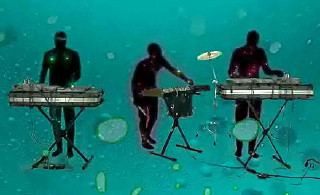 He goes on to dissect the dichotomy of fans who are just ‘in it for the music’ but download every album before it comes out without paying a dime, Animal Collective as a ‘lifestyle brand’, and the death of music reviews. The whole piece is over the top, but rings so true in its ramblings it’s not to be missed. Still, it pre-supposes that Animal Collective are on the verge of ‘making it’, which I would still question. That won’t happen until you have one solid sing-a-long single, and I’m sorry, ‘My Girls’, as good as it is, would still be considered annoying by something north of 8 in 10 of Americans.
Of course, if you don’t have a song ready-made for hipster karaoke night like The Arcade Fire does, the other alternative might be more the Moby route after all, and lay down a sweet dance groove. Paste seemed to think so in their review:
Nine albums and eight years in, it’s time to stop trying to figure out what the hell Animal Collective—vocalist/guitarist Avey Tare, percussionist/vocalist Panda Bear and knob-twiddler Geologist—is, and just enjoy the orgasmic rush of danceable rock. After all, hands are meant not to be jettisoned up in frustration at dead-end lyrics, but thrown in the air as if you just didn’t care.
To which I can’t really help but laugh. I mean, there are beats, but they’re too off-kilter to dance to in the traditional sense, unless your idea of dancing is a ring of convulsing neo-hippies. I might even concede on ‘Summertime Clothes’ — I can see a remix of that working its way into select hipster dj sets. But then I tried to imagine myself dancing to one of my favorite songs from the album, ‘Also Frightened’. The most appropriate thing I could think to do was to pantomime being part of an angry lynch mob, marching pitchfork-in-hand to skewer the town freak who hasn’t done anything wrong but whom we all hate because he’s different. (Side note to AC: if you’re accepting pitches for other music video ideas, I’ve got a good one.) The songs do have marvelous energy, but it’s more the swaying head-bobbing, howling at the moon kind; not the kind you find in a club.
Speaking of Pitchforks (like what I did there?), what did those self-important jerks think of this supposedly transcendent album?
What they’ve constructed here is a new kind of electronic pop– one which is machine-generated and revels in technology but is also deeply human, never drawing too much attention to its digital nature. It’s of the moment and feels new, but it’s also striking in its immediacy and comes across as friendly and welcoming. Animal Collective have spent the decade following their own path, figuring out what their music is capable of while also working to bring more listeners into their world. On Merriweather Post Pavilion, their commitment has paid off tremendously.
Ha! Yeah right, that’s total bullsh…. Oh wait, I totally agree with that assessment. They really like it and so do I. Huh. Guess even elitist clocks are right twice a day.
4 comments Subscribe to Posts
 Subscribe to Podcasts
 Become a Facebook Fan