
watching
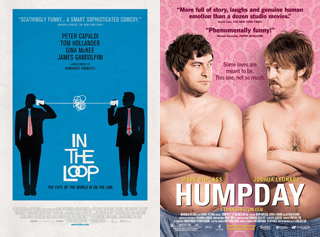 Big Laughs at LAFF: ‘In the Loop’ and ‘Humpday’
For the avid film fan, the best part of living in Los Angeles isn’t the beach or the weather or the attractive people, though none of those hurt either. The reason to live here is the access to year-round movie events: early releases, revival screenings, special talks with filmmakers, and this month, the LA Film Fest. Those connected or wealthy enough to justify a full pass can choose from dozens of great independent projects (and this year, attend an early gala screening of Public Enemies, to the envy of us armchair amateurs), but thankfully the majority of the showings are also open for individual ticketing. Anyone willing to sort through the long list of choices is sure to find a few gems, providing the perfect counterbalance to the summer blockbuster season.
In addition to the joy of discovery, the festival environment is one of the best ways to see a small film. Similar to seeing the latest superhero or sci-fi movie at a midnight premiere, you’re surrounded by fellow fanatics, not just casual viewers out for the latest Wayans or Ferrell vehicle. Everyone in those seats had to seek out these shows, and go into the experience prepared to love the movies they’re seeing. Often actors, directors, or writers are present, so the audience is more willing to show appreciation for the film instead of grumpily holding back for the film to win them over. The energy goes a long way to make up for the lack of huge production budgets or amazing set pieces big Hollywood films depend on to draw you in.
This all works especially well for smart independent comedy. Both In the Loop and Humpday may not work for a general audience the same way a broad comedy like The Hangover, wholesome fun like Star Trek, or even unintentionally laughter-inducing blockbusters like Terminator or Transformers do at the local multiplex. But even if you missed the LA Film Fest, both of these clever little films are worth tracking down when they arrive in a theater near you. Each one earns its laughs honestly, and with an added depth that makes them more than just silly Friday night fun. They might be harder to find and harder to see with a great crowd, but they’ll both reward the effort.
Leave a commentpodcasts
 Under Culture Podcast #4: Verbally Attacked by Dogs
We’re big time now. For episode four we managed to convince our friend James, music blogger at Green Pea-ness and equally enthusiastic culture nut, to come in for our first three-man show. We needed someone who could talk video games and raise the overall geek levels even further, with what Spencer asked me to describe as “the somewhat idiosyncratic pop culture consumption methods of James Cobo”. He served the show well and may even be back in the future at some point (especially if we get fan mail, maybe not if we get hate mail — listen and decide (kidding, we loved having him)).
We also picked up a new microphone to accomodate, and were crammed into a fairly small space in our luxurious corner-of-my-bedroom studio to record. As a result, there is a small amount of echo in some parts as we continue to master the ins and outs of audio production. Some digital judo took care of most of it, but if you hear a little here and there, it isn’t just in your head. We’ll continue to refine the recording process and get better and better at this, we promise.
Enjoy episode four, and if you like what you hear, review us in iTunes. If you want to join the conversation, you can always leave comments, or email brian@under-culture.com with suggestions, questions, etc. We’d love to get some listener feedback or opinions to discuss on future episodes.
[display_podcast]
Download The Under Culture Podcast: #4 – Verbally Attacked by Dogs
Subscribe in iTunes for automatic updates.
……….
InFamous is out now on the PlayStation 3, and it’s safe to say we generally liked it.
Punch Out!! is out now on the Wii, and it’s up to you whether or not it deserves both exclamation points.
Castle Crashers is available for download on Xbox Live Arcade, and has been for months, but is still worth checking out.
(Check it out, we covered all three platforms in 20 minutes, how impartial of us.)
……….
If you’re a little lost on why we start making fart jokes after the first segment, it’s in reference to a recent bit on Conan that Spencer shared with us during a break. It’s okay to go a little blue if Conan does it, right?
Up seems to be universally loved, so there’s no reason not to go check it out. After listening to us debate the value of seeing it 3D, seeing it with or without dorky goggles is up to you.
If you’re more interested in Friday Night Lights after hearing us talk about it, check out our recent article on why it’s seriously worth watching.
Spencer also mentioned a marshmellow test, by which he meant deferred gratification, not the famous chubby bunny game I was thinking of. Honest mistake.
……….
William D Cohan’s book, House of Cards: A Tale of Hubris and Wretched Excess on Wall Street, is available now from Random House in hardcover. What a wonderful title.
……….
The Dirty Projectors and Coalesce albums were covered in a previous podcast, so check out the last episode if you haven’t already.
Grizzly Bear’s new album, Veckatimest, is out now on Warp Records. They’re finishing up a mostly sold-out tour before heading to Europe. Their track ‘Two Weeks’ plays during the first break, and ‘Southern Point’ for the show’s ending.
The Rural Alberta Advantage’s album, Hometowns, is being re-released July 7th on Saddle Creek Records, where you can pre-order now and get an immediate mp3 download. It’s a steal really; you could have the songs before you even finish pronouncing their band name. Their track ‘Don’t Haunt This Place’ plays for the second break, and ‘Four Night Rider’ for the third.
James’ last-minute song recommendation was ‘Reason 45’ by the band Apples, which you can check out on their Myspace page.
Leave a commentplaying
 Living with Sequel-itis: The Most Promising Follow-ups of E3 2009
In years like this one, game consoles are in the third or fourth year of their lifespans, which takes off some of the pressure. E3 (or the Electronic Entertainment Expo for the uninitiated) can be less of a fight over which platform is the most viable and cutting edge and deserving of your loyalty, and more about the abundance of quality games across the board. By now developers know the ins and outs of each system, and are starting to do some of their most accomplished work. The message from all fronts seems to be, “Stay excited, the best is yet to come”.
Unfortunately, as some have pointed out — Michael Abbott over at The Brainy Gamer was the first I saw and makes an indisputable point — “the best” too often means “more of the same, just bigger and with more polished graphic technology”. Few truly breakthrough game ideas are being announced and applauded; instead, live demonstrations of the next chapter in a host of familiar franchises are dropping the most jaws and stealing the show.
All is not lost, however. Instead of whining about the lack of creativity, remember that video games are essentially software, and software is by its nature iterative. Just as patches and updates make our web browsers, iphone apps or operating systems better over time, game designers need time to work out their ideas and present them in their optimal form. More often than not, a new game is only the best they could do to bring a concept to life given limited time and resources. Sometimes they score a home run on their first attempt, but often they don’t hit their stride until a few games in, using the lessons from one project to improve the next. It’s safe to say Super Mario 3 is a better game than the first NES adventure. Halo 3‘s multi-player combat perfected what was only hinted at with their launch title. And no one would argue that the makers of Grand Theft Auto should have stopped at number two to create something wholly original instead of revolutionizing the landscape with GTA III.
Not to say that anyone should want all sequels, all the time. New game ideas often make for some of the best games in a given year (Portal or Mirror’s Edge for example). That, and endless iteration can end with way too much of a good thing (I think we can all agree the Tony Hawk series probably peaked fairly early into its decade-long run). Ideally, creators would take their learnings and apply them to fresh concepts instead of just re-visiting the same ones again and again; and some developers definitely take that approach, which we’ll get to at the end.
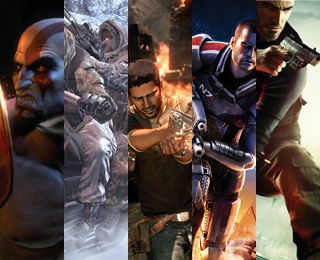
The point, however, is that some of the very best games also come as follow-ups to ideas born early in a series, and then fully realized in later versions. So for reassurance that all is not pure and shameless regurgitation, let’s first look at the top seven (well, eight, sort of) straight sequels shown at this year’s E3, and why it may be worth revisiting them instead of just wishing their creators would move on to the next project.
[Thanks to GameTrailers.com for all the video clips. Where possible, actual game footage was chosen instead of just CG trailers to better demonstrate the relevant points, though the trailers are goddamn exciting too and also worth looking up.]
Honorable Mention: Left 4 Dead 2
Fall 2009
The first Left 4 Dead was an almost perfect 4-player zombie-shooting masterpiece. The one gripe: there wasn’t enough of it. With only 4 ‘movies’, i.e. missions, to play through, everyone immediately just wanted more. Valve are happy to comply by following up a year later with this sequel, promising more undead mayhem, only now with things like Axes, Chainsaws, and bullets that set things on fire. Yes, please.
Nothing revolutionary, and perhaps a bit tacky to make us buy a whole new game so soon instead of just releasing more levels for download. However, it’s a safe bet that everyone who loved the first one will happily rush out to buy another volume. It was too much damn fun to waste time complaining.
……….
7 – God of War III
Early 2010
Probably the most exciting sequel in which the least will change from its predecessors. Sure, there will be a few new gnarly weapons or Greek-god-themed magical powers, but you’re still going to be an angry, angry dude butchering a whole lot of evil minions between fights against pissed off mythological beings of epic size.
The reason this sequel may be the climax of the series, though, is because the PS3 allows them to do what they’ve wanted to be doing all along. Somehow back on PS2, they managed to make a brutal action game on a grand scale despite technological limits. With much more fidelity to work with, the brutal fights are going to be really brutal, and the scale is going to be really grand. The feeling of tearing foes limb from limb is going to be a lot more gut-wrenching when you can see blood splatter and entrails spill in high definition. If done right, it should make for the definitive God of War game.
……….
6 – Mass Effect 2
Fall 2009
Perhaps this is personal bias (one of our first gaming articles on Under Culture was about the merits of the first game), but Mass Effect promised a lot and delivered on most of it admirably. The role-playing was excellent, with the best conversation system on consoles to date, and the universe was the perfect blend of classic sci-fi influences and new fiction. However, small problems held it back. The storytelling was a bit too stiff, the action a bit too loose, and the number of planets to visit maybe too large, with many feeling like filler terrain not really worth exploring.
If early reports of a tighter combat system and more cinematic presentation during dialogue scenes both turn out to be true, the sequel could persuade naysayers who couldn’t get past the problems of the first game. And for those who already thought Mass Effect was outstanding sci-fi, the sequel could be more satisfying by several degrees by simply cutting out some of the fat and making the whole experience more seamless and exciting.
……….
5 – Metroid: Other M
TBA 2010
I won’t try to be objective here: I’m not generally interested in the Wii much at all. Though Super Mario Galaxy looked like a lot of fun, the sequel to that game really does look like more of the same, with little attempt to push the boundaries in any way (“But now Yoshi’s back!”, you say, to which I shake my head). Otherwise, it’s been easy to mostly shrug off as a platform except when visiting family or friends and playing a few party games.
So it follows that I’ve never been much of a Metroid guy either, but wow, this one does look like a whole lot of fun, doesn’t it? Instead of trotting out another same old Nintendo property for another same old Nintendo rehash, they’ve handed the reins to masters of the action genre for a whole new take on a classic character. There are even hints of a semi-grown-up story. I might actually be sad to be missing this one.
……….
4 – Assassin’s Creed 2
Fall 2009
The previous Assassin’s Creed was about as divisive as they come, with some finding it dreadfully dull and repetitive, while others loved the ideas and put up with the shortcomings. Setting a game in the crusades-era Middle East was a breath of fresh air, and the free movement around the city was well-executed, even if there were legitimate gripes to be made in the mission structure.
Thankfully, lovers and haters alike have been fairly unanimous in their criticisms of the game. By adding more mission variety and choosing another totally original setting, Renaissance Italy, the new installment can go a long way toward realizing the potential they fell just short of. Not to mention the fact that it looks even more gorgeous than its already beautiful predecessor.
……….
3 – Modern Warfare 2
Fall 2009
Call of Duty 4: Modern Warfare is arguably the best straight-up action shooter of this era. It essentially nails everything you need for a gripping military game: masterful storytelling, smooth controls, and spectacular set pieces that rival any blockbuster.
From all appearances — and untethered from the long-running Call of Duty moniker — Infinity Ward are striking out to take everything they excelled at even further. When you’re already at the cutting edge, you don’t have to do much but keep at it.
……….
2 – Uncharted 2: Among Thieves
Fall 2009
If Uncharted is the PS3’s answer to Gears of War, it carved out a space for itself as a light-hearted, more colorful counterpart to Microsoft’s grey and brown behemoth. By keeping things T-rated and character driven, encouraging exploration instead of chainsaw mutilations, it’s a shooter that’s more pulp adventure than the grisly bloodbaths that are so in vogue, and a welcome respite from doom and gloom.
Naughty Dog’s emphasis on how the character reacts to both his environment and the supporting cast around him is where the first game really shined. With more time to figure out how to wrangle the PS3’s capabilities, the next chapter is their chance to show how their skills have sharpened by putting them to use on even better storytelling.
……….
1 – Splinter Cell: Conviction
Fall 2009
Metal Gear Solid has always been the marquee stealth action game. Now its main rival, the Splinter Cell series, has come back from hibernation in a big way. Going the complete opposite direction from the former’s cut-scene-heavy presentation, it pulls all the story elements as fully into the game world as possible, so as Sam Fisher, you’re never not in control. Since a successful Bourne Identity or Casino Royale super-spy game never fully materialized, we may be getting it here.
In addition, the stealth genre’s tendency to rely on hide-and-seek for suspense sometimes leads to games where a lot of time is spent waiting. But by the looks of what they’ve shown, a real effort has been made to let players feel like they are mastering their environments, not hiding in them. Even for those who have never been fans of this franchise, it’s rebirth with Conviction may be the game so many people are talking about this fall, there’s no way to sneak around it.
……….
Even with how promising all these games look, it’s still tough to make the argument that we’re not getting stuck in a rut. The entire list is dominated by either macho guys running around killing people, or macho guys shooting at people while ducking behind things. At least Metroid features a nominally female lead, but is that enough? Surely there are more stories out there to make games from than revenge fantasies.
What we’re going through right now may be more akin to the heyday of 80’s action films, where a certain formula is being perfected in front of our eyes before we start moving on to more lofty and ambitious goals. Forget Citizen Kane or Godfather; now may be the time where games at the very least get their Die Hard (Nathan Drake = John McClane?), or their Empire Strikes Back (was Saren Shephard’s father, somehow?). Maybe an iterative, software-based art form has to fully master the basics before its creators can collectively leap forward.
Luckily there are plenty of non-sequels coming along as well to break up the tedium (though tedium may be the wrong word, with sequels at least promising some of the most exciting popcorn-type games on the horizon). There are also a host of ‘spiritual successors’ on the way that follow through on previous ideas from great game makers, who at least go to the trouble to invent new characters and settings. These games, like Fumito Ueda’s The Last Guardian, Tim Schafer’s Brutal Legend, or David Cage’s Heavy Rain — all must-plays for the discerning gamer — may end up being the freshest and most creative of the bunch. With these games, fingers crossed, we’ll get not just blockbuster excitement, but new thinking, new styles of play, new emotions.
Regardless, no one will be wanting for choices come the end of 2009, with some great things spilling over into next year. Now that we’ve advanced so far technologically, the upcoming field of action franchise follow-ups could just be a case of game makers finally being able to achieve their original visions. Once they get those ideas out of their systems in ways they’re fully satisfied with, there will be plenty of time to take the old models and start reinventing them. The rise of indie developers just now getting their start in places like PSN or Live Arcade will also breathe more life into the field. Groundbreaking progress may not be happening as quickly as we’d like, but it’s creeping in from the edges and not about to stop.
Sure, we may be stuck with a lot of sequels for now as the industry grows up. But goddamn if growing pains have ever looked this much fun.
4 commentspodcasts
Under Culture Podcast #3: A List of Injustices
Our latest podcast went extremely well. The conversations were interesting and flowed well, and we had lots of interesting music and movies to talk about. Good third try, I believed.
Then when I went back to edit it all together, I discovered the last section had some strange interference. Possibly supernatural (gypsies!), possibly technological (time-traveling robots?). I had to cut a few minutes worth of wrap-up jokes where it got really bad, but it flared up mid-conversation, so I minimized it as much as made sense without just hacking off the closing. Hope you will forgive this minor inconvenience, and that our lives are not doomed for offending whatever forces corrupted the audio file.
Enjoy the third episode, and if you like what you hear, review us in iTunes. And you can always leave comments, or email brian@under-culture.com with suggestions, questions, etc. We’d love to get some listener feedback or opinions to discuss on the show.
[display_podcast]
Download The Under Culture Podcast: #3 – A List of Injustices
Subscribe in iTunes for automatic updates.
……….
Looks like we’re not the only ones who thought Blade 2 was better than Terminator: Salvation. Sorry, McG.
……….
If you’d like to make your own judgments on Animal Collective live, they’re playing a few more shows (mostly sold out) across the US before heading to Europe, then returning stateside to play a lot of the summer festivals. Or you can just read our very positive review of their new album, Merriweather Post Pavillion.
The Decemberists will be on tour for the next few months playing their new album, The Hazards of Love, in its entirety. Their track, ‘The Queen’s Rebuke/The Crossing’ is featured in the third music break, one of the songs that especially destroys in a live setting.
The Thermals have just finished their US tour and are heading to Europe soon, but their latest, Now We Can See, is still worth checking out, as are their three previous albums.
……….
The new Dirty Projectors album, Bitte Orca, comes out next week. The tracks ‘Stillness Is the Move’ and ‘Temecula Sunrise’ are featured in the first and last breaks. They’re on a US tour this summer.
The long-awaited next album from Coalesce, Ox, also comes out next week. ‘Purveyor of Novelty and Nonsense’ is featured in the second break, and you can sample that as well as a few other full tracks off of Ox on their site. They’re touring Europe in June, lucky continentals.
[UPDATED:] You can now stream the full album online as well, so there’s no reason not to give it a go. Unless you’re afraid of hardcore or something.
……….
Drag Me to Hell is playing now in theatres everywhere. That one seems like a no-brainer.
Dead Snow is the movie about Nazi zombies, featuring the brilliant tagline ‘Ein. Zwei. Die!’. You can see the trailer on their site, and according to IMDB, it will have a limited release in June.
For horror fans, Spencer’s four part series on the state of modern horror films from last fall is still worth a read. You can start at part one, on where horror went wrong, or at least read part four, on which modern horrors are still getting it right.
……….
Anvil: The Story of Anvil, is now playing in select cities, so take advantage of that while you can to see some lovable metal guys trying to make it.
Tyson is also in theatres now, so you can decide if he deserves to be loved or not.
Dreams with Sharp Teeth, the documentary about Harlan Ellison, is now out on DVD, though not yet available via Netflix as of this writing. Sundance Channel may not be showing it again soon, but they do have a handful of clips. This one is especially great and representative of the film:
If you can’t track down the film, we do recommend the interview with Onion A.V. Club, and especially this podcast interview on Salon Conversations. You really have to hear him speak to get the full effect.
……….
Leave a commentwatching
 Fool Me Once: Falling for the ‘The Brothers Bloom’
A good confidence scheme hinges on the fact that, somewhere in his heart, the mark wants to believe something implausible. Whether through hubris or insecurity, the poor sap needs to think that they alone have the good fortune to stumble on the chance of a lifetime, or that someone out there badly needs their unique intelligence and charisma to make an easy fortune. Without that moment – where the soon-to-be-victim pledges himself to the fantasy of the setup — the whole ruse would come crumbling down, because it’s only afterward that he’s committed to his own delusion and willing to be taken for a ride.
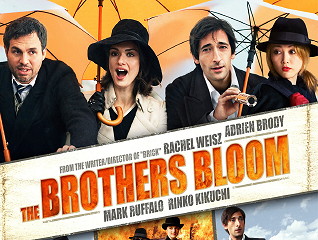
In The Brothers Bloom, Mark Ruffalo’s character Stephen, the mastermind in this duo of gentleman thieves, knows that fact inherently. As he puts it, “The best cons are the ones where everyone gets what they want.” He invents elaborate schemes in which the mark gets to walk away with their delusions intact, and the brothers walk away richer men. Everybody wins.
Writer/director Rian Johnson duplicates this setup with the movie itself: an alternately silly and surreal adventure that’s larger and wilder than any real-life scenario could ever be. But as long as there’s a part of us that’s willing to be taken on that ride, we’ll end up feeling like we came out ahead.
In his previous movie, Brick, Johnson created an absurdly noir spin on high school drama, hard-boiled dialogue and all. In The Brothers Bloom, he imagines a quirky world of crooks too dashing to be true. But for all the melodrama in one or romping fun in the other, they both work because their characters are played with conviction. The consistent element between Brick and its follow-up Bloom is the way Johnson conceives of a world and sticks to it whole-heartedly. Like a good con, they require viewers to buy in to the film’s conceit to get the most out of them. Frowning at the stylized world of either film will only bar the gates to enjoyment, whereas embracing their fanciful realities will reward viewers several times over, and it’s up to us to decide if we want in or not.
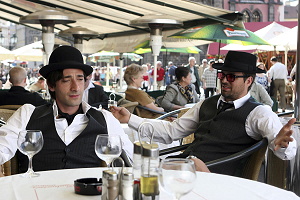 For those that do, Johnson seems to take pride in making ambitious films for real film fans. They don’t pretend not to be movies, sticking to grounded characters and plausible plots; they tell fantastic stories for audiences to get lost in. From the outset of The Brothers Bloom, the pace is brisk and the wits are sharp, with lots of subtle visual and verbal flourish. The central challenge of a successful con film, a scheme that keeps the audience guessing, remains a puzzle to the very end. But it’s all built on the solid fundamentals of great performances: Ruffalo is rakish and always in control as the brilliant older brother, and Adrien Brody is sensitive and vulnerable as the reluctant criminal trying to go straight. Their largely silent-film style sidekick Bang Bang — she likes explosives — is hilariously mimed by Rinko Kikuchi, and Rachel Weisz is at her most fetching as the sweetly naive and eccentric heiress in their cross hairs.
Not that it’s for everyone, or a perfect film. From the opening sequence — a con man’s nursery rhyme that whisks viewers through the brothers’ childhood — you’ll know right away if it’s the sort of trip you want to go on. Comparisons may be drawn to Wes Anderson’s eye for detail and rapid-fire exposition, but calling this outright mimicry is unfair. If anything, it only exposes the lack of directors to compare to; those who give audiences enough credit to be able to keep up with densely packed film-making. Where Anderson’s aesthetic is often cold and sterile, Johnson’s shows an exuberance that’s easier to enjoy without ironic detachment. True, the pace never relents, and as the team travels the globe piling on double- and triple-crosses, it’s possible to feel like the adventure has left you behind. But in the end, it’s more satisfying to spend two hours trying to match wits with a con film than be condescended to by one.
The film also poses a larger question that makes Bloom more than simple novelty. As a boy, Brody’s shy, awkward Bloom could only talk to the pretty girl in town once his brother had given him a workable plan, allowing him to find confidence in pretending to be the boy he wanted to be. His choices were to retreat from a pleasant fiction to an unhappy reality, or accept the part of himself that wanted to be tricked just as badly as the rubes, allowing himself to be swept up in the tall tale. The same dilemma continues into adult life, for Brody’s character as well as all of us. The pair of con artists offer their marks something greater than real life, and provide a moment of truth when they decide to dive in and willingly suspend disbelief. Bloom doesn’t have an issue with the stealing, only the fact that at the end he’s left with nothing genuine to fulfill him personally. He longs to be the one who escapes with his illusions intact, to finally walk off into the sunset without immediately darting back into the bushes.
Similarly, the film poses that maybe all of us are in essence conning ourselves. Like Weisz’ character, we prefer seeing our lives as grand adventures as opposed to the realities that they are. If it’s only a matter of perception, and the circumstances remain the same either way, maybe a little self-deception is okay. More likely, the grand adventures only await those who fool themselves into thinking they can create one, and have the guts to go into them headlong. Perhaps people are only really happy when they invent a role for themselves that they enjoy playing enough to get lost in.
That seems to be one of Rian Johnson’s guiding principles in The Brothers Bloom. Even if we can’t live fantastic lives day to day, at least those willing to get lost in a yarn can suspend disbelief long enough to be taken for a wonderful ride. Certainly if you go in cynically, looking for loose threads, they might be there to find. But if you’re able to let yourself be conned by some cleverly executed movie magic, you’ll end up richer for it.
1 commentplaying
 The Perils of an Open World: What Far Cry 2 Can Learn from Burnout Paradise
Lacking any must-play games this spring (sorry Resident Evil), I’ve popped in a few older titles from the year prior that I missed on the first go-round. It’s a standard practice for the season which usually serves me well; last year I circled back to Call of Duty 4 and Assassin’s Creed, both of which I was glad not to have missed. So for the dry spell of 2009, I selected a couple much talked about titles I’d also neglected: Far Cry 2 and Burnout Paradise.
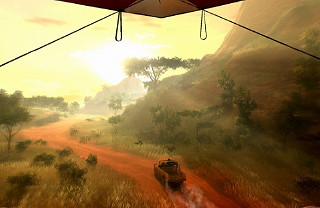
Aside from the fact that they’re both available at reduced prices now that they’ve been around for a while, you might not think these two games had a whole lot in common. Far Cry is an oppressive first-person shooter that takes place in the shantytowns of a militia-controlled African nation. Burnout is a full-contact arcade driving game that’s all about speed and spectacle, without characters or story to get in the way of fast-paced action. Of the two, you might expect the latter to be the simple, fun fluff that loses its draw after the hundredth amazing crash, and the former to be the deeper experience that really gets its hooks into you.
But in the end, due to seemingly minor design choices and their effects on the flow of each game, the opposite turned out to be true. Far Cry 2 is an exceptional game buried beneath a pile of inconveniences, requiring a lot of patience to actually enjoy. Burnout Paradise is a decent game condensed down to its purest, most concentrated essence — like an uncut brick of fun just begging to fuel a full-on gaming bender. And the way each game succeeds or fails comes from the way they treat the one major conceit they both share: their big, open-world playgrounds.
……….
There’s no doubt that Far Cry‘s premise takes players somewhere they don’t usually go, both geographically and emotionally. The violent African villages surrounded by desert and jungle are not the typical military/industrial setting for a shooter, so the initial promise is of a novel experience. Then you quickly discover that your character is an unquestionably bad person, destroying and killing to prolong an ugly and dangerous conflict; your only good deeds are for the self-serving purpose of getting medicine to treat your malaria. There’s a moral quandary in Far Cry about who you’re really hurting or helping with each violent act, which not enough games that involve mass killings bother to explore. This one forces you to confront being evil head on, and the results are certainly compelling.
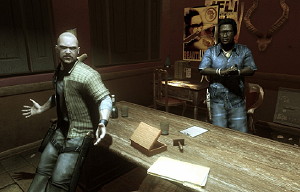 However, basic problems detract so heavily from getting fully immersed in that role, much of the impact is lost due to frustration or fatigue. The world is enormous, with save points scattered around the map instead of allowing you to capture your progress at any point. Bands of thugs are much more prevalent, so while driving across the large expanses between missions, gunfights constantly break out, forcing you to stop. If during a mission you fail and die, you not only have to drive or boat or run all the way back to where you left off; you have to fight the roving gunmen all over again on the way.
Essentially, crossing the large map is not a fun thing, and you’re forced to do it far too often to get to the exciting infiltrations or assassinations. That’s a big problem: progressing through the game quickly becomes less about inhabiting your character and more about minimizing annoyances. I even resorted to taking buses whenever possible, because they were the only fast-travel option. Though it might not gel with the game-world’s reality, it meant you couldn’t be attacked en route (whether or not real-world militia fighters have a bus-related truce in effect, I’m not sure).
Other games with huge playing fields get around this problem by making sure you’re never bored or frustrated in transit. GTA never had thugs coming at you for no reason unless you’d provoked them, and it livened up dull long-distance drives with the brilliant in-game radio stations, which featured some of the game’s best humor. Understandably, that game wasn’t meant to be a serious treatment of mercenary opportunists in military insurgencies. In the world Far Cry constructs, even getting from place to place probably is dangerous all on its own. But then even Fallout, which also took place in violent desolation, only ever made you slog long distances once before letting you zip straight from point to point. There is something to be said for making players experience hardship to provide context, but also for letting them move on to the next experience instead of beating them over the head with the ‘Oh, look how dangerous this world is’ club. At a certain point, the open world comes to be seen as a chore, not a source of potential fun.
Add to this the fact that you can succeed in all the game’s missions after your first or second weapon upgrade. All the side missions and exploration — generally the aspect of open-world games that give players a sense of freedom and belonging, and give the game world its richness — quickly become pointless, as they would only involve putting yourself into unnecessary danger to earn cash you no longer need. Once there’s no satisfaction to be gained from wandering the map, the game has missed its mark. It’s not an entertaining platform where the player decides what to do next. The only decision left becomes “How can I get to the next interesting part fastest?”
……….
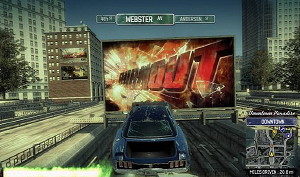 Contrast that frustration with Burnout Paradise, which masterfully utilizes its open-world setup to make sure its players are never more than ten seconds away from a different opportunity for fun. Not only are there races of all types at literally every street corner, but there is absolutely no punishment for failing. Lose an event? That’s fine, try another one right near where you ended up. (They even recently patched in the ability to go immediately back to the start of any event at any time). Sick of doing structured events? There are things to find everywhere you go, like ramps to jump, billboards to break, or shortcuts to discover. Plus, every time you find something new, an on-screen exclamation comes on to give you a constant sense of accomplishment. In Burnout, you’re never not progressing toward some goal or reward. You’re never simply ‘in transit’, so there isn’t a single moment of non-fun.
Sure, it’s nowhere near as profound a premise as Far Cry 2. That game admirably attempts to explore man’s inherent greed and selfishness and violence; this one puts you in a fast car in a big city and lets you drive around breaking things. But of the two, only Burnout will suck you in for hours at a time without having realized where the day went. Far Cry, for all its ambitions, will instead have you looking at the clock to see how much time you’ve wasted commuting back to a failed mission for the third time.
Don’t misunderstand: Far Cry 2 is a good game, despite its problems. The situations you face are intense, and the questionable morality of your actions makes for an intriguing plot. Burnout Paradise, no matter how fun, is just a game where you crash a bunch of cars. But in the right application of open-world gameplay, Burnout takes a B-level game into A territory, whereas Far Cry‘s shortcomings let a potentially A-level game fall into the B range.
……….
The principles of player choice and free-roaming gameplay are becoming more and more prevalent in modern games, and with good reason. When done well, they can make it seem as if the world is our oyster, with a hundred unique ways to entertain ourselves. Seeing life go on around us, and interacting with a living system, makes our experience as a part of that system much more meaningful than actions in a void.
But these examples demonstrate that freedom itself is not always a virtue; the reason these games turned out the way they did was their use and misuse of the open-world concept. One presents a large city full of life and possibility, and lets you introduce chaos. The other is a largely barren savannah in which every element is set against you from the start. One constantly rewards exploration, the other penalizes it regularly. The game that’s more meaningful at its core loses that meaning by missing crucial elements of building out its world. The other hooks you instantly despite being essentially meaningless action. If the purpose of an open world is to provide a universe and encourage the player’s agency within it, the surprising winner is the one where he’s not even a person, but a car.
Leave a commentpodcasts
Under Culture Podcast #2: Gun with Truth Bullets
Podcast #2 is here and ready for your ears.
We were a little more comfortable recording this time out, which was both good and bad. We had more fun with it, but also went off on a few random tangents that lead to dead ends. That means a slightly longer show, but also more editing on our end to keep the momentum going. On the plus side, more editing means a few bonus music breaks. Maybe next time we can prepare a little better and find a happy medium.
Don’t forget, you can subscribe in the iTunes store now. If you happen to like the show and give us a nice rating or review while you’re there, we wouldn’t mind either.
[display_podcast]
Download The Under Culture Podcast: #2 – Gun with Truth Bullets
Subscribe in iTunes for automatic updates.
……….
Notes:
Asher Roth, Kim Kardashian, and OctoMom don’t deserve any links from this site. Though I did learn one thing after the podcast: there are two girls who are identical twins, and six boys, two of whom are also identical. They say you learn something new every day, but not necessarily that that ‘something’ will be of any value.
……….
If you’re curious after Spencer’s description or enticed by the mini-mix he built for the outro, Jobriath’s catalog was reissued on CD last year.
Anyone’s Live Acid CD is actually available to stream on Rollingstone.com.
Smile’s album Girl Crushes Boy, featured in the first two music breaks, might be a little harder to come by. But there are used copies on Amazon and some other assorted tracks on iTunes.
To clarify some passing references, Velvet Goldmine is absolutely 100% a move based on David Bowie and Lou Reed. The Flaming Lips documentary briefly mentioned is called Fearless Freaks.
……….
Japandroids’ Post-Nothing, featured in the last two breaks, is out now on Unfamiliar Records in digital or vinyl formats. Or see our previous post on Japandroids to stream the album and download a sample song.
……….
Richard Price’s book Lush Life is available all the usual places in paperback.
Michael Chabon also wrote a thorough review of Lush Life for the New York Book Review, and in a short interview with NY Magazine, Price addresses the fact that he also wrote the dialog for Michael Jackson’s (Scorcese-directed) video for ‘Bad’. Who knew?
……….
You may have missed Free Comic Book Day on May 2nd, but at least they have a helpful counter so you can start keeping time until the next one.
William Shatner’s free comic was indeed a Tekwar title, a series which is not in Esperanto. (I must have been thinking of the 1965 film he starred in, called Incubus, with dialogue entirely in Esperanto. Silly me.)
Atomic Robo was my favorite pick from the free selections — you can check out a few of those pages here, or find out more about the full books at their official site. And what’s this? You can check out their first issue for free on your iPhone too? How cool is that?
Also: NEEERRRRRDS.
……….
Brian K Vaughan’s two comic series, Ex Machina and Y: The Last Man are available from DC/Vertigo/Wildstorm. The latter has run its full 60-issue course, the former is ongoing. The DC sites have issue #1 of both available for free download if you want a preview.
……….
Star Trek. There’s nothing much else to say about Star Trek. Apparently everyone likes this movie. Just go see it if you haven’t.
The Onion bit that Spencer mentioned, “Trekkies Bash New Star Trek Film as ‘Fun, Watchable'”, is pretty good though.
……….
Final note: Spencer finally did check his email (Spencer at under-culture dot com). There were 0 emails and one fake ebay listing response.
4 commentsside notes
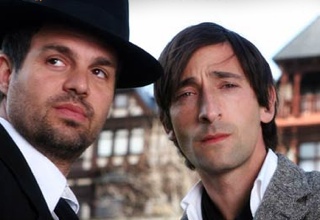 ‘The Brothers Bloom’ Arrives, ‘Chuck’ Struggles, Celebrity Twitters
Where has this movie been hiding? I remember finding a link to a trailer for The Brothers Bloom way back last fall, and thinking, “Oh, the next movie by the guy who made Brick, I loved that movie. Count me in.” I was saving up to write about it, had the link sitting in my drafts folder for weeks, but the film seemed to hang in limbo for so long I sort of gave up. I thought maybe it had a small release and vanished, but I was wrong. It’s finally getting a proper run via a phased roll out starting next weekend in NY and LA and expanding from there.
If you still hadn’t heard of it, you can catch the trailer and watch a full scene over at Apple trailers.
Turns out there was nothing wrong with the movie, they just moved it back for time slot reasons, giving it a better chance to pick up steam. Personally, I’ve been hearing great buzz about this one and can’t wait to finally see it after months of wondering. Brick came in second on my best of 2006 list behind only The Departed, mostly for so fiercely sticking to its guns. What could have been gimmicky — combining crime noir and high school drama — only worked because it went all out and followed through on its ideas. The story was tight, the shots were beautiful, and it felt like a very complete film. Brothers Bloom may be more lighthearted, but after the twisting conspiracy of Brick, I fully trust writer/director Rian Johnson to construct a satisfying con movie: equally exciting double-backs, only this time with bigger-budget sets and more jokes. Plus, Mark Ruffalo and Rachel Weisz are always adorable, aren’t they? Maybe a decent performance by Adrian Brody can even pay me back for sitting through The Darjeeling Limited.
……….
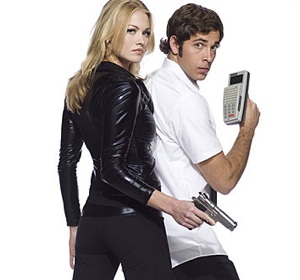 NBC’s Chuck is a pretty good show. It’s not the best thing on TV, but it’s certainly not the worst. It’s extremely watchable and well made, even if it isn’t the deepest story; of course sometimes that’s good, because it’s one of the few shows that can wrap up a basic plot on a weekly basis. Overall, it’s just a flat-out fun piece of entertainment. In fact, as other series get less fun to watch (sorry Heroes, you’re really losing steam at this point), I found I’d pick Chuck over a lot of other choices. Unfortunately, it just never reached the critical mass it needed to ensure its future.
Now that the season’s over and the show’s on the bubble for cancellation, the campaign to save Chuck has been getting an awful lot of attention
I love these grassroots efforts to rescue struggling shows, because it shows TV executives that there is still an audience for quality scripted programming. These people are donating money to charities in the name of the show, organizing big trips to Subway (a primary sponsor), and sending Nerds candy to the network to make their numbers known. CNN is even giving the movement news coverage. Does anyone do that for reality shows that may go off the air? I’m guessing not.
It’s fascinating that entertainment business models are so complicated, something with this passionate a fan base still might not find some way to sustain itself. There’s a tension between people watching shows in new ways that are more convenient to them, but which also hurt the ratings those shows depend on, and cases like Chuck should be the perfect opportunity to try out some new experiments in monetizing — online ad views, co-marketing deals, shorter seasons, anything. Instead, what’ll probably happen is they’ll bring it back, it’ll struggle again for half a season, and fade away nine months later instead of this spring. How much longer until we figure out something that works better?
……….
A quick rant, if you don’t mind, to wrap up. New technology is interesting, but only in how it’s used. It happened with blogs, with Facebook, now in an embarrassing way with Twitter. Yes, it’s new, but there’s no need to constantly talk about it. People can have Twitter accounts, and use them, but how many news articles and special segments and goofy analysis of ‘the phenomenon’ can we bear? It’s like there’s a competition to be the most Twittery newscaster or media personality alive (don’t get me started on the sad tendency of fading stars to use it to prolong their fizzling post-70’s Show careers). I promise this will be the only time we write about Twitter here, and only for the specific reason of seconding a specific recommendation. There is a Twitter feed on the sidebar, and if you find it interesting, please participate, enjoy, whatever. If not, you’re still a fine person.
Anyway, this specific list of top celebrity twitters from TV Guide is somewhat interesting.
 Mainly, because it puts my favorite person to follow, Michael Ian Black, at number two. This guy does it right; everything he writes is either a random joke, or a joke semi-related to what he’s currently doing, and he’s one of the only people whose updates regularly make me laugh. It’s also increased my interest in his new post-Stella show, Michael and Michael Have Issues coming this summer. (Not mentioned in the article, Eugene Mirman would be on my list, but he writes less frequently and is less famous).
But how do extremely clever comedians make it on the same list as boring overly-famous airheads like Kim Kardashian and Heidi Montag? I’m sorry, Heidi, but using three exclamation points is a waste in a character-limited format, as are most things that escape into the world either through your fingers, vocal chords, or any other organ (eww, little Montags are probably heading our way). Also, ghost-written Twitter accounts, even if they’re hilarious, are incredibly lame. As The Real Shaq said in a NY Times article on the matter, “It’s 140 characters. It’s so few characters. If you need a ghostwriter for that, I feel sorry for you.”
Leave a commentwatching
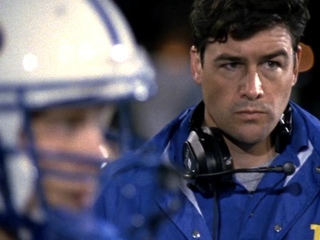 Breaking Through Defenses: How ‘Friday Night Lights’ Will Make You Care About Football
Set in the small town of Dillon, Texas, Friday Night Lights centers around a football coach, his family, his star players and their girlfriends. It follows the team’s struggle living up to the expectations of a town obsessed with their success; the cultural void of the semi-rural southwest providing little else for the townsfolk to get excited about. At first glance, it’s a show about the awful pressures of Texas high school football — boo-fucking-hoo. And it sounds like the exact opposite of something I’d want to watch.
See, I was the kid on the chess team. The kid who always wore headphones so he wouldn’t have to talk to the other kids on the bus, and gave anyone wearing a jersey a wide berth in the halls. To me, football players were people to be resented for getting so much undeserved attention, or at least avoided so as not to invite comparison of their physicality to my total lack thereof. Way more Freaks & Geeks than Friday Night Lights. But a handful of people whose opinions I respect (and who probably had similar high school experiences to mine) said this was a show worth checking out anyway. So lacking anything better to watch over a slow month, and because the first two seasons are available to stream directly from Netflix, I broke down and gave this jock chronicle a try.
Suddenly, despite never going to see a single high school football game, not caring much about sports in general, and being the polar opposite of the type of people in this backwater Texas town, I was completely sucked in. I was staying up late to squeeze in another episode, and if my final one for the night involved a nail-biting setback or heartbreaking loss for the team, I’d have a hard time getting to sleep afterward. It’s safe to say I went from assuming I wouldn’t care about this show to absolutely loving it in only a few episodes, obsessively powering through until I was caught up three seasons later. So for anyone like me who’s still hesitant, I owe you this review to explain why Friday Night Lights is worth watching, just like you owe it to yourselves to give it a try.
……….
The reason Friday Night Lights excels as a television drama is the way it works at every turn to make its characters real, to make you care about them as people first, no matter your preconceptions of football jocks or small town life. The players aren’t just popular bullies riding high on their celebrity. The coach isn’t just their hard-ass after-school drill sergeant. The fans aren’t just dumb hicks with nothing better to do on Friday nights.
In fact, the episodes wisely spend most of their time on the characters’ lives outside of the weekly games, delving into so many other issues, it’s hardly about football at all. Every character is part of a tight-knit community of families struggling in their own way. Subplots about drug use, race relations, crumbling marriages, aging loved ones, and every manner of family tension get as much weight as whether or not the team wins or loses. While one person’s dreams are crushed and have to be rebuilt, another gets a chance they never thought they’d get. It’s the time-tested formula for getting us to root for the underdogs by showing all the painful steps it took them to even have a shot at success.
 But instead of a highly staged Hollywood comeback story with the usual schmaltzy pre-fab plot line, it’s an honest portrait of the small battles and minor victories real families face, on and off the field. Friday Night Lights is a healthy mix of tough dilemmas and playful friendships, where characters argue and make up and move on with their lives like actual human beings, minus the heavily music-supervised soundtrack of introspective Starbucks sampler tunes.
That genuine quality is helped along further by the presentation. The visual style is more documentary than blockbuster, and dialogue is primarily improvised and natural. Each actor speaks volumes in close-ups, humanizing their characters by wordlessly conveying what they wish they could say but aren’t quite able to express. Every scene takes place in a real house, locker room, restaurant, or office that feels as lived in and worn out as you’d expect a modest Texas country town to be. All the gritty details, shaky camera movements and authentically awkward conversations combine to make it seem as if you’re spying on something really happening in small-town America, not just watching a show set there. It’s impossible to take your eyes off of.
……….
Making a football show that even former mathletes and drama club geeks can appreciate is an achievement in its own right, and Friday Night Lights deserves credit for that. But make no mistake: the show isn’t worth watching despite the time spent on the field. It’s so well crafted that you might even — like me — find yourself suppressing the urge to cheer out loud for the Dillon Panthers during the climax of a big game. Their ability to make you care about the outcome of a high school sporting event may be what proves Friday Night Lights isn’t just good, but great. It accomplishes what all the best fiction aspires to: it paints such a vivid world of characters that we empathize with the desires of people totally unlike ourselves.
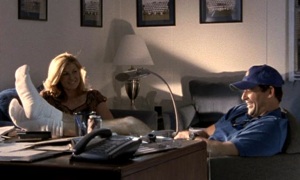 Every kid on this team is finding solace in football, and for some, the team is all they really have. Most of the main characters, players or not, are essentially fatherless. The pitch-perfect Coach Taylor and his amazing wife, the real centers of the show, are these kids’ de facto models of strength and integrity. Even while dealing with their own family struggles, they maintain that strength for the people around them, and provide far more guidance than just tackling drills or academic counseling. Sure, they make mistakes too. But at the center of those two characters is compassion, and a desire to help these kids become the people they want to be, that any decent person can see and aspire to. Through them, we see the kids struggle and falter and get back up and keep going. So when they do, it all builds to one of the most satisfying dramas out there, and almost certainly the most sincere show on television right now.
That’s the point where no matter how you feel about rural Texas or high school sports, you start cheering for these kids and their families. When you get a pit in your stomach before they play a big game, it’s not because they’ve convinced you that football matters, but because the people on the field matter. You know it might not mean everything will work out for them, but you want so badly to see them succeed, even if only one night of the week, it’s hard to help but cheer along: Go Panthers.
1 commentpodcasts
Under Culture Podcast #1: Observe and Transmorph!
[Updated: now includes link to subscribe in the iTunes store.]
Over here at Under Culture, we watch a lot. We read a lot, play a lot, listen to a lot. But when it comes to posting, we go for quality, not quantity. There just isn’t a feature article worth writing about every single thing we’ve been up to. Also, we’re busy people who would sometimes rather grab a beer than write an essay — hard to believe, I know.
Then we had the genius idea: since on the nights we do go out for drinks, we end up talking about the same shit anyway, why not make our own drinks and record the conversation? It’s cheaper to drink at home, plus you get the added thrill of trying not to spill on your iMac. A little more debate, a few more jokes, and before you know it we have an hour-long podcast to fill in the gaps between articles. Genius.
The plan for now is to record a new episode every couple weeks, but for starters, please enjoy our first Under Culture podcast. The topics discussed are linked below in the Notes. Join the conversation in the comments, or suggest topics for future discussion.
[display_podcast]
Download The Under Culture Podcast: #1 – Observe and Transmorph!
Subscribe in iTunes for automatic updates.
……….
Notes:
The Thermals’ new album, Now We Can See, is out now on Kill Rock Stars.
You can stream the title track as well as some others on The Thermals Myspace page.
And my guess was right, the lead singer’s name is in fact Hutch Harris.
……….
The latest Ihsahn album, Angl, is out now on Candlelight Records.
Several tracks are available on the Ihsahn Myspace page, or stream the whole album on Lala.
A clip from the Emperor live DVD Spencer mentioned is here on Youtube. Rumors of former bandmate, Mortiis, getting surgery to appear more gnome-like appear to be incorrect, but he does have a history of wearing freaky prosthetic masks and being generally gnomish.
……….
You can read our quick review of Observe & Report, or check out more reviews at Rotten Tomatoes.
Does 50% mean only half good, or 100% divisive?
……….
The Asylum is the company behind the mockbusters discussed on the show.
As mentioned, you could be watching Transmorphers as we speak via Netflix, but you may want to check out some Youtube clips before putting yourself through the whole thing.
HG Wells’ War of the Worlds and AVH: Alien Versus Hunter are even airing on the SciFi channel in May, if you are so inclined. And that’s pre-Syfy.
……….
We previously posted a Sit Down, Shut Up preview trailer which caused the initial fears, or you can watch the first episode on their Fox site to confirm those fears for yourself.
Kings is also streaming episodes on the NBC site, which is helpful since they recently decided to postpone airing the rest of the season until June. The forecast for Swearengen’s new show does not look good.
 Subscribe to Posts
 Subscribe to Podcasts
 Become a Facebook Fan