
side notes
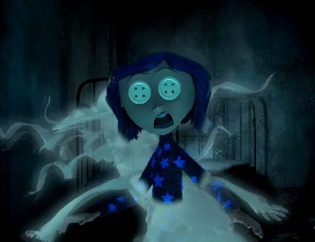 ‘Coraline’ re-envisioned, ‘Daily Show’ re-reported, ‘Nick and Norah’ reminiscent.
Ever since picking up the Sandman series during the peak nerdiness of junior high days, I’ve been a Neil Gaiman fan. I’ve continued to follow his output with reactions varying from casual enjoyment to genuine excitement. No matter what I think of each project, at the very least, they always give the impression that he relishes the telling of stories.
Coraline, his novella aimed at young adults, may not be my favorite of his books — no longer being so young of an adult myself — but it was certainly a pleasant read. Then word leaked a year or so ago that it was being turned into a film by Henry Selick, animation genius behind The Nightmare Before Christmas. Now we’re talking something I can get behind; a favorite author who specializes in the fantastical, paired with an animator who specializes in bringing fantasy to life. This could be the case of a decent book being transformed into a marvelous movie.
Now IGN has a five-part behind-the-scenes look at Coraline, with plenty of clips throughout that show how it’s coming along.
What may have been missing for me as an adult reading the book was the level of imagination required to construct such a vivid world on my own. But combining the original story with Selick’s creative vision, which brings every scene to life with such rich detail, results in images much more arresting than anything I could conjure up. It’s a good thing there are adults who can still flex their fantasy muscles for the delight of the rest of us. Based on these early glimpses, I’m looking forward to seeing the final product.
……….
As an equally loyal The Daily Show fan, it’s always nice to see Jon Stewart getting some good press coverage for the continually excellent job he does skewering the nonsense that passes for governing. I’ll read any piece on him or the show I come across.
One of this week’s most-shared/blogged articles on the NY Times site was a nice article on how they’re covering the elections, called “The Most Trusted Man in America?”
Of course, as a long time follower, I quickly realized that the article felt awfully familiar. As in, it sure sounded a whole lot like almost every other article I’d ever read about Jon Stewart. Start with a description of how the show works (as if we didn’t know by now), provide a little walk-through of how a typical day plays out in the Daily Show offices, sprinkle with a few insights from Stewart on what he sees as their mission and place in the “news” world, and close with some poignant remarks referencing the emperor’s new clothes.
It bears an uncanny likeness to this Rolling Stone cover story from two years ago, which I remember enjoying at the time as well. They even used Rolling Stone‘s clever sub-header as their title. But then there’s this Newsweek article from 2003. Even shades of this earlier NY Times piece which predates the rest. Hmm.
Now I would never turn down the opportunity to hear some laugh lines or pearls of wisdom from one of my favorite TV personalities, even if they come via well-worn premises for feature articles. But it does seem ironic that as his show increasingly focuses on the media’s misplaced attentions and mismanaged agendas, here comes another big publication proposing the shocking idea that maybe this jester is the one revealing the most truth.
……….
Before seeing Pineapple Express last week, we were also treated to a look at the trailer for Nick and Norah’s Infinite Playlist. It looks suitably adorable, crammed with indie pop, and Michael Cera-tastic to be worth giving a try this October, so that’s all well and good.
It did smack at least a little bit of trying too hard to be hipstery in this post-Garden State era of young romantic films, but that sure won’t stop a sensitive, nerdy indie rock fan such as myself from enjoying it. I was however just a tad bugged by their blatant reuse of certain design elements from last year’s sleeper indie hit Juno.
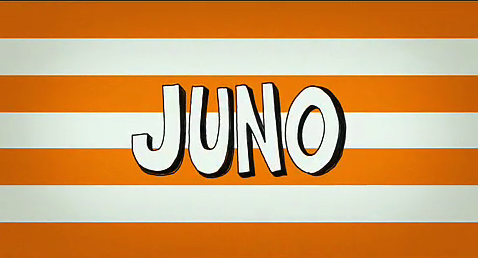
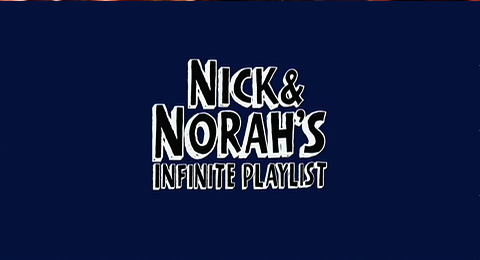
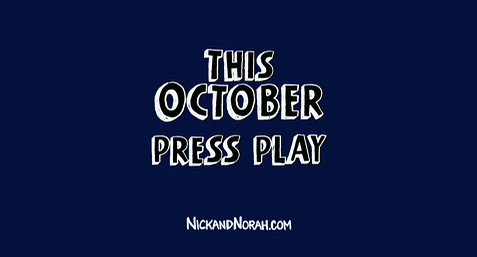
At first I thought I was crazy, but Film School Rejects noticed this as well. I mean, I’m okay with Cera playing essentially the same character — why shouldn’t he, he fucking owns that character. But do they have to use the same quirky, blocky font and bold colors to really drill into our heads just how sure they are that we’ll like this movie if we liked Juno? It may be nitpicking but it seems so lazy and/or sleazy. If I were Fox Searchlight’s poster design company I would be making some angry calls to MTV Pictures’ art department right now; this cannot be a coincidence.
Oh wait, one has a right-sided hand-drawn drop shadow and the other one goes left. Nevermind, it’s all good.
5 commentsplaying
 The Joys of Untangling ‘Braid’
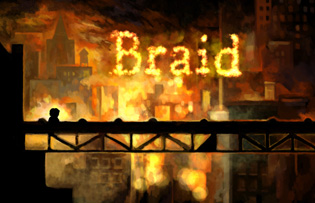
Braid, the first downloadable console game by indie designer Jonathan Blow, has only been available on Xbox Live Arcade for slightly over a week. For a debut release from a relative unknown, it’s sparked a surprising level of discussion in the game world so far. Game critics have unanimously praised Braid, and sales have been strong for a small-budget project, all chronicled by Blow on his game blog. Message board chatterers have done what they do best, complaining either that its $15 price is too high for a short download title, or that the game and its maker are full of themselves. Other notables have come to its defense, calling it a unique addition to the medium. All of this over a seemingly simple 2D platforming game that a good puzzle-solver could finish in a single afternoon.
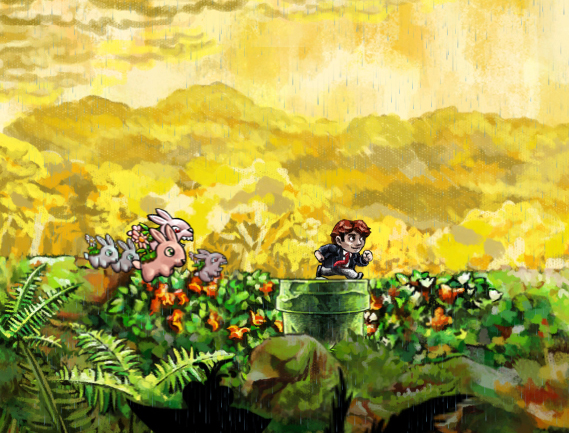
If Braid‘s only aspirations were to be an original twist on the classic running, jumping, and collecting formula, it would still be a solid entry into this summer’s catalog. The mechanics are great fun to play with. Its art style –provided by talented comic artist David Hellman — gives the game a beautiful texture and a wistful, dreamy quality games don’t often have. Even the musical score avoids the usual game clichés in favor of leisurely classical arrangements, which are more Shakespearian drama than Mario jingle. It all adds up to an enjoyable and entertaining, if somewhat brief, little game.
But as Blow has made abundantly clear in lectures, interviews, even a steady online presence through comments on his and other blogs — a habit that’s earned him a mixed bag of respect, raised eyebrows, and accusations of arrogance — he set out to make a game that’s more than just a little piece of amusement.
……….
According to his idea of good design, a game is more meaningful when all its elements work together to explore the central theme it’s built around. Most games simply use accepted game mechanics — running and jumping, running and fighting, or running and shooting; take your pick — and try to impose meaning on the experience with a story that happens between the player interactions. It may be cathartic to bash your way through God of War, for example, but remove the cinematic scenes and the game loses any sense of the tragic side of its anti-hero, Kratos. In this case, though the game is loved and widely accepted as great, the theme of revenge is served up to you through the story, not the game structure itself.
What Blow says he wanted to accomplish with Braid was a game in which the structure, aesthetic, and story elements combine to be greater than the sum of the parts, instead of arbitrarily combined or even set in opposition. In his game the visuals and sounds are nostalgic. The game challenges involve going backward and forward through time to solve problems or erase mistakes. The story segments that are provided, in the form of readable books and pieced-together paintings, deal with fond memories or bad decisions and the joys or regrets that result. Each element weaves together with obvious intent, and all support the game’s central themes of the passage of time and our inability to change the past.
Or at least that’s one way to look at it. The real accomplishment of Braid is that the whole story isn’t spelled out in heavy-handed, literal ways through dialogue or cinematics. Story isn’t even the right word, because you aren’t constructing a solid narrative from fragments you uncover. Instead of ideas served up to the player between levels, Braid allows the player to explore those ideas throughout. By constructing a game in which all elements contribute meaning, each element remains open to interpretation, or not, as the player sees fit. In a sense, the game itself is storyless, and leaves us to extract whatever story we glean from playing it.
……….
One could enjoy the game strictly for its puzzle challenges, which are smart. Or read the books, examine the paintings, and consider the ending, then reflect on the failed romance of the main character Tim — whose name can’t be coincidentally close to time. These written sections are the closest the game has to story, but are more like ruminations than narration. This is where detractors have pointed for evidence of pretentiousness, as if simply acknowledging the existence of emotions or speaking honestly of sadness in a game is too much for a cynical gamer to be forced to bear. Granted, the prose isn’t Hemingway, but if we can love the cheesiness of Resident Evil, Final Fantasy, or Soul Calibur voice overs, can’t we also love the sentimentality of Braid?
For those who want to analyze every bit, there’s plenty more to ponder as well. In some stages, there are things which can’t be stopped once they start in motion, despite your rewinding abilities; some things in life are inevitable. Later in the game, there are platforms that once you cross, you can’t go back to where you were before; some of our actions can’t be taken back. There are dozens more touches like this that all point back to the idea of time and can be taken how you like. There are even players who have read much, much further into some of the game’s ending passages, and interpreted the entire game as an allegory about the development of atomic energy and weaponry.
Here, in a rare bout of shyness from Blow, he responds to questions about the ‘right’ interpretation with:
I’m glad you like the game!
I have been reading through the various threads people have going; but I want to stay out of commenting on what the game is “about”. That’s not my role!
-J.
All over, people are finding different ways to grasp the game’s meaning, and finding new little details that support their theories. Compare this to most games, where the hidden secrets are collectible statues or extra-powerful weapons which only add to the method of your play, not the effect it has on you afterward.
Add to this the fact that as a short, simple game, it benefits from the fact that all its excited fans were able to download and play through it in a reasonable amount of time, and in the same window of others who would want to have these kind of discussions afterward about their experience. It’s an argument that length does not equal value when talking about quality expressions of ideas, and addresses the falsity that some sort of dollar per minute ratio must be maintained to be worth including in your gaming budget. The game was as long as it needed to be to accomplish what it wanted, and did it admirably.
Which is the main reason a simple game like Braid can end up, if not one of the best, most exciting games of the year, then at least one of the most important. Too few games offer what great films, paintings, novels, or poems do, in rewarding a closer reading of the text — the various interpretations giving a work life beyond the time it takes to read, watch, or play it. It’s a fantastic demonstration that fun does not have to come at the expense of meaning, and that good art, including games, doesn’t necessarily answer questions, but raises them.
……….
Further notes:
For some serious inside-gaming talk on ‘avoiding conflicted game design’ (some of which I referenced above), check out an enlightening lecture Jonathan Blow gave as a keynote at a recent conference, posted to his Braid blog.
Or if you want the reader’s digest version, Game Set Watch has an excellent overview of the speech, including the examples he used to make his point.
Giant Bomb’s video review gives a nice, fair, less uppity take on the game if after reading this it sounds a little too artsy for you (they assure you it’s not).
Shawn Elliott at 1up also wrote a realistic, less glowing, but ultimately admiring review as well that points out some valid faults as well as victories in the game.
Leave a commentwatching
 Ad Men Push ‘Mad Men’
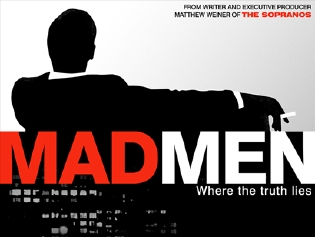
A strange thing happened with the AMC series Mad Men, now in its second season. The marketing team responsible for bringing in viewers took a sophisticated serial, about the supposed Golden Age of Advertising, and poured a large part of their efforts right back into attracting present-day advertising professionals. They’ve essentially turned the idea of a target audience back on themselves, creating a unique feedback loop whose reverberations may be partly responsible for the show’s success.
Not that Mad Men doesn’t appeal to people outside of that particular industry — the show itself is great — or that going after people who can relate to a show is a new idea. You can bet Project Greenlight went after filmmakers, Project Runway goes after designers, and so on. But for non-reality shows this seems new. Does F/X’s The Shield get a huge push with cops, dirty or otherwise? Does Lost get more viewers who live on islands? Heroes definitely chases people who love comic books, but that’s not the same as courting people who do what your characters do for a living. People with superpowers aren’t easy to come by, and even if they were, it’d be hard to pin down which marketing channels would best reach them.
Maybe it’s a question of budget. AMC may not be able to afford the billboards and bus stop posters that HBO liberally papers with promotion for their new series. So instead, they go full force making sure their best bets aren’t just interested, but feel compelled to watch. See, for example, their full 16-page section in Ad Age from earlier this summer.
The massive insert, which took over the whole back section of the magazine, mimics the publication’s layout while promoting the DVD set and upcoming season in a clean, vintage ad style that’s like cat-nip for art directors. The rest is extremely copy-heavy, and as the Ad Age editor puts it in the explanatory blurb, top corner of page 1:
“You’ll see reprints of actual articles [from 1960],… some ‘then and now’ comparisons… And then there is the creative license — a one on one interview with [Mad Men lead character] Don Draper, a portfolio… the [fictional] agency’s latest account wins, with a bit of gossip mixed in.”
The piece reads as part extended back-story or show primer, and part history lesson for today’s advertisers. And by running in a professional publication, more Variety than Entertainment Weekly for ad folks, they managed to make reading about a TV show feel like it qualified as work.
……….
It doesn’t hurt either that the real-life ad men of today are of two generations. The older, which fondly recalls the simpler, more debaucherous good old days akin to the ones Mad Men depicts, and the younger, which hears about ‘how it used to be’ and is fascinated by this era they missed out on. Full disclosure: my day job is in advertising and I fall fully under the latter. In fact, I first heard about the show from a teaser ad in the same magazine leading up to its premiere, and gave it a shot for exactly the reasons above before the show itself sucked me in.
Then of course there’s the older ones, who take it upon themselves to write columns either praising or nitpicking the show’s treatment of how they remember it. What a great excuse for people who normally critique thirty to sixty second commercials to step up and critique a full show, thereby dedicating even more business publication space to covering entertainment. In Barbara Lippert’s recent Adweek piece, for example, she comments on how distracting the inconsistencies were before moving on to the show itself, with a handy analogy we all reach for in our moments of aspiring TV criticism:
“I guess it’s harder to accept someone else’s made-up version of the relatively recent past. You think your own (made-up) version is better. So it took me until Season 2, which debuted this past Sunday, to see that my obsessive view was in fact making me the dim one. The first show of the new season was the best ever, setting up psychologically intricate story arcs that will play out all year in grandly satisfyingly Sopranos-like fashion.
Which completes the top-to-bottom infiltration of the ad industry — the old guard is enthralled, the kids are captivated. Phase one complete for the forces behind Mad Men.
……….
A greater point here bears consideration though. As more and more people find themselves in the ever-broadening marketing services sector, their strategy to push a show about advertising specifically toward advertising people may have created some sort of perfect storm. Counting up all the people who work in some sort of agency isn’t enough to sustain a show, but does provide a built-in audience large enough to at least serve as a springboard to success. After all, real-life ad men are famous for their egos, so of course they would watch a show whose hero is the ultimate ad guy — the suave and brilliant archetype they all imagine themselves being (more full disclosure: ask anyone who works at an agency, “Which character does what you do?” and they will begrudgingly admit which role they play, but almost certainly follow up with, “But also a little bit of what Don does.” He’s the figure we all strive to be). Not to mention that those same people are probably already in the habit of influencing the TV habits of their friends and family, giving this tactic a sort of snowball effect.
Giving the advertisers — both behind the scenes and in front of the screens — all the credit for the show’s hit status would be simplistic. Of course the excellent writing, acting, and production are the most important factors. The 16 Emmy nominations they picked up for season one (including Oustanding Drama Series) couldn’t have hurt either. Whatever they’re doing seems to be working, because Mad Men came back to more than double their viewers this season. But the odd mix of insider interest and super-focused marketing might have contributed to the fact that they even made it to a second season in the first place; after all, which other AMC shows have made it this far? Something tells me there isn’t a huge push focused on America’s meth lab owners still in the works for Breaking Bad.
Leave a commentside notes
 Rogen on Buddy Flicks, Patton on Graduating, and a Nursery Rhyme on Net Etiquette
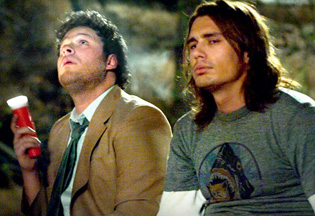
Based on an unscientific method — gauging my own friends’ reactions to the trailer and ads — feelings seem mixed on the next Apatow outing, Pineapple Express. It would be nice to believe he and his crew can continue the charmed run of quality comedy they’ve put out each of the last few summers, but whether reducing the ratio of dick jokes and smack talk for guns and car chases will work, we’ll have to wait and see. Part of the problem may be that the stereotypical ‘buddy film’ formula has been so well-worn and driven into the ground by this point, we’ve learned to tune them out. I dare you to try to sit all the way through Rush Hour 3 or Harold and Kumar the next time you flip past them replaying on cable.
Proving my point, WSJ has Seth Rogen’s 5 picks for great buddy films.
If you’re too absorbed here to click through, I’ll run down the list for you: The Last Detail, 48 Hours, Withnail and I, Lethal Weapon, and Midnight Run. Noticeably absent is any movie made in the last twenty years. Rogen’s a year younger than I am, as hard as that is for me to swallow, and that means he was around six years old when the last of these were released. To be honest, I’ve seen less than half of these. One, because my netflix queue is backed up, but two, because they were before my time; excuse me, make that before our time.
As co-writer of Pineapple Express, he must have realized he was naming a bunch of classics and essentially illustrating that maybe it’s a sub-genre best left alone. Or, after their run of successes, he and his cohorts think they’re the new kings of comedy and can do anything they put their minds to.
Frankly, I hope they’re right. I’ll continue to hold out hope — I remain a fan of both Rogen and Franco going all the way back to Freaks & Geeks — but expectations may have to be set accordingly on this one.
……….
Apparently this has been around a bit already, but I just found it recently while catching up on kathryn yu dot com, and had to profess some love.
Patton Oswalt’s commencement speech to this year’s class at his old high school.
All of you have been given a harsh gift. It’s the same gift the graduating class of 1917, and 1938, and 1968 and now you guys got – the chance to enter adulthood when the world teeters on the rim of the sphincter of oblivion. You’re jumping into the deep end. You have no choice but to be exceptional.
But please don’t mistake miles traveled, and money earned, and fame accumulated for who you are.
Because now I understand how the miraculous, horrifying and memorable lurk everywhere. But they’re hidden to the kind of person I was when I graduated high school. And now – and it’s because of my traveling and living and some pretty profound mistakes along the way – they’re all laid open to me. They’re mine for the feasting. In the Sistine Chapel and in a Taco Bell. In Bach’s Goldberg Variations and in the half-heard brain dead chatter of a woman on her cell phone behind me on an airplane. In Baghdad, Berlin and Sterling, Virginia.
Not only is it a great speech, but how lucky are those kids? 20 bucks says that if you poll 100 people on their high school commencement speaker — or even their university one, for that matter — less than half will remember who that person was, less than a quarter will have found that person insightful and/or funny, and maybe two or three, tops, will actually remember something they said. Some lucky kids in Virginia got all of the above.
……….
Lastly, a bit of fun. Long-time internet writer Kevin Fanning and comic artist Kean Soo teamed up over at the Morning News to create a delightful guide-slash-takedown of Web 2.0 culture.
The result is a delightful illustrated poem called Baby’s First Internet. Here’s a taste:
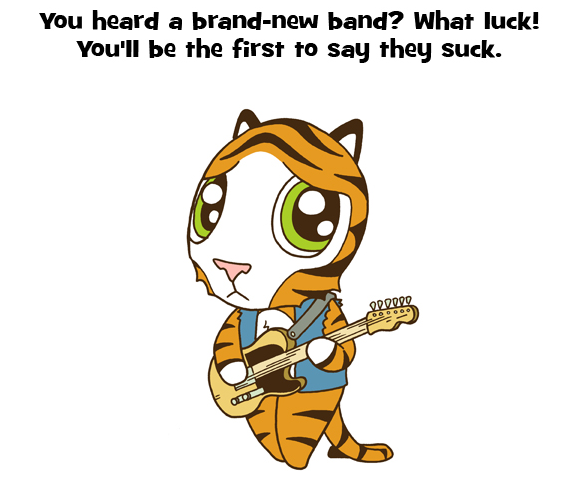
Of course, it must all be taken with a grain of salt, as they conveniently left out the necessary jab at internet writers’ tendency to take jabs at internet writing. Nonetheless, the jokes are true and the drawings are adorable, so enjoy.
Leave a commentplaying
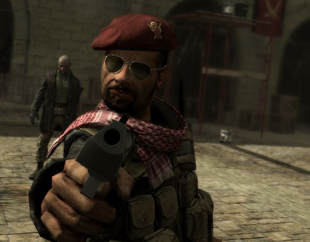 I Feel the Pain of Every One, Then I Feel Nothing: Death and Distress in ‘COD4’
Every year around mid-to-late summer, we all wait while the upcoming games get spit-polished leading up to their fall release dates. E3 begins the I-V drip of anticipation and the payoff rests on the horizon. But the question is, what to play in the meantime? By now, I’ve finally finished the overflow of games I bought in last year’s holiday glut, and the one or two big spring releases worth my precious coinage. So, I’ve taken to using this barren corner of the calendar to pick up one or two of the previous year’s big hits I neglected. The past few years this has worked out perfectly, by letting me get in some quality Dead Rising and Crackdown time during the summer gaming doldrums. This year’s selection: the much-talked about Call of Duty 4: Modern Warfare.
Obviously, I’m unfashionably late to the COD party. Considering over 10 million gamers beat me to it, most people don’t need to be told about its outstanding graphic engine, tight shooting controls, great presentation and amazing sound. And I haven’t even dipped my toe into their super-popular multiplayer yet.
COD4 is, regrettably for me, a case of prejudices getting in the way the first go-round. As far as I was concerned, any amount of chatter around the game amounted to “Blah blah, another war game, only with terrorists instead of Nazis, and a new venue for shooter fiends to murderize each other. Who cares?” And even if my instincts were right, if COD4 were no more than a slick shooter with great graphics, I’m sure it still would have been fairly successful. Then I started hearing terms like ‘groundbreaking’, or descriptions like, ‘I’ve never seen anything like that’, and my ears perked up. Of course, it took a few people I know personally to play through it and say, “Yes, I’m not a shooter person either but I’m telling you, you have to play this game,” to finally seal the deal.
Having finally finished it myself, I can see now why this game deserves a level of praise Generic Military Shooter 4 would never get. The designers at Infinity Ward are about much more than just making another war game for the trigger-happy. With Call of Duty 4, they raise the bar for first-person gaming — evolving the way you experience pain, and even death, through your game character’s eyes.
……….
The advantage of this genre has always been the uniquely immersive element of the first-person perspective, and using that aspect in new ways has produced its most memorable moments. Truly talented game designers realize that highly detailed gun models and enemy blood splatters aren’t the only ways to make a game better. They put the increased fidelity of current PC and console tech to good use, by doing more and more with audio and visual cues. They use camera and control effects not just to enhance action sequences, but induce emotion during high-impact narrative moments. When Gordon Freeman gets tossed across a gorge strapped into a bombed out car, or pinned to a wall by a psychic monster in Half Life 2, you retain camera control while your life is essentially out of your hands, and feel the vulnerability and fear first hand as the player. When one of Bioshock‘s Big Daddies knocks you clear across a room with a belt of his massive arm, that second of blurry disorientation afterward gives the sensation of a real gut punch, which takes a terrifying second or two to recover from before you can get back into the fray. Both obscure or limit the player’s pure ‘game’ experience to greater effect.
Plenty of merely good shooters are content to just let you glide through a murderous rampage, and that can be fun too — I played the Halo trilogy just like everyone else. Great FPS games go beyond flat-out massacre, and are able to not just immerse players in the tension of battle, but in moments that convey the confusion, pain, helplessness, or tragedy of war as well.
This is what raises Call of Duty 4 above the standard. Before the prologue even wraps up, the game manipulates player perspective in two fresh and brilliant ways. One recreates the sense of panic in fleeing a sinking ship, taking what could have been a flat stage with a simple ticking clock or rising water level, and making it exponentially more intense simply by rolling it sideways. Not just because it’s harder to complete when you can’t walk a straight line or see through the cascading water, but because by putting the player as off balance as his character would be, the game playing experience better matches the in-game one.
From there you’re put in the shoes of a doomed man, something that — but for reading reviews like this one — you only suspect as the minutes go by, and you slowly realize you’re not about to be suddenly saved or spared. The sinking feeling of being a hopeless captive, right up to the moment of execution, isn’t an experience many game makers would dare to put their players through; nor would players who are used to being the invincible hero ever expect to face that moment. Limiting control to one basic ability, looking frantically at the madness taking place all around as you’re dragged to your death, isn’t a cruel trick by the game makers. It’s an honest depiction of the cruelty of war, done in the way truest to the gaming medium.
COD4‘s other highlights evoke equally strong emotions. The head-spinning helicopter crash, and subsequent crawl from its fatal wreckage, confronts the player with the harsh war zone reality that everything can go wrong at any second. The amazing climax goes from a bridge explosion to an assassination, with chaos, hope, despair, loss, and victory all wrapped up in an expertly crafted two minutes. It’s these scenes that will become part of gaming canon, and rightly so. They do more than play out highly dramatic story moments, but do so in a way that draws out vivid reactions from the player. You feel for yourself what it’s like to realize you won’t survive a crash, and that your story is coming to an end. Or how time slows as you muster the will to fire the last shot for your fallen teammates even though you’re too dazed to stand up.
While the term ‘cinematic’ often gets thrown around for sequences like these, due to the Hollywood scale of the set pieces and well-choreographed action, these same segments, done as cinematic cutscenes, would lose a large chunk of their impact. The word ’empathic’ sounds so much more pretentious to describe them, but it’s certainly the game’s ability to immerse you in those instances, and experience the attendant emotions, that gives them their gravity. By putting the first-person perspective to its best use — by innovating in the depiction of those moments of pain, or trauma, or fear, or even death — Call of Duty 4 earns more than just credit for being a fun shooting gallery. They prove that a first-person game can be a lot more than just aiming down a barrel, and save themselves a place among the future classics that people will point to as a step along the path to evolving the genre.
2 commentsside notes
 Watching the Watchmen, Draining the Super-well, & Bringing the Payne
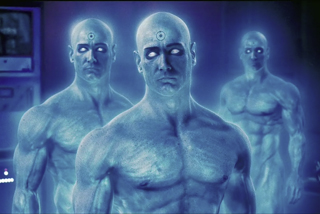
One of the most pleasant not-quite-surprises of going to see The Dark Knight last weekend was getting to see our first official glimpse of the upcoming Watchmen movie. It was a great appetizer for the feast it preceded.
And if you’re anything like me, you’ve already been back to watch the Watchmen trailer again several times since.
This is an example of how to do trailers. It’s the perfect teaser: all memorable imagery and mood, meant only to build anticipation. Arguments abound as to whether or not the movie will be any good — not to mention whether one of the pinnacles of the graphic novel form even needs a film version. I fall in the camp that if nothing else, it will be exciting to see the classic panels in motion. Of course, the images are all we really get a taste of in this trailer, and on that front it’s reassuring. 300‘s hyper-stylized execution proved that Zack Snyder’s team is capable of manipulating film with the best of them to create an eye-popping visual spectacle. The Watchmen trailer looks like their next level of achievement, and thankfully, with colors this time.
The question won’t be if he can make a nice-looking adaptation, but if the script can hold a candle to the book. If some of the rumblings I’ve heard from those who’ve read it are to be believed, then it’s got a fighting chance to be great. And the resulting slew of stylish R-rated graphic novel films could be really fun, though I’d be happy if they just get around to the next Sin City already.
One more thing of note was how perfectly that Smashing Pumpkins song set the tone and mood. Popcritics points out the song’s details — ‘The Beginning Is the End Is the Beginning’, off their b-sides album — and the curious fact that a different version of the same song appeared on the soundtrack to the atrocious Batman and Robin. Bad omen for Watchmen, or second time’s a charm for the Pumpkins?
……….
If you’ve already read our extensive, multi-sided review of Dark Knight, you heard me argue that it sets a new bar for comic book movies that can be taken seriously. Spencer lamented that lowered expectations for this genre lead the film to get over-hyped just for being decent.
NY Times’ AO Scott has his own piece on how the superhero film genre may have gone as far as it can.
His argument is that between Batman and Iron Man, “these films discover the limits built into the superhero genre as it currently exists.” He goes on to detail why no matter how good they are, they always fall short because of the formula they’re tied to:
“The Dark Knight” has rules, and they are the conventions that no movie of this kind can escape. The climax must be a fight with the villain, during which the symbiosis of good guy and bad guy, implicit throughout, must be articulated. The end must point forward to a sequel, and an aura of moral consequence must be sustained even as the killings, explosions and chases multiply. The allegorical stakes in a superhero are raised — it’s not just good guys fighting bad guys, but Righteousness against Evil, Order against Chaos — precisely to authorize a more intense level of violence. Of course every movie genre is governed by conventions, and every decent genre movie explores the zones of freedom within those iron parameters. Thus “Iron Man” loosens the reins of its plot to give Mr. Downey room to explore the kinks and idiosyncrasies of Tony Stark, the playboy billionaire engineering genius who finally grows up and builds himself a metal suit. And “Hancock” takes the conceit of a dissipated, semi-competent hero — more menace than protector — and turns it into the occasion for some sharp satirical riffing on race, celebrity and the supposedly universal likability of its star, Will Smith.
But in both cases, as soon as the main character is suited up and ready to do battle, the originality drains out of the picture, and the commercial imperatives — the big fight, the overscaled action extravaganza — take over…
An argument that essentially comes at the same point I tried to make, but from the negative angle. Instead of just crediting these movies for pushing the conventions farther, he calls out the genre’s glass ceiling and casts doubt on their ability to break through it. Although it’s a valid point, personally, I’d like to give the filmmakers the benefit of the doubt. The genre will continue to evolve and grow if talented directors continue to take it on, and maybe the path from Dark Knight, to Watchmen, and forward from there will lead to the comic book genre’s Unforgiven yet to come down the road.
……….
Unfortunately, things aren’t looking as promising in the games-to-movies world. One of my favorite last-generation games, only now being adapted to the screen, made a much less impressive debut on the internet recently.
If you were expecting great things, I’m afraid that the Max Payne trailer may just ruin your day.
Not that they get everything wrong. Mark Wahlberg is a solid casting choice. The dark, snowy city looks right on. But then there are giant angel/demon creatures that kind of ruin the whole hard-boiled noir aspect. Instead it swerves into a totally unnecessary Hellraiser/Constantine territory, and some of us may have the misfortune to remember how that turned out. So put me an extra wrung down from ‘skeptical’ and hope someone knows what they’re doing — although hearing the words ‘first-time screen writer’ doesn’t inspire the greatest confidence.
This furthers a point that can’t be made enough. Now, I loved Max Payne. In fact, it’s one of the very few games I’ve played through more than once. But the reason people loved it was because it took a great movie genre (hard-boiled cop), and let you be the hero. Not because the story was amazing, but because it was typical of a style that people love, and made interactive in a fun way. You can’t adapt a game that borrows so heavily from film (and graphic novels) back into a film again and expect it to be good. Movie industry, please hire some new idea people and stop making us out to be sycophants whose thought processes can’t go past “I paid money for that game and liked it… so I will also pay money for the movie version.”
3 commentswatching
 The Two Faces of ‘The Dark Knight’
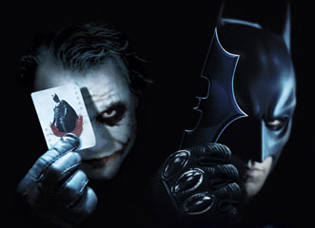
At this point, no one needs to be convinced that they should go see The Dark Knight. Based on its record-breaking numbers, chances are almost everyone with eyeballs and 10 bucks went to see it opening weekend, or gave up when they faced sold out shows and are planning to see it soon. Contributing to those figures was an equally record-breaking level of pre-release buzz, which virtually guaranteed the film’s success. So to give a fair postmortem on the massive Batman weekend, we’ve got a two part ‘review’. First, I take a look at how the latest Batman supersedes the superhero mold. Then, as a counterpoint, a piece from Spencer on how The Dark Knight’s hype weighs down an otherwise great movie.
……….
The White Knight of Superhero Films
By brian
Almost every opinion on superhero movies ends with a qualifier. The default review is always, “It’s really fun if you like that sort of thing“, or “It was great for a comic book movie“. For those of us who do like that sort of thing, it’s assumed we’re willing to put up with schlocky plots and one-dimensional characters in exchange for the awe of seeing our childhood heroes come to life on screen. Even the best of the genre, movies most people would consider good, are still plagued by wooden performances, gaping plot holes, or cheesy dialogue; but they inevitably get a pass because hell, seeing Wolverine claw shit up or Spider Man in full swing are still really enjoyable.
The writing team of Christopher Nolan, his brother Jonathan, and David Goyer all deserve praise for pulling off a heroic feat that no one thought could be achieved — they wrote a comic book movie that could be taken seriously. It didn’t need disclaimers to be called good; it was legit. Then they did the unthinkable and followed it up with a sequel that was even bigger, without letting the inflated budget and anticipation allow them to spit out a lazy, bloated over-production called Batman Begins II: Begin Again. From the moment word leaked that the second film would be simply named The Dark Knight, and didn’t even need to be preceded by a token ‘Batman (colon)…’, they began building the case that they were going to take this as seriously as they had the first time out.
The first installment succeeded by treating Batman as the monster in a horror movie, with its criminals paralyzed by fear of this strange masked vigilante, but Bruce Wayne’s alter ego never crossed the line into supernatural being. He was just a bad motherfucker. By the second he’s a familiar presence in Gotham. Some of the mystique is gone. He’s even befriended not-yet-Commissioner Gordon, and works alongside the city’s cops and lawyers to clean up the city. In The Dark Knight, he’s gone from monster in the night to a sort of super-spy character, not unlike an Ethan Hunt or James Bond — equipped with the perfect high-tech gear for every situation, trained to handle anything, but exciting because you know underneath it all he’s really just a man pushing himself to the limits. If the first was a monster movie (with a stop off in kung fu film for the origin story), the second is more of an epic crime drama. Most importantly, neither steps so far into fantasy that it no longer feels like a story about real people, instead of just a good comic adaptation.
While Nolan and team do deserve the lion’s share of credit for conceiving this version of the Batman universe, what makes it work is the outstanding cast of actors they pulled together. None of them treated this as a laughable gig between serious acting jobs. They all interpret their timeless characters in a totally human way, and do a perfect job of making those characters convincing.
For better or worse, a lot of this film belongs to Gotham’s civil servants, and both avoid falling into caricature. Gary Oldman’s take on Jim Gordon is more vulnerable than the tough, grumbling comic book version, and his uneasy courage is likely the second best performance of the film. His moments of obvious anxiety or hesitation make his heroic ones that much more impressive. Aaron Eckhart was a stellar choice for Harvey Dent, and not just because his spectacular chin fits Two Face’s profile as drawn. His confident all-American charm fits perfectly with a man who finds himself suddenly thrust into the role of savior, and his wild streak comes out in force when that dream is shattered. Dent thinks he might be able to save the world, yet still carries a lucky coin to depend on; Gordon worries he won’t be able to save anything, but steps up when the time comes. Both actors let their flaws come through just enough to feel genuine, and not like the transparent plot devices of pulp magazines.
Christian Bale’s performance continues to improve as he settles into not just two but three characters; the intimidating Batman, the outlandish Bruce Wayne of the public eye (with shades of his brilliant Patrick Bateman from American Psycho), and the private Bruce of cold, single-minded determination. Michael Caine and Morgan Freeman keep up their warmth as the two men he can count on for support and guidance through all his turmoil, and even those smaller parts have weight, grounding the hero in the consequences of reality.
And then there’s the Joker. Say what you will about Heath Ledger — I may have doubted him myself at one point, his first two works that spring to mind being 10 Things I Hate About You and Lords of Dogtown, having never seen Brokeback Mountain. But from the instant you see his mangled face and hear his impish voice, every shred of doubt is replaced with respect. That Ledger not just nails, but personally reinvents one of the most iconic ‘bad guys’ of all time, with the conviction that he does, will be this film’s memorable achievement, recent events notwithstanding. His character is not a super-villain of children’s stories. He doesn’t have any evil magical abilities as a result of some experiment gone awry. We don’t even know where he comes from. All we know is that he’s pure psychotic. But this is where Ledger pulls a coup where Nicholson as the Joker — or much worse, Carrey as the Riddler — never did. This Joker is totally unhinged without ever being over the top, and it’s downright disturbing. This is plotting, scheming madness of the Hannibal Lecter variety, dressed up in messy clown paints. The fact that they’ll sell action figures of this character to kids is troubling. And it’s the central antagonist’s ability to disturb on an emotional level, not just fill the role of crazy, cartoonish foil, that seals the whole movie as genuinely powerful.
The movie isn’t perfect, and it’s important to recognize that in the face of all the attention it’s getting. Gyllenhaal added very little to the film, the balance between Batman/Joker/Dent could have been better, and there were awkward lines or brow-furrowing moments that showed chinks in the armor. Ledger may very well deserve an Oscar — I would say Oldman deserves at least a nod for supporting — but putting this among the best films of all time is a bit premature. However, the fact that such a discussion even comes up, especially compared to the other superhero films of this generation, shows that this group has accomplished something seriously impressive. They’ve proved that you can make a serious film out of comic book material, and when it all comes together this well, it’s destined to be a classic.
……….
The Dark Hype
By spencer
Not to be the Grinch Who Ruined A Historic Hollywood Moment, but I’m going to come out and say it: The Dark Knight is over-hyped. Wildly over-hyped. I feel a little dumb bitching about this, because I contributed to it. Here’s my Netflix review from March 17, 2008, which appears to be exactly four months before I even saw the movie: “Why bother seeing this before I give my review? Five stars.”
Don’t get me wrong, I really liked The Dark Knight, and it deserves all of its financial success. Also, I have loved seeing it take that goofy shitstorm Spider-Man 3 off the record books. But its critical success has been wildly overstated. No movie could ever live up to the reviews that have been written and the hype that has been generated for this one, which ends up really reducing the impact of the film when you compare the final result to your expectations.
For example, as of the writing of this article on July 21, it stands at the top of the IMDB as the best movie ever. So let’s look at a few movies that it’s implied The Dark Knight is better than. The Godfather; The Good, The Bad, and The Ugly; One Flew Over The Cuckoo’s Nest; Star Wars; Raiders of the Lost Ark; Casablanca; City of God; The Silence Of The Lambs. I don’t even think I broke the top #30 with anything from that list, but it shows just how distorted this whole phenomenon really is.
Quickly scanning the list myself, I would probably place it at #130; sandwiched between Woody Allen’s brilliant Annie Hall at #129, which it’s not as good as, but ahead of The Bourne Ultimatum at #130, which it’s far superior to. And about thirty slots lower on the list than its predecessor, Batman Begins, which I personally found to be a better movie. That was the true example of learning what Nolan was capable of doing with the Batman franchise; his inventiveness in recreating the origin story, his willingness to deviate from the comic books when he saw opportunities to improve upon them, and his in-depth characterization of Bruce Wayne culminated in a movie that towered far above the quality of past Batman entries. It was shockingly impressive.
The fawning over The Dark Knight and Iron Man has really only illustrated one thing about movie critics: how far downward they adjust their expectations when they’re seeing a “comic book movie”. But guess what? Christopher Nolan is one of the best directors alive. As a critic, you know that the studio gave him several years and $185 million dollars. If you don’t know whether to expect something with quality comparable to a) The Prestige or b) Batman and Robin, well, Nolan’s probably going to create something more along the lines of critical fave The Prestige, as opposed to the failure of Batman and Robin. If you judge what you see based on expecting Batman and Robin, you’re going to wildly overstate the case in the film’s favor.
Now that my expectations have been readjusted, I am looking forward to seeing The Dark Knight again. I love a lot of the choices (masking The Joker’s origins, the wealth of screen-time given to Gary Oldman as Jim Gordon, the bravura opening sequence) and disagree with others (the amount of time spent on the Two Face storyline, the relative lack of time given to Batman and the Joker, the decision made by Batman at the end). But I did learn why you need to bother seeing a movie before giving it your review. Four stars.
3 commentsreading
 Fan Fiction: John Darnielle Mixes Crit with Lit
Imagine the singer from your favorite band decided one day he was going to write a book. Would you read it? We’re not talking an autobiography about their life as the singer of your favorite band; lots of fans would want to read that. This is a songwriter one day deciding to write a novel, which would generally sound like a pretty bad idea, if only because it’d be overextending themselves. Even Jordan realized he wasn’t meant to play pro baseball.
Most lyricists, though capable of writing killer pop songs, exist in a grey area between poetry and literature. A vast plain that encompasses forlorn love letters, rock and roll manifestos, protest chants, introspective journal entries, and surrealist word association. Often they paint a scene or a situation and sing about how that moment feels. But can you imagine trying to understand the plot of a Beck paperback, or the character progression of a Slanted & Enchanted novelization? Jack White’s story of drunken southern heartbreak might be a rollicking good time, but the prose would be muddy and derivative. Thom Yorke’s tale of modern dystopia would probably be interesting but incomprehensible, and then you’d have to pretend that you ‘got it’ around your artsy friends. Which is all fine; these people are who they are because they’re good at writing songs. Even the ones who do approach storytelling in their music rarely leave you feeling like you want to know what happens next.
Not so with the Mountain Goats’ John Darnielle. His songs often feel like short stories waiting to be filled out with details. He even has recurring characters that span multiple albums. Yes, the music on his recent, more studio-polished albums is increasingly key to setting the tone and creating a fuller sound. Look back to his earlier lo-fi guitar recordings though, and they give the impression that the music was a means to an end for the narrative. Maybe I’m being kind, since I own more Mountain Goats albums than any other band — which is easy; there are over a dozen — but I’d say John Darnielle is unlike other songwriters in that he’s always had a book in him. Volumes of books even.
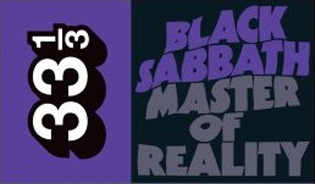
So as a fan of his songwriting, I was naturally excited to hear he was going to flex his typing fingers on some fiction. The real surprise was finding out his book debut would be coming as an entry into the 33 1/3 series. Generally known for in-depth analysis of classic albums from rock critics and insiders, there’s no doubt Darnielle could have done an admirable job with their traditional approach; he already writes intelligently about music on his site Last Plane to Jakarta. Who would’ve guessed he’d tackle the Black Sabbath album Master of Reality in the form of a novella, composed of diary entries from the perspective of an institutionalized teenage metal fan? I’d never seen anything quite like it and couldn’t wait to check it out.
……….
I’ll admit it, I’d never heard the album, or at least really listened to it, until getting it along with the book. So I sat down to read its 100 pages one weekend with the CD on repeat. I soaked it up while the main character, Roger, describes looking up to Ozzy and his band for being “people like us…Maybe every other band in the world has more brains and deeper meaning, but only Black Sabbath sounds like exactly what my friends and I might have done if we’d had the equipment.” I skipped backward or forward to re-listen to songs as Roger sits alone in his room, picking them apart, trying to figure them out, and pondered each track while he proudly explains how it fits his life, his attitude toward the world, and his fucked up situation. By the end, I wished someone would write a book like this for every album.
The reason it’s so effective isn’t because it the most outstanding story you’ve ever read. Roger’s difficulties and depression aren’t radically different than lots of kids’ problems, or lots of adults’ for that matter, his circumstances are just more extreme. This book work harder than most things written about music with how genuine it is. Darnielle’s method mostly skips over comparisons, influences, process, or any of the trivia you might get from another 100-pages on a single album, and cuts right to the heart of the fan. He exposes what the music means to the people who love it.
By telling a story instead of simply writing criticism, he lets us see the music through the eyes of someone who has a deep emotional connection to it. To that person, the music isn’t just guitars and drums and words, but the soundtrack to their life, and the voice of someone who understands. Seeing the role it plays in their lives is especially helpful in understanding the power of something you wouldn’t relate to otherwise, or even necessarily enjoy. For latecomers to the Sabbath party, it’s much more enlightening and rewarding to read than interviews and liner notes, and for the duration I found myself convinced, like Roger, that this album fucking rules.
……….
If this were solely a book review, I would have stopped right there. Darnielle tried something different in music criticism, and it worked insofar as it did something unique and effective, even if there were trade-offs. But then, several weeks after reading the book, I also happened to get to see a reading he did at Book Soup in Hollywood.
[Quick side story: For a seven o’clock reading, I arrived almost exactly on time, to find the room completely empty save for one older, roadie-looking gentleman who assured me I was in the right place. I suspected he was more into Sabbath than the Mountain Goats. But as minutes passed and Mr. Darnielle came in with an employee to prepare, I had a moment of terror — what if no one shows up? It could be a golden opportunity to sit down and have a personal chat with a favorite musician, but that’s a lot of pressure. On the other hand, this guy sells out respectable music venues every time he comes to LA, so would it be too embarrassing and awkward for him to even stay? Does anyone want to be there to see one of their heroes absolutely flopping? I considered bolting, but luckily postponing for half an hour allowed the room to fill out comfortably. As usual, I should have known that in Los Angeles, ‘on time’ is actually ‘uncomfortably early’.]
A friend recently asked me what the point is in going to book readings if you’ve already read the book, and the obvious answer is just to see someone you admire in person. But what’s most interesting is finding out what sections they choose to read, and the way they read them. Although you could argue great writing shouldn’t need a live reading to ‘get it right’, hearing the words delivered exactly as the author imagined as they were writing does bring you that much closer to the story.
In this case, Darnielle’s selections were less about the music, and more about the intense personal story of the character he’d created — which, he interjected, he briefly considered naming after himself. His reading was very urgent, almost stream of consciousness, and it was apparent that he identified very strongly with his protagonist. Listening to his version, Roger’s pain felt sharper and his frustration more tragic.
Afterward, he also read an excerpt from a new book he’s working on, though he warned us he’d already decided to cut that selection in favor of a better idea. He’d hinted at the new project on his site and in some recent interviews, remarking that he wanted to tell another story about these kind of kids, who often get unfairly grouped together as the same for being metal fans. I won’t go into details he obviously doesn’t see fit to print, but the handful of typed pages dealt with issues that were troubling and hard to swallow in a very honest way, and had the potential to be a another great read.
I included all this not because I wanted to review his reading in addition to his book, but because the reading sparked some new ideas about the book itself. I realized as he read certain entries in the diary — the ones having very little to do with the album — that although the book works great as a 33 1/3 entry, and as a fresh way to write about music, when it comes down to it the story is the central driver. Instead of a book that makes Master of Reality so real to someone who’d never heard it before, he could have feasibly written about another album, from another metal band, and accomplished just as much.
It’s possible that a short novel wasn’t just a creative way to do criticism; criticism was an excuse to write a short novel. Perhaps he saw it as an opportunity to test the waters, starting with one foot still in the music writing world, before jumping fully into outright fiction. Based on the book, his reading, as well as his enormous body of music, he obviously has a strong kinship with the quote/unquote ‘troubled’ youth character, and hasn’t forgotten what it feels like to be that person. Some of his best songs have come out of that familiarity. We’ve got a fascinating piece of hybrid music criticism out of it. And if he’s so brimming with stories that he goes on to write a successful full-length novel to boot, this might only be the start of those many volumes finally tumbling onto our shelves.
……….
A few notes:
For more on the book and writing, this Nerve interview is highly recommended.
Also check out the Hipster Book Club for a review as well as an interview by Kyle, whom I have seen a Mountain Goats secret show with and am jealous of for getting to talk to the man himself.
Leave a comment
side notes
 ‘Blood’ and ‘Kill’ Fill in at HBO
It’s good to see that the reigning champs of non-crappy television over at HBO aren’t going to give up easily just because their big hits likeThe Sopranos, The Wire and Deadwood have all been laid to rest.
Though word of its existence went around a while back, there wasn’t much information available about their new fall show, True Blood. All we had to go on was that it’s a series about modern day vampires from Alan Ball, the creator of Six Feet Under.
In the past few weeks, ads for a synthetic blood substitute drink called Tru Blood have started appearing in magazines, on outdoor posters and online as a teaser campaign for the show, finally giving some hints as to what the show’s about. I first saw one in Entertainment Weekly before spotting them on bus shelters around town, so it’s good to see there’s going to be a strong push for this show; that usually means they think it’s worth watching, right?
Building around the hypothetical situation of vampires living openly among us — now that midnight snacks don’t necessitate murder — could be an interesting premise. Going the subtle route by advertising the fictional product rather than slapping famous faces on a poster also shows some class, and gets points for mystique.
However, following the link to their site brings up a fake blog called Blood Copy that “chronicles the amazing days we live in as vampires attempt to integrate with humans”, full of cheaply produced fake news stories and video clips, which was obviously farmed out to a viral marketing company. It’s your basic, ‘Oh man, is it really real?’ set up that’s more embarrassing than mysterious, and threatens to turn off anyone who may have been interested enough in the show to surf that far. See for yourself.
Taken together, it’s hard to tell which side of the fence this will fall on. The blog and its cheesy videos, which are badly filmed and acted, give off a B-movie vibe. The series of books the show is based on appear to be of the light/trashy airport paperback variety, which could be another reason to doubt it’ll be anything other than camp.
At the same time, I’m really pulling for this show to be good. Six Feet Under is still my favorite HBO series (blasphemy, I know, but I can explain that in another article), so I want to have faith in Alan Ball here. Ana Pacquin’s set to star, and she’s capable of good things. And although I never got Buffy fever like some people I know, shows like that and Battlestar Galactica have shown you can build a strong series around a fantastical premise if it’s treated the right way, despite the inherent goofiness of monsters or robots. It may even be too soon to pigeonhole it to the realm of fantasy; who knows, the director of American Beauty can find a way to finally make a serious and sensual vampire story without it becoming comical a la Blade or just boring like Interview with a Vampire. Until some sort of real promo trailers show up, it’s all speculation until it airs in September.
……….
To bridge the gap until then, we get an Iraq miniseries from the creators of The Wire, which debuted last night. Although it would be nearly impossible to top the greatness of their previous work, the first episode of Generation Kill was promising. The trick is the tone. It’s not exclusively macho in that first-half-of-Full Metal Jacket way, or bleak and mopey in a Jarhead way. Although it is still very coarse and open about what I can only imagine Marines are like in a war zone, there’s also humor and honest personality; never has a TV show existed where you’ll see so many copies of Hustler while hearing this much racist bravado interspersed with an equal amount of ‘bro”s. And it wouldn’t be a David Simon show without his ability to portray the frustration of real people trying to do a good job under drastic circumstances, with insufficient resources and bureaucratic bullshit getting in the way. I’m sort of amazed it took him this long to get around to the war, frankly. Plus, we finally get more Ziggy Sobotka, which I fully support. His smartass Humvee driver character is the highlight of the series so far.

listening
 Girl Talk – Feed The Animals: The Best Non-Album of the Year
One of the CDs every serious music fan should hear this year isn’t really an album, nor is it really comprised of songs. There are as many reasons to hate it as there are to absolutely love it, but that contradiction is at the center of what makes it valuable — both as a piece of entertainment and as a topic for debate on what music can be.
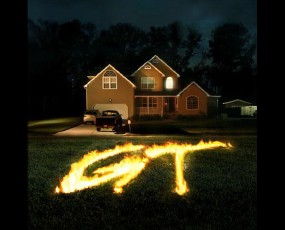
Girl Talk, the sound-scrambling DJ project of Gregg Gillis, takes blending to a whole new level by grabbing hundreds of samples to construct an album-length piece; yet in interviews, insists that he shuns the ‘mash-up’ label, and isn’t a big fan of that style of music. He’s become infamous for his bizarre live shows, at which he tends to yell into a microphone while fiddling with his laptop in varying stages of undress; yet his recorded works’ quickly swinging moods and varying beats per minute verge on undanceable by strict club standards. Then of course there’s the ongoing debate, which any DJ working with samples gets sucked into, over the legal and ethical dilemma of selling music composed almost entirely out of other artists’ recordings.
Let’s set aside all those discussions for now. Whether he’s a thief or not (as I believe); an annoyingly spastic performer or not (as I have yet to find out for myself); those points could be argued all day. Now his fourth and possibly best release, Feed the Animals, has surfaced via a donate-to-download site on Illegal Art — another topic that deserves its own discussion. Here, I’d like to focus entirely on the product itself and what makes it worthwhile.
This is tricky, because most of the standards by which you’d evaluate any other album don’t really apply in this case. Feed the Animals is an hour-long collection of sounds, but that’s about where the similarities end. When we talk about songs on an album someone sat down to write, each piece conveys an idea, creates a mood, or tells a story. On really good albums, all those individual songs add up to a cohesive whole built around a central theme.
Sure, a Girl Talk CD may be broken into tracks, but each one doesn’t necessarily revolve around its own concept; if they’re meant to, with titles like, “Give Me a Beat” and “Hands in the Air”, they’re certainly not trying very hard. When discussing his music, no one would say, “I love that song about _____”. Nor would they be able to explain what Feed the Animals is about versus his last album, Night Ripper. In fact, if you let your iTunes player go unattended, you can barely tell when it transitions from one release to the next.
What Gillis creates instead aren’t albums or songs; they’re essentially collections of musical moments. While it would be tough to find someone who could say “I loved ‘Smash Your Head’ off the last album” with conviction, anyone who heard that album would almost certainly say, “I loved the part where Biggie mixes with ‘Tiny Dancer'”. But that track, like the rest, contains several other samples and parts unrelated to that particularly good moment, so saying that there’s such a thing as a good Girl Talk song is both inaccurate and largely irrelevant.
What he does deliver is an extremely well-constructed musical collage that stimulates several parts of our musical minds at once. There are moments of nostalgia at hearing an old favorite, and surprise at combinations no one else would have thought to make — all meticulously crafted to keep heads nodding throughout the rapid-fire tempo and genre switch-ups. But the most enjoyment may come from simply decoding what exactly you’re hearing before he moves on to the next sample, like playing an audio version of Where’s Waldo? in which spotting the sequin-clad glam rocker or awful 80’s bouffant through the hip-hop bravado feels like winning a game of Name That Tune: Hipster Edition. Putting Feed the Animals on your headphones or car stereo isn’t quite listening to an album, as much as it is participating in something that’s part puzzle and part aural art project.
This is where Girl Talk accomplishes something special in several respects. He shows that meaningful music — music that excites and amuses but also challenges and provokes — can be created entirely from borrowed sounds and the emotions they evoke. Because of the range of samples, he also creates a work that everyone experiences differently, depending on their relationship with his sources. Pitchfork called the Radiohead/Jay-Z moment off Feed the Animals a “miss”, whereas my Thom Yorke-obsessed friend flips her lid during that track. Similarly, around the midpoint of Night Ripper when MIA finds herself suddenly backed by the deep guitar chords of Hum’s “Stars”, I couldn’t believe my ears at hearing one of my favorite 90’s bands popping up in a DJ mix, whereas others probably glossed over those 15 seconds unimpressed. Listening to Girl Talk is interactive in a way other albums aren’t, in how fully your experience is subject to your personal music history.
At the same time, his work is entirely of this moment. Proper enjoyment of Girl Talk depends on both the listener’s familiarity with his sources and openness to combining them. An indie rocker close-minded to rap lyrics would have a hard time digesting this, as would a hip-hop purist. Fortunately, fewer and fewer true music fans fall into either of those camps, so most of his savvy 20-something listeners can see the forest for the trees. But play Feed the Animals for someone a generation above ours, and they’ll likely pass it off as an ADD nightmare, because they haven’t come of age in the era of mash culture we have — I know firsthand, I’ve tried and been told to turn that shit off promptly. Or play it for a high schooler just now growing into their musical tastes, and they’ll lack the references to enjoy the same moments of recognition key to appreciating what’s being done. Girl Talk excels as a chronicle of our particular time in the broader music timeline, which is to say, Gillis’ time.
These are the reasons Girl Talk’s music has value, even if you’re of the mind that these albums are dull, unappealing, disposable, forgettable, overly twitchy or artificial, all of which are valid opinions. As a piece of audio art, they’re really a document of the moment, and a demonstration of the interaction between disparate styles. Some artsy sound engineer could probably construct a totally different collage, which makes the same points about pop music, and elicits the same response. But the fact that a release that’s more art project than album is this listenable, and will almost certainly show up on any credible music critic’s top 50 albums of the year list, is a much bigger accomplishment for one music nerd in Pittsburgh than most people give him credit for.
……….
A couple footnotes:
I did some due diligence to make sure there wasn’t already a review elsewhere that said exactly what I was trying to say here, and it seems I’m in the clear so far.
Tiny Mix Tapes and Culture Bully were probably the two that best covered some of these ideas, and both make good points I didn’t, so check those out too.
I did find a review at listenerd, though, which had a great idea I wish I’d come up with: a Feed The Animals review made out of samples from other reviews.
3 comments Subscribe to Posts
 Subscribe to Podcasts
 Become a Facebook Fan