
side notes
 Bond 2.0, Grand Theft Junot, and Game/Movie Limbo
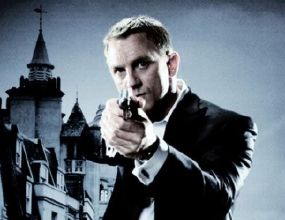
Despite its questionable title, the next James Bond film, Quantum of Solace, now has a trailer at their official site.
It’s fair to say the last Bond movie was the best installment in the last decade or two, taking the series to a tougher, more emotionally mature level while retaining the mystique of the classic secret agent. The sequel breaks further ground by finally acknowledging the existence of a prior Bond story, and specifically a past love interest, instead of getting to start over each time with another guaranteed victory and a fresh vixen to celebrate with. Going from a narrative vacuum to actual continuity could help create the tension that some of the cartoonier installments of the past have lacked, or it could become too much weight for the series to bear. What’s better, a grittier, more real Bond, or a Bond that sticks to the classic formula? Either way, it’s an exciting new era for 007. We’ll find out November 7th.
……….
This week also brought out some serious game criticism from a few unlikely sources.
First, from the winner of the Pulitzer Prize for his novel The Brief Wondrous Life of Oscar Wao, of all people — Junot Diaz takes on Grand Theft Auto IV. And in the Wall Street Journal of all places.
His criticism revolves around the argument that the game is not art the way Scarface or The Godfather are art, or at least ‘high art’. He makes a strong case and calls for a game that does more to expose the human condition in order to earn its place among great works of art.
Successful art tears away the veil and allows you to see the world with lapidary clarity; successful art pulls you apart and puts you back together again, often against your will, and in the process reminds you in a visceral way of your limitations, your vulnerabilities, makes you in effect more human. Does GTA IV do that? Not for me it doesn’t, and heck, I love this damn game.
Also paying extra attention to the game’s failure to live up to great examples of the immigrant story — as is his book, though he doesn’t compare the two directly.
Though it’s hard to counter his points, the article begs the question: Is Grand Theft Auto trying to be The Godfather in the first place? Or is any game? When Michael confronts Fredo over his betrayal, it’s one of the most famously moving scenes in film history, and in the aftermath we see how power led Michael to betray his humanity. It’s potent storytelling.
But when watching a movie, you’re never faced with a choice between pulling the trigger on a heroin-addicted criminal or his crooked cop brother, both of whom you’ve performed contract killings for in the preceding days. Though the game moment doesn’t offer the ‘lapidary clarity’ of the film, it may do the opposite by raising ambiguities we couldn’t imagine facing otherwise. Is that not a form of art in its own right?
……….
Continuing the game vs. film debate, the New York Times’ Seth Schiesel calls out Metal Gear Solid 4 as more of an interactive movie than a video game.
Oddly enough, he still praises it for having sequences better than a lot of action movies, despite lacking the level of interaction that would make it truly great as a game.
This comparison is a little more fair. Speaking in terms of visceral action instead of dramatic narrative, games are definitely in a position to match or even outdo their film counterparts. However, taking control away from the player neglects a game’s biggest advantage in that race. So if MGS4’s purely non-interactive sections can hold up against a film of equal merit, they’re further painting in the grey area between the two and expanding the bounds of what a game can be. That alone seems like a job well done, even if 30 minute cut scenes aren’t your cup of tea.
2 commentsreading
 Seagalian Dialectics
I’d like to briefly preface this article with criticism of an Internet institution: Ain’t It Cool News. Has any other media outlet ever conveyed such (field-specific) incredible scoops so very, very terribly? Has genuine news ever been so completely surrounded by such transparent “noise”, like favorable reviews obviously written by marketing departments? In the end, one must at least give thanks that founder Harry Knowles chose an aspect of journalism that is so very, very unimportant. If he had been instead, say, either half of Woodward and Bernstein, the world would be like Watchmen and Nixon would be serving his fifteenth term as president. To summarize: I am not so big a fan of Ain’t It Cool News.
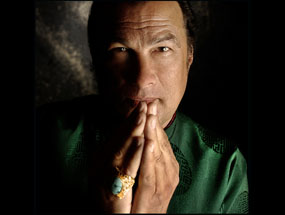
So I approached Seagalogy: A Study Of The Ass-Kicking Films of Steven Seagal, written by frequently featured Ain’t It Cool reviewer Vern, with a little trepidation. On the one hand, it is a critical analysis of the life and films of Steven Seagal. On the other hand, it is a critical analysis of the life and films of Steven Seagal. And if you recognized that the sentences above were not only a joke, but also reflect a certain unique quality about Seagal’s flicks, then you, like myself, have probably dedicated a little bit more attention to this douche of a bag than he probably deserves.
But it’s not our fault; Seagal is oddly intriguing. Nay, fascinating. The other big three action stars of the 80’s spat out their cheesy one-liners through slack-jawed caverns that seemed to barely have a passing acquaintance with the English language (including Stallone, who was an actual native speaker). While Seagal spoke clearly, his actual content was so baffling that it inspired disbelief.
The differences between their fighting styles were noticeable as well. Out of the Big 4 (Schwarzanegger, Stallone, Van Damme, and Seagal), Seagal was probably the deadliest in reality. But instead of solely focusing on the bone-shattering, eye-gouging, awesome portion of aikido, Seagal prefaced it with a lot of slapping, redirecting henchmen towards obstacles as they ran at him, etc. In short, his fighting style was basically half 3 Stooges short, half autopsy video. The rest of the action heroes, living in Reagan’s 80’s, observed the Second Amendment and just murdered people with guns. Expedient, efficient, oversized guns.
So, to contrast the two formulas, a typical Schwarzanegger movie would feature him blowing up a city block with a bazooka to kill one man, and then making some dumb pun. Which is kind of a hilariously disrespectful way to commemorate the taking of something as sacred as a human life. “Well, I know I just committed murder, but I really couldn’t pass up a succulent bon mot like ‘Happy Landings!’ I impaled him on the antenna of an aircraft carrier, for Christ’s sake!”
In contrast, Seagal would basically slap someone until their elbow popped out of its socket, and as they writhed in pain on the ground, he would serenely spit out a Zen koan. Which the victim would sometimes correctly counterpoint! It was basically like they were alternating reading Michael Gira lyrics, and the first time you saw it happen, it was probably the most nondiegetic bullshit you’d ever seen outside of a Leslie Nielsen film. Check out 4:30 into a clip from On Deadly Ground for a classic example of this nonsense.
And far more explosive and exciting than his fairly generic action movies was Seagal’s personal life. It was out of control. He pretended to be in the CIA, opened the first aikido dojo in Japan, bodyguarded a bunch of celebrities, got entangled with the Mafia, created an energy drink that tastes like NyQuil, got too fat and unconvincing to have his movies released in theaters and starred in a million poorly dubbed direct-to-video features, broke Sean Connery’s wrist during training, started up a blues career, became an aikido legend without ever fighting in any tournament of record, seduced anything within a ten mile radius, and wrote a script that he claimed was so beautiful that he couldn’t help but cry while he read it. It was about the CIA creating and distributing the AIDS virus. A Steven Seagal biopic stands a great chance of being the first legitimately good movie featuring his involvement in any aspect.
The book Seagalogy recognizes all this, and has been written to walk the tightrope between appreciation and humiliation; to have its cake and eat it too. It juxtaposes the politics of the Iran Contra with breakdowns of corny one-liners like “I’m gonna take you to the bank, Senator Trent…THE BLOOD BANK”. Descriptions of how Seagal circumvents traditional auteur theory perform hand-to-hand combat with ponytail jokes.
This book is a deeply researched work of criticism about the films of Steven Seagal that simultaneously observes how fucking stupid it is to create such a book. It is genius-ly dumb. Reading Seagalogy is akin to watching The Colbert Report; where you can’t help but feel excited to experience the tightrope-walk art of satire. Seagalogy puts untold amounts of effort into understanding films that were created haphazardly and designed to be as disposable as possible (particularly in the later, solely direct-to-video half of Mr. Seagal’s career).
In fact, the book’s salient characteristic is probably how much more enjoyable it is to read Vern’s analyses than to actually watch the movies being described. Take, for example, DTV release Out for a Kill, a mind-numbing excursion that currently ranks as Seagal’s 3rd least popular film on imdb.com. The movie features Seagal, rather plausibly, as a former thief of priceless Chinese jewels and artifacts who is caught, imprisoned, released, and then becomes the most distinguished professor at Yale. Although that ridiculous backstory alone would make an interesting movie, it receives short shrift; instead, the “gwilo professor” runs into an international drug smuggling ring sponsored by the Chinese Triad, shoddy wirework ensues, etc. etc. etc.
Due to its low score on IMDB and a penchant for cinemasochism [cinemasochism (n.): the desire to watch the worst movies possible as a form of entertainment], I saw this two years ago with some friends. The movie is 90 minutes long and right before the shamelessly-telegraphed climactic end battle, approximately 86 minutes into it, one friend simply got up and walked out. “Why are you leaving?” I called out, “There’s only, like, two minutes left.” “Because,” he replied, “life is too short.”
He was right. I watch a lot of terrible movies, most of which I forget pretty quickly, but Out for a Kill stood out (for a kill). So how does reading about it in Seagalogy compare?
Well, it’s awesome. Here’s a selected passage regarding the pilot who flies Seagal out to his archaeological dig:
He explains that his nickname “Crash” comes from the fact that he never has. Now, wait a minute. Is this guy telling us it is unusual for a pilot to never crash? That it is a trait so unique to him that it becomes his handle? If so, I’m never flying again. If not, shouldn’t most pilots be nicknamed Crash?
Or:
One surprisingly artful scene is the one where his house blows up with his wife inside.
The study of this terrible movie is filled with such greatness. One particularly excellent observation/digression is how the movie informs the viewer of the scene’s geographic location by rolling out computer text, accompanied by the “chooka-chooka” movie computer noise. Vern notes that no computers actually make this noise, the only reason we even associate this noise with computers is because they use the same sound in every movie, and that the only reason the noise is used is to make movies less relatable to humans, most of whom use real computers on an everyday basis. Then he points out that on the DVD release the text is not on-screen, but instead utilizes your DVD player’s subtitle function. The net result? You hear chooka-chooka but the text rolls out instantly in a generic, italicized, non-computer font. Brilliant!
This led to my current hypothesis: every Seagal film is better to read about than to actually watch. To test this, I’ve been using my Netflix account to rent his old movies. I have yet to find an instance where the analysis is not better than the film, with the possible exception of On Deadly Ground, because, let’s face it: if most of Seagal’s catalog is from Mars, that one is from Venus. But other than that, I’ll take Seagalogy over the source material every time, and encourage even non-Seagal fans to flip through a section if they see this at Barnes & Noble.
In closing, if I sound overly enthusiastic about this book, it’s probably because I am. And that’s because that is the point. Seagalogy is a celebration of trash, a monument to failure. Seagal’s movies have generated $850 million at the global box office; that’s an incredible amount of success, but most of us view Seagal as a joke (and a damn funny one at that). In the end, what Seagal does better than anyone, and what this book both matches and captures so astutely, is this: he consistently makes movies that suck so bad that they loop back around and become awesome. His successes, shortcomings, eccentricities, and cinematic je ne sais quoi have been given a tribute that matches them tonally while standing head and shoulders above them with regards to quality.
3 commentsplaying
 Cloned Wars: How Mass Effect Outdoes Its Influences
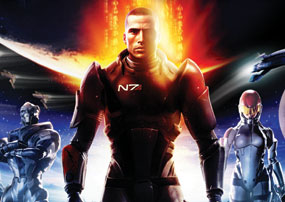
There’s no denying Mass Effect has several flaws that might send lesser sci-fi geeks back to the waiting arms of their darling Master Chief. Your character starts without the ass-kicking powers necessary to make up for unnatural controls, so you begin feeling decidedly unheroic by action game standards. During cutscenes intended to be cinematic, it takes several seconds for the smooth hazy forms of each character to realize they should in fact have things like detail and texture. And maybe at some point a play tester should have mentioned what an enormous pain it is to manage the truckloads of often useless bounty you inherit from your vaporized enemies.
These generally amount to only minor annoyances, which anyone who pushed through into the game’s meatier offerings learned to forgive. However, the biggest complaint that could be raised by anyone looking for an excuse to pass on this title is its obvious derivation from popular science fiction franchises. Take a Jabba-sized pile of Star Wars, with its band of renegades out to save the universe from an evil force bent on domination. Glaze with a healthy coat of Battlestar Galactica‘s xenophobic panic over the rise of sentient machines. Then just to throw the Star Trek kids a bone, make the base of operations the coolest ship in the fleet, with maybe a side plot where you get to hook up with a sexy alien as the cherry on top.
If it doesn’t sound groundbreaking, that’s because it isn’t. But it is exactly the game I wanted it to be.
……….
I’ve loved Star Wars ever since I was old enough to work a VCR — like most nerds, audio-visual forces were strong with this one — and imagined myself a young Jedi throughout childhood. As my thumbs acclimated themselves to the glorious world of games, I eagerly scooped up any chance to interact with that galaxy far, far away. The problem being, they were all terrible. A half-hearted attempt to recreate the magic of taking down AT-AT walkers on the Atari was bland. A noble effort at Episode IV on the NES was too hard for a novice such as myself to even get to the good parts in the era before game saves. The closest to filling the hole were the TIE fighter and X-wing PC games, but even those were missing something huge: you’re not the real hero. You’re some guy involved in a minor battle taking place before or between the real saga playing out in the movies.
At some point — presumably after Dark Forces, where you’re dropped into Doom with Stormtroopers and expected to be grateful — it wasn’t worth trying anymore. No Star Wars game was going to satisfy that desire to step into the knee-high moccasins of Luke Skywalker or don the dashing vest of Han Solo.
Then Knights of the Old Republic came along and offered a new hope, if you will. This group of serious geeks at Bioware, a studio famous for making PC games based on D&D rules, were making a totally original role-playing game set in the Star Wars universe? This could be something. Unfortunately for me, that game slipped through the cracks of Grand Theft Auto‘s streets and Tony Hawk‘s sidewalks, but it was a crucial step toward the game I’d been waiting for.
……….
As it turns out, it took a game maker to do what I’d done — steep themselves in the Star Wars universe, and then consciously walk away from it — to create the best case scenario. Mass Effect essentially goes back to the blueprint stage of it’s source material instead of trying to recreate the final product, and in doing so delivers the perfect blend of fresh and familiar.
The beauty is that it’s enough like the original material to satisfy all the same urges, without having to dance around the continuity of an existing universe or relegate you to a bit player on the galactic stage. Within the familiar framework of a space drama, you finally get to be the real hero. Even better, your actions as hero actually affect how the story unfolds, allowing for the added excitement of not knowing what happens next.
First and foremost, Mass Effect is definitely a role-playing game. The action gets more and more fun the farther you develop your character, but there is enough dialogue to choke a bantha, and that means plenty of time standing around listening to people talk, then choosing the manner of your response. If you find that idea boring, you’re really missing the point of this game. Putting it back in terms of the movies, if mindless action is what you’re after, the prequels weren’t that bad either. The second trilogy disappointed so many people, even those like me who don’t actively hate them, not for a lack of blaster vs light sabre showdowns. Where the first trilogy excelled so much was for having dialogue and characterization between the big battles that didn’t cause physical pain, but actually endeared you to its cast. The conversations were as enjoyable as the combat. Similarly, the choose-your-own adventure interactions in Mass Effect are as much a part of its success as the joy of using your force powers to catapult villains into the void. Playing it as a strictly action game is unsatisfying, because its real strength is as a sci-fi role-playing template.
Star Wars characters are nothing if not archetypes, and so picking one and sticking with it makes role-playing a real part of the game, even challenging at times. Applying a ‘What would Luke do?’ filter to each situation makes you think about your characters and the dilemmas they face. Even though the conversations are less like an action game and more like an interactive movie, feeling for yourself how hard it is to be purely good or unflinchingly evil makes for the most memorable moments. Seeing the outcome of each decision, and living with it afterward, gives the repercussions of your actions emotional weight. Even if no matter what happens, you still end up saving the day, how you get there can feel very different, and it’s that level of involvement that no officially licensed Star Wars offshoot game has ever come close to delivering.
For example, I chose to play through once as a Han Solo type: a roguish tough guy who was basically good, but greedy and willing to intimidate or kill when it came down to it (and yes, he also beds the sexy alien). But helping people just for the sake of more money and experience points I could use to beef up my abilities — the “I don’t know, I can imagine pretty much” version — turned out to be a lot of work. And I took a lot of crap from my in-game superiors for what, I thought, was doing the right thing. Then I later went through as a young Darth Vader type: someone corrupted by his power, thinking he was working toward a greater good even if it meant committing obviously evil acts along the way. The second time I found I had an easier time in key parts of the game because being a dick just got the job done faster. At the same time, it cost the life of my favorite supporting character. Once that happened there was no turning back; the guilt just made me more committed to my evil ways. This is why I’m glad I’m not actually a superpowered space soldier.
……….
Not only does the game allow the chance to live out the childhood fantasy character of your choice, but the themes are all so spot on it’s like they had this exact goal in mind when they built it. Sure, there are a wealth of great details unique to the game, so there’s never a sense you’re playing Wars of the Star Variety. But all the classics are there. A galaxy divided into factions that don’t trust each other, worried about a takeover that can only be prevented with the help of a small force aboard the fastest ship in the galaxy. You have a crew that includes such members as, ‘the one who’s good at computer stuff’, ‘the big guy everyone’s scared of’, and ‘the female that creates tension’ — sorry, no gay robot (sequel?). Major plot points involve meeting people in bars. There are giant monsters people keep, almost like pets, that you must vanquish to progress. You hop from planet to planet trying to understand your own powers while your rival slowly loses his grip under a dark influence. There’s even a scene before a big fight where you’re all but told, “Join me, and together we can rule the galaxy as father and son!”
When you put it in laundry list form it starts to sound ridiculous, but the point is that this was done, obviously intentionally, to spark a certain sensibility in a certain kind of person, and set that part of them ablaze with delight. Can you play Mass Effect without a lifetime of fandom to build on? Absolutely, and if you were born with that same set of tastes the original Star Wars fans had twenty-odd years ago, you may be able to understand what all the fuss was about. But the people who will love this the most, a set which probably includes the game makers themselves, aren’t going to be put off by these similarities in any way. They’ve been waiting their whole lives for this.
One day in conversation someone asked whether or not Mass Effect would make a good movie, and I frowned immediately. The surprise was that I could like a game so much and not wish to see it in movie form. I had to explain that the exact reason this game works so well is because it borrows so heavily from cinematic history — all the rich references from prototypical story arc to visual style — puts the slightest twist on it all, then finally lets me play it in a meaningful way. Take that out and you’re just watching a copy of a copy of a copy.
At the end of the day, it turns out I never wanted to play Star Wars in game form. Those are great movies I can watch over and over again, but recreating that magic would be impossible. What is possible is to break down exactly what’s great about what I already love into its base elements, and figure out ways to give it to me again for the first time. God of War did it for kinetic action games. Crackdown gave it a try with superheroes by giving you the best leaping and climbing abilities in ages, despite having nothing resembling a narrative other than ‘kill the bad guys’. GTA IV did it with the open-ended style they themselves perfected. Is it a coincidence everyone loved The Departed because it was like Goodfellas, or buys new Coldplay cds because they sound like old U2 albums? There’s no reason to feel shame for knowing what you like and wanting more of it, which is why I can’t wait for the dramatic reveal in Mass Effect II: The Geth Strike Back.
1 commentside notes
 Dark Knight ‘toons, Coen Bros Goons, and Far Right Buffoons
While the rest of the civilized world is out buying the new Coldplay album, comic book geeks lie in the shadows eagerly awaiting the release of the next Batman film, The Dark Knight. Here in Los Angeles, billboards and bus shelters alternating between the Caped Crusader, his Bat-pod, and the Joker can be spotted roughly every half mile on any major roadway in town.
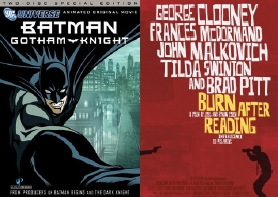
Much less publicized but worth a look will be Batman: Gotham Knight, out Tuesday, July 8th.
Similar to the Animatrix project, which bridged the Matrix movies with a collection of anime short films, this six-film dvd release gives a handful of Japanese animators and American comic writers a crack at Gotham City. Fortunately for bat-fans, one of its producers is the legendary Bruce Timm, who helmed much of the classic Batman: The Animated Series. Not to mention, voice work features that same show’s Kevin Conroy, perhaps the best personification of Bruce Wayne to date. Since that remains one of the best comic book action shows ever created, all signs are pointing to excellent on this one. Should make a fine way to wait out the last ten days before the best movie of the year.
Check out a nice interview with Conroy over here as well.
……….
Possibly less of a sure thing, the next Coen brothers movie, Burn After Reading, has a trailer floating around.
Considering their filmography of Big Lebowski, Miller’s Crossing et al, not to mention last year’s outstanding No Country for Old Men, this will be one to keep an eye on. Though their prior comedies featuring George Clooney may not get as much praise lavished on them, they brought out Clooney’s funniest performances and made for quick-witted and fun movies. And no one will turn down more Frances McDormand after Fargo.
A spy comedy from a team this clever should be a winner. The most interesting part may be the re-pairing of Clooney and Brad Pitt, whose chemistry carried two Ocean’s 11 sequels that otherwise had no business being made. We’ll have to wait and see how their charisma plays out in the Coens’ capable hands, or if winning an Academy Award will go to their heads and this will end up in the same bin as Ladykillers. A little Malkovich never hurts though, and after a spate of serious roles it might be fun to see Pitt play an airhead again.
……….
Finally, just because the combination of desktop publishing tools and political fanaticism do not often mix well, a tale of intolerance gone awry.
Please enjoy a tale of how not to use auto-replace when publishing news stories.
1 commentside notes
 Greetings, Screenings, and Animal Feeding
First off, hello and welcome. If you’re reading this, you’re witnessing the first post to our fledgling site. How you got here, since only a half-dozen people know it exists yet, will remain a mystery.
In addition to full-length articles in the five main sections, which will start showing up soon now that the site is built, we’ll also collect a weekly digest of interesting tidbits for the Side Notes section. Links to articles we find elsewhere worth commenting on, or smaller blurbs that don’t quite merit full-blown articles. This one’ll be short since it’s just Monday and we’re just getting started.
……….
Most exciting for this week is the LA Film festival. For regular non-industry people this isn’t the wild transformative force of the Sundance variety, but it does mean a chance to see a couple cool movies before the rest of the country — though last year my girlfriend did brush up against Steve Buscemi going into his movie Interview, which some might consider transformative.
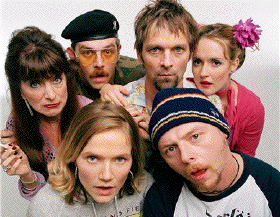
Although it’s a bit of a shame to have missed Friday’s Swear-a-long Scarface (featuring 226 F-bombs) and the live Cinematic Titanic show (featuring MST3K alums) Saturday, all is not lost. We will be representing at the Monday screening of the new Palahniuk adaptation, Choke, as well as the long-awaited arrival of UK cult hit Spaced on Tuesday, coinciding with the overdue American DVD release. Maybe this year, someone I know will trip over Edgar Wright.
With the number of people claiming both of these things to be absolute must-sees, it should be a fun few days. Unfortunately, these shows are both sold out, so it’s too late to invite you to join. However, you may see longer articles here if either turns out to be as good as their respective buzz.
……….
Last week also saw the release of the new Girl Talk album, Feed the Animals, via the increasingly sensible and cred-building pay what you like for download method. Does anyone else find they’re more likely to pay for music this way than pirate it? Cheapskate or no, this one’s definitely worth checking out and likely to be discussed further in a full article soon.
Leave a commentwatching
 Don’t Fear the Cloverfield
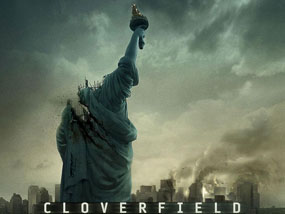
I wondered aloud to my girlfriend on the way home if this film was conceived before the fall of 2001 and postponed due to sensitivity, or in the years since, now that an acceptable distance has grown between that terrifying incident and the present in which this film occurs. A quick wikipedia check seems to suggest the latter, as well as including a summary of what various critics thought of the comparisons between this monster movie and those monstrous realities.
If you ask me, anyone who uses the parallels in plot and imagery as an excuse to dismiss this movie is missing the point, because this movie isn’t about ‘a horrible thing that happens to some poor New Yorkers, that sorta resembles real events’. That would have been in poor taste, and yes, cheap.
What this is, is a movie about fear, plain and simple. The current world climate of anxiety feeding into it is merely a symptom of the times; it’s only one factor that contributes to the overwhelming, confusing state of pure terror these characters find themselves in.
Through a well-executed handheld style that embodies that confusion, you’re sucked right into this emotional rollercoaster for 90 minutes of nail-biting and breath-holding. The building moments of ‘What’s happening here?’ uneasiness turn into ‘Oh my God this is bad’ grief and sadness. The ‘What the fuck do we do now?’ uncertainty slowly becomes a ‘This is crazy but I have to get through this’ intensity.
Seeing — or in most cases, barely glimpsing or only seeing once it’s too late — exactly what you’d see if you were trapped as they are by the circumstances serves to translate the fear better than any monster or horror movie since the blinking dot snuck up on that unfortunate Alien crew member. I left this movie literally exhausted and shaky from how much I felt every brutal beat of this story in my own body.
The obvious Blair Witch comparison both helps and hurts this movie; I’ll admit to really liking that film as well for pulling me in and truly scaring me. But I’d describe that as an experiment in unsettling creepiness, the fear of the unknown. Here, it becomes clear very quickly that what you’re afraid of — what you’re running from, hiding from, fighting off successfully or unsuccessfully — is right there, in your face, and real no matter how much you wish it was a nightmare. As far as telling a full and satisfying story, this film far surpasses its predecessor.
A real credit goes to the people behind this project. A monster movie from the perspective of the man on the street running in terror was a brilliant concept that they pulled off impressively when it could have been a disappointment. A genre so full of predictably ‘unpredictable’ scare moments or token gore is given a refreshing jolt of real emotion. And even the monster itself is new and interesting.
One word to the wise though. If you leave the theatre right after this movie and go up to the parking garage, as we did, watch out for an oncoming car driving over some metal grating and making a loud THUMP THUMP noise as it passes; you might almost shit your pants and look around you for explosions. The movie’s that good.
Leave a comment Subscribe to Posts
 Subscribe to Podcasts
 Become a Facebook Fan