
side notes
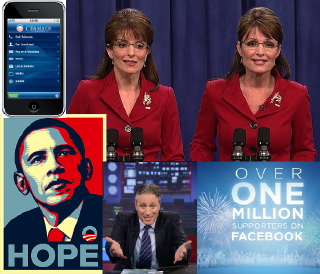 Elected in Style: How Pop Culture Rocked the Vote
Having been politically aware for only a few presidential cycles in my less than three decades of life, I may not be the best qualified to make grand claims on why this year’s election turned out the way it did. Doris Kearns Goodwin I am not. But an interesting theory did occur to me in the last few months regarding the Obama Phenomenon (Obamenon? Phenomobama? The next four years are going to be delightfully punny, that I can say for sure), a thought that crystallized further every passing week. Part of me wanted to write about it in the final days leading up to November 4th, when our democratic juices were flowing at their height and all anyone could talk about was the pending decision. A bigger part was too busy devouring every news or blog story possible as if, it could be said, my future depended on it. Of course, there was also an admitted bit of superstition that congratulating ourselves a week early was probably not a good idea. So instead of a bold election prediction article, how about a fun election post-mortem?
Plenty of dramatic political pieces have already been written — my fellow under culture writer tells me the epic 7-part “Secrets of the 2008 Campaign” in Newsweek is a must-read — so I’ll leave those to the proper authorities. What fascinates me is how this contest went from political pageant to pop culture moment. One could chalk up my sense of the buzz level to having a peer group finally at an age to be informed and responsible enough to care, but that seems only half right. Maturity alone couldn’t have inspired almost everyone around me, some who’d never shown interest in politics during any conversation I’d witnessed, to care for the first time; to donate money, or cell phone minutes, or leisure time; to have strong, informed opinions that provoked passion. This time around it somehow became popular to give a damn, and the resultant increase in participation may have accounted for Obama’s margin of victory.
How did it happen? Three factors may have played a bigger part than they’re given credit for.
……….
Artists
The single image most associated with Barack Obama’s rise from freshman senator to 44th president is undoubtedly the one here. Not a photo taken on the trail, but a piece of art that started as a screen-printed poster and quickly became an icon.
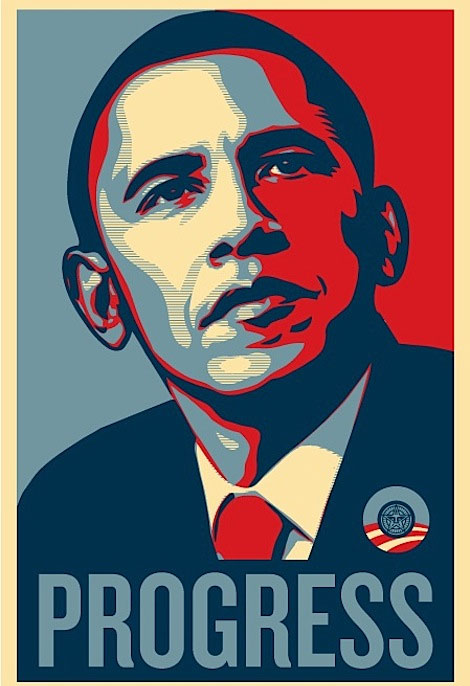 Shepard Fairey launched a career doing provocative, political street art. Going back to interviews from January, when he sold out the initial run in a mere 15 minutes, he was just one of the many inspired by a figure who represented something different. He thought he could show his support with some cool posters and raise a little money for his chosen candidate in the process. But after getting in contact with Obama’s team (and making it more campaign-friendly by removing the Obey logo and changing the caption from ‘Progress’ to ‘Hope’), his little fundraising stunt quickly became the most famous image of the year. Not bad for a guy who rose to fame plastering creepy Andre the Giant images around the city.
We’ve all seen the poster everywhere. We’ve seen giant versions held aloft in the crowd at rallies on television. We’ve seen it on t-shirts, buttons, bumper stickers, magnets, and an awful lot of computer desktops (I’ve kept mine set to this one since January — again with the superstition — but I suppose it’s safe to move on now if it isn’t permanently burned in already). Countless parodies and imitations have sprung from his original piece, enough to guarantee it meme status for years to come.
As a piece of pop art, it accomplished more than ubiquity though. It cleared the hurdle of making a political statement personal, emotional, and even hip. Imagine Fairey had never painted, digitized, and distributed this portrait. If the only campaign materials available to display in windows, on bumpers, or on clothing was the traditional name/year/slogan on a field of blue, the Obama message would not have been nearly as prevalent. The number of stickers, posters, and t-shirts would have been a fraction of what they were with the help of this image. But thanks to this painting, people who never would have stooped to putting a campaign sticker on their car made an exception for one this well-designed. Thousands of shirts (many sold in a cottage industry of sidewalk bootleggers) made it stylish to show support, whether worn by hip-hop fans or hippie activists. It transcended subcultures and conveyed the inspirational appeal of the Obama campaign in a way no classic insignia could possibly have succeeded in doing.
Musicians played their part as well, mainly by amplifying the moving, musical quality of Obama’s own words. Will.i.am’s ‘Yes We Can’ video played on tens of millions of computer screens, turning a great speech into a viral video. Adam Freeland plugged Obama into a Daft Punk mix at Coachella, and DJ Z-trip passed out a free mixtape that sampled heavily from various emotional campaign speeches. Weeks later, a DJ friend of mine did the same, with no knowledge of the previous attempt — anecdotal evidence that something about this candidate was energizing creative minds in every corner of the country.
Not that any of these elements alone had the power to convert voters. What they did do, collectively, was increase the feeling of a building movement. The excitement in the creative class around this inspirational figure, once put into artistic form, became that much easier to spread to others, giving Obama backers more ways to share their enthusiasm with a broader community. I think it’s safe to say it was the enthusiasm that became so infectious — more than a candidate on his own could have hoped to be. The early momentum that continued on into November came not just from a man and his message, but from the swell of artistic passion he sparked along the way.
……….
Technology
Another factor in swaying voters, more intangible than the candidates’ views on any single issue, is an over-arching sense that they ‘get it’. To connect with millions of people watching at home, they need to convey that they’re current on how things work for the rest of us — that they have a handle on today, so they’re capable of leading us into tomorrow. McCain’s priceless slips about not knowing how to email, or calling it “The Google”, didn’t do him any favors in fighting his old fogey reputation. The Obama campaign, on the other hand, went above and beyond in proving their leadership by harnessing technology like no presidential hopeful ever has.
 Howard Dean’s 2000 primary campaign is widely credited as the first to make substantial use of the internet for amassing small donors. Two terms later Obama’s team perfected the art, shattering every record for money gathering. Millions of individuals, some in increments of five or ten dollars, contributed to the movement they saw happening around them and took a stake in this candidacy. Going beyond a portal for donations, the official site was more than a stiff piece of digital literature. It was a living, evolving tool for organizers and supporters, allowing them to stay connected to daily happenings and plan grassroots programs.
Designers fell in love with its clean, easy-to-use layout, web 2.0 boosters swooned over its social media features (designed by Facebook founder/Obama new-media guru Chris Hughes), and marketing observers could not find the words to adequately praise that spectacular logo. Top to bottom, Obama as a brand exuded the well-planned, well-executed actions he hoped to take as a president. More importantly, he showed that he meant to be the first truly 21st century president, reflecting the change he promised in his rhetoric.
It’s the little touches that stand out though. An active presence on Facebook kept millions of ‘fans’ current with the latest news and videos from the trail. In an innovative if somewhat gimmicky move, Obama promised to text message his VP pick to supporters before making the announcement in the news media. Reporters went into a frenzy trying to beat them to the punch. A memorable scene of Senator Biden handing bagels to the cadre of journalists camped out on his front lawn further supported his down-to-earth credentials, and word got out as he boarded a plane to Illinois, forcing a mass text push in the middle of the night. Despite the hiccups in its delivery, that message still gave the campaign a personal touch. Weeks later, they created a free Obama iPhone application, just to show that they were on top of every emerging tech trend. How necessary or useful that was may be debatable, but it conveyed a leader who planned to use technology to stay connected to the people who voted for him, and more importantly, one who understood the role technology would play in solving the nation’s problems.
A New York Times article during the primary season pegged Obama and Clinton as Mac and PC, respectively — conveniently glossing over that McCain was probably the Remington typewriter in the equation — and the characterization is probably most apt when looking at youth appeal. Where Macs have become the preferred choice among college students, nowhere does tech savvy gain a candidate more points than the plugged-in generation most apt to receive his Facebook updates or download his iPhone app. The research shows how strongly the social networkers turned out on election day, too.
Their unified support for Barack Obama combined with their high turnout made the Millennial Generation the decisive force in his victory. Young voters accounted for about seven million of Obama’s almost nine million national popular vote margin over John McCain. Had young people not voted, Obama would have led McCain by only about 1.5 percentage points instead of seven.
So while it doesn’t hurt that younger voters tend to identify Democrat by a nearly 2:1 margin, the fact that this year’s Democrat made a particularly good showing in their native digital haunts only cemented their conviction that he was the right choice for them. Compounded further by the tools that made it so easy to donate, discuss, register, volunteer, and vote (early or not), it’s no wonder that the higher tech candidate edged out the one who doesn’t understand email (or the VP who conducted secret business via a free Yahoo account).
……….
Comedy
Although the ways in which Youtube has changed elections could have its own entire section, nowhere was it more effective than as a lampooning tool. In an age where everything is videotaped, forever archived and accessible as reference, watchdogs have a much easier time pointing out spin and hypocrisy. Politicians have to be more careful than ever about flip-flopping or flubbing a line, because once it’s out there, it’s ripe for parody.
The Daily Show has become increasingly dependent on archival video to make its jokes, cutting from present day talking heads to their own counterarguments from the past. This season they used it to devastating effect, with a staff to do the legwork so we don’t have to. With good editing and access to limitless hours of speeches and interviews, they’ve become more than a comedy show, but a sort of Spin Police, keeping the bloviators honest — or at least, being right there to point and snicker every time they’re not. (I’m reminded of a favorite line, from Sandman or Shakespeare or possibly both: It’s the fool’s prerogative to utter truths that no one else will speak.)
With the rise not just of access, but of easy sharing, it only takes a few clicks to send the truth and a laugh to everyone you know, making such videos an invaluable resource for balancing the scales. Just because the man (or woman) behind the podium says something doesn’t make it true, and here are several clips that prove it posted effortlessly to my blog or Facebook page. The ease of fact-checking automatically raises the level of debate for everyone with access to the internet.
The Sarah Palin fiasco will someday be a case study in politics as well as satire, I have no doubt. The day after her debut speech at the Republican National Convention on September 3rd — while media figures were going wild over her potential to bring excitement, and more importantly votes, to the ticket — Jon Stewart and co. were already busy popping their balloon. As more info (and more videos from her past) surfaced, it only became easier to knock her off her pedestal.
But as skilled as the writers and editors at The Daily Show may be, their audience is nowhere near as wide as the institution that is Saturday Night Live. Tina Fey’s first guest role impersonating the Alaskan governor was laugh-out-loud hilarious and got everyone talking, as well as heading to their computers to see what they missed. Millions of Youtube and uncountable Hulu views later, popular perception had been shaped: this woman was a disgrace. Once it becomes a punch line, there’s no going back. Look at OJ.
Just to satisfy my own curiosity, I borrowed a chart from some Daily Kos tracking data and matched it up with the SNL sketches to see if there was a noticable effect, shown here:
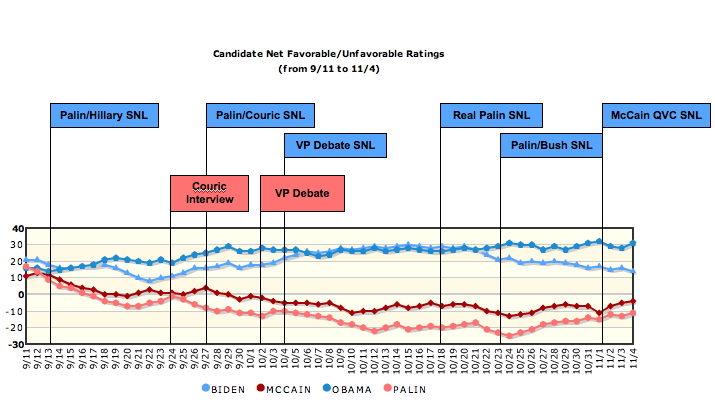
Although this is by no means a scientific or strict statistical study, two observations emerge. One, Palin was on a downward trajectory from the beginning, mostly of her own ridiculous doing. The extensive and embarrassing Couric interview alone made sure of that. Two, both she and McCain got slight upticks after they appeared in person with a sense of humor about themselves. Bear in mind, this isn’t a chart about who people would vote for, just their favorable/unfavorable opinion of the candidates. And by late October the majority of Americans had made up their minds already, so it was a personal measure more than an election predictor. After all, who doesn’t like to see a lovable loser able to laugh at their own shortcomings?
So is my theory that comedy played a part in tipping the scales in the closing months totally off-base? Well, maybe my chart didn’t turn out the way I expected, but if we turn to the professionals at Roll Call:
These and other conclusions are contained in a poll of 1,049 voters that was taken election night for Roll Call…
Two-thirds of voters saw the “Saturday Night Live” election parodies during the campaign season and 10 percent said the program had an influence on their vote. Asked whether they would prefer Alaska Gov. Saran Palin (R) or actress Tina Fey — who portrayed Palin on the show, to hilarious effect — as vice president, 51 percent said Fey.
Wow. So not only did comedy help change people’s minds and votes, it may have launched a Palin/Fey race in 2012. Digging in just a tad more to the survey company’s (First View) press release:
Non-traditional influencers also helped shape voter opinions. ‘The ‘“Saturday Night Live” effect’ absolutely impacted the election,” said Mike Dabadie, FirstView researcher. “We saw that 10 percent of voters said they were influenced by the skits. At the same time, the data shows that 59 percent of those who saw the skits voted for Obama and 39 percent voted for McCain.”
None of this is definitive of course; I also have a source that says 88% of statistics say whatever you want them to. If slightly more Democrats watch SNL than do Republicans, it follows that the number who saw the sketches tilted slightly higher in Obama’s favor than the national vote percentages. After all, what’s more satisfying to a fighting Dem than seeing the opposing VP skewered so deftly? But in a world where as many young people stay informed through late night comedy as nightly news or the internet, it’s not surprising that these sketches molded opinions. As an expert who’s been studying the comedy/news relationship for years said,
“When individuals are familiar with the biography and policies of a candidate, an impersonation simply highlights well-known flaws in an exaggerated way. “But because Palin was widely unknown,” Young argues, “Fey seemed to co-opt the Governor’s identity altogether, reconstructing her as a down-home, cute, but ignorant small-town mayor, not quite ready for prime time.”
And not a moment too soon. I’m sure Tina Fey is well aware of the fact that Africa is a continent and not a country, to say the least. So if the popularity of her TV appearances shifted even a fraction of a percent in a fraction of the toss-up states, god bless her for being a patriot.
……….
Are you convinced? Fueling the buildup. Increasing the participation. Steering the conventional wisdom. From start to finish, the campaign was run expertly by the Obama team, but helped in small part by the participation of pop culture at every turn. Would things have turned out much differently without Shepard Fairey? Without Facebook? Without Tina Fey and Youtube? Possibly not. But with all of them in conjunction, there’s enough reason to believe the numbers tilted more comfortably toward Obama than they would have otherwise. We — and I say we, being of the vast young, connected, comedy-watching pool of voters who helped make the difference — got to seal the deal and go to bed early instead of dealing with a 2000 or 2004 situation. Now that we’ve proved that “Yes We Can”, maybe we can go back to our TV shows and video games in peace.
……….
Thanks to flickr user TaraLivesOn for the side-by-side Fey/Palin comparison shot used above.
Leave a commentwatching
 The State of Modern Horror – Part IV: The Shining
[This month, we bring you a special four-part series examining the past, present and future of the horror genre, with a new article to be posted each week. Part 1 asked the question, “What Ever Happened To Rosemary’s Baby?” We decided there are two aspects to the decline of modern horror: the absence of great directorial talent (which we covered in Part 2) and the preponderance of terrible, terrible horror movies (like The Strangers, which we covered in Part 3). Part IV: The Shining focuses on the best recent horror films, analyzes what they’re doing right, and hopefully will lend some recognition to new underappreciated horror classics.]
After all this crotchety bitching about the new breed of horror movies, you might be under the impression that I’ve hated everything I’ve seen over the last five years. Actually, even though Saw and The Strangers and a million other lousy horror movies have reduced the quality of horror collectively, some of the best movies within the genre have also come out. So, I’m going to discuss what I feel are the six best horror movies that have been released since Saw, in order to show that even during the worst of times, great things can happen: mainly by ignoring cheap prevailing trends and sticking to creatively modifying but also respecting the established framework.
Analysis will be somewhat limited, as a lot of these films might have gone under the radar, and I don’t want to ruin plot points for readers (especially for movies like these, which tend to be genuinely creative in that department). I hope to get across my enthusiasm for the quality of these and prompt you to see the ones you haven’t, relying on descriptions of what makes them good as opposed to what specifically happens.
#6. Masters of Horror: Dreams In The Witch House (Dir. By Stuart Gordon – 2005)
Showtime’s Masters of Horror anthology series was a knockout idea, even if the actual films didn’t always deliver the way fans expected them to. The concept of taking established horror vets like Tobe Hooper, Takashi Miike, and John Carpenter and giving them the opportunity to make uncensored hour-length featurettes would lead you to think that every episode would be amazing. However, when they were actually released, fans found that they were more likely to see a brilliant episode bookended by two mediocre ones.
That said, when the series has been good, it’s been excellent. John Carpenter’s first submission, Cigarette Burns, about a film with the ability to cause homicidal insanity, was a great one and narrowly avoided missing this list. But the one that I keep coming back to, and decided on, is Stuart Gordon’s first-season episode, an adaptation of H.P. Lovecraft’s Dreams In The Witch House.
No discussion of horror of any kind would be complete without Lovecraft, to date the preeminent author within the field. Incredibly prolific, his body of work can be compared to the Masters of Horror series in the sense that there are so many terrible or nonsensical stories enclosing works of pure brilliance. Many of Lovecraft’s stories have inspired films or been adapted for film; the problem is that, due to the scale and how imaginative Lovecraft’s tales of psychic and cosmic horror are in the original text, they are frequently impossible to represent on film.
Gordon has been adapting Lovecraft stories into films over the past twenty years, and Dreams was his fifth time doing so. While his other attempts ranged from failures (From Beyond) to okay for the fan, but not for anyone else (Dagon), he kept pushing on. I think it’s fair to say that, not just for Gordon, but for all directors, no adaptation to date has come close to matching the quality of Lovecraft’s better works until Stuart Gordon’s Dreams In The Witch House.
Dreams In The Witch House’s plot basically follows its title: a graduate student working on his thesis moves into a room in a supposedly haunted house, and begins experiencing nightmares of a witch and her familiar that start affecting his waking life. Lovecraft’s original story is one of the lesser well-received of his later works, with many criticizing the plot and arguing that it’s a mess of successful images that aren’t tied together via plot (coincidentally, the most critically lauded Italian horror films would probably fit that same description). I’ve never agreed with those critical reads on it, and I think it’s an excellent haunted house story with a particularly effective denouement.
Watching Dreams, it’s easy to pinpoint what makes the adaptation succeed so well. For the fan of the original text or Lovecraft in general, there’s the barrage of references Gordon incorporated, from the “weird geometry” of the story’s room to the main character’s Miskatonic University t-shirt. Although the original takes place when it was written in 1932, Gordon brought it into the modern age perfectly, updating it in ways that make it more disturbing for modern audiences, while successfully avoiding sacrificing any of the atmosphere or mood that come naturally with the (somewhat faux-) antiquated prose of the original. That claustrophobic mood that’s central to the story is executed perfectly, and Ezra Godden’s increasingly disconnected and unraveling performance carries the movie to the aforementioned conclusion.
For me, this episode made the list for several reasons. First, it is the first faithful Lovecraft film adaptation, which for me prompts the question: what other of his works can be successfully adapted, bringing the ideas of this true master of horror to a new generation of fans? And will catching even this episode prompt people to pick up his story collections? Secondly, it is personally exciting to see Gordon succeed at a “noble feat” (for the Lovecraft fan) he’s been attempting for over twenty years, and not feeling the same sense of being let-down those past attempts inspired. And third, the promotion of Lovecraft aside, it’s just a great featurette that I think worked well within the anthology framework of the series. If you’ve never seen or are just starting the Masters of Horror series, do yourself a favor and skip the first episode and go straight to this one.
#5. Behind The Mask: The Rise of Leslie Vernon (Dir. By Scott Glosserman – 2006)
Let’s just preface this by saying: I know. This is the one that’s going to draw heat. If any picks on this list are disputed at a volume above normal disagreement, Behind The Mask will be the one that provokes that. Its critical reputation is dubious: in fact, the year it came out, I’m pretty confident I saw it on as many Worst Top 10 lists as I did Best Top 10 lists. But, in the end, it’s my list. If it’s any consolation, I had this spot down for either Behind The Mask or 2008’s Baghead, and ended up going with the one with more violence (not strictly because of that, though).
Behind The Mask takes place in a world where the slasher killers (Freddy, Jason, etc.) of cinema are real, and a documentary is being made about Leslie Vernon, a young acolyte hoping to join their ranks. He takes the film crew through his preparations, meetings with his mentors, stalking, etc. As the film crew finally gains their moral grounding and realizes the consequences of the killing spree Leslie is planning, the documentary switches to a traditional slasher film, and they become the prey.
In a way, Behind The Mask is less like a slasher film, and more akin to a comedy like Hot Fuzz, in which the first hour is spent poking at the genre and enumerating its tired cliches, while the second half completely embraces them, for the comedic enjoyment of the audience. And that’s probably what people hate about it. Because Behind The Mask’s skewering, whether it’s “Survivor Girls” or “Ahabs” or Leslie’s relentless plotting atoning for his lack of supernatural powers, is right on point with a lot of movies that we love.
I’m guessing the other thing that drives people who I would think would like the movie (but don’t) nuts is Leslie himself. Portrayed by Nathan Baesel, he’s basically a hyperactive “Jim Carrey” type who is into torture and serial murder as opposed to pet detectives, hobbies, lying, or whatever stupid fucking thing Jim Carrey is making movies about these days. But to me, that disconnect between Leslie’s personality and his idolization of slashers and sense of place within the pantheon is one of the funniest parts of the film. This affable goofball, strolling around with a camera crew talking about his preparations at the house where the final murders will take place, and winning the crew over, really is some excellent black comedy.
So, moving past what people might not like, let’s summarize why this movie deserves to be here. First, the film is expertly constructed. The documentary and comedy of the first half is totally subverted by the “real film” second half, which also ironically utilizes the elements from the first half to create a tonal dichotomy between slasher film and comedy in a way that I found particularly new and inventive. Secondly, it wears its heart on its sleeve. From the horror aficionado’s star-studded cast (Kane Hodder, Robert Englund, etc.) to the barrage of slasher references, it’s clear the film was written and directed by people who love and GET the genre.
So Behind The Mask takes the “postmodern take on horror” spot on this list for me. Just like Scream before it, it’s a meta-horror movie that mines the genre to criticize what is stale in it, and despite Scream’s success, still manages to find ample new material to criticize. I found it clever, entertaining, and violent, and if that doesn’t constitute good horror, I don’t know what does.
#4. Wolf Creek (Dir. by Greg McLean – 2005)
Ever since the release of Saw, popular movies within a new variation on the horror genre have been released in a style frequently referred to as “torture porn”. If its clear predecessor was the slashers, torture porn is less about the slashing, and more about the preceding two hours of pulling someone’s teeth out. I typically tend not to enjoy the films that fall in the genre; for me, the slasher genre tends to be so formulaic, that I prefer its films to be gory escapist fun as opposed to causing torturous uncomfortability.
Wolf Creek is not an easy film to watch. It’s not a popcorn horror flick or a postmodern genre-bend or a hilarious gore-out. It’s a movie that details the kidnapping, torture, chasing, and murders of three tourists sightseeing at Wolfe Creek in the Australian outback. Although it is based on the well-documented murders of Australia’s most notorious serial killer, “The Backpack Murderer” Ivan Milat, compared to the documentaries I have seen on the same subject, the movie is much more adept at exploring his evil — by creating empathetic characters we truly don’t want to see harmed, in a much better approximation of how we feel in reality, as opposed to the standard “Kill ‘Em All” mentality and characterization we apply towards most victims in most horror movies.
Despite being well made, Wolf Creek is not for everybody, either. Greg McLean followed Wolf Creek with Rogue, an Aussie independent monster flick about a giant crocodile. My girlfriend, who is usually not a fan of the horror genre, found herself engrossed by the tension and cinematography, and said that she enjoyed Rogue far more than she expected to. Wolf Creek, despite equivalent if not superior tension and cinematography, would not receive the same reaction from her.
While I remain convinced it’s the best movie Roger Ebert’s ever given zero stars to, I can understand why people don’t like it. It is excruciatingly violent, relentlessly intense, and, as mentioned before, the victims are genuinely likeable. In short, as opposed to a breakout hit that rallies critics who typically despise horror, Wolf Creek was largely panned by mainstream critics, but enthusiastically celebrated by the horror press. A mainstream review is more likely to deride the film’s plot, while a horror review will celebrate its pacing and cinematography. That’s because the content is so extreme and brutal that you either can or can’t get past it.
Provocative, well made, and highly divisive, Wolf Creek is one of two films on this list that I wouldn’t recommend universally, but am going to have to modify by adding “not for the squeamish”. The imagery will stick with you, whether it’s the torture of a crucifixion, or the magnitude of space above the Wolfe Creek crater. For me, the question of whether the movie has value isn’t about whether or not it depicts something brutal and ugly (it does), but whether skill went into its creation, and if its capable of affecting the audience. Based on the divisive mixture of laudatory reviews and critics who left the theater, the second question is answered; the first one is for you to decide.
#3. Slither (Dir. by James Gunn – 2006)
For how good it is, for how well-received it was by both mainstream critics and the horror elite, for how much of a comeback the horror genre has made, and for how many dollars far inferior horror movies grossed, Slither should have been a massive hit. Instead, the film grossed under 8 million dollars in the U.S. and Canada during its theatrical run, and a total worldwide gross under 13 million dollars. Forget the somewhat substantial marketing budget: that didn’t even cover production. A lot of times, a well-made but missed hit can find a cult audience on DVD (i.e. Office Space), but that was not to be the case for Slither either. That’s unfortunate, because people are missing out.
Slither is a gross-out horror comedy in the vein of Dead Alive. Writer/director James Gunn, a Troma vet who prior to this was probably best known for writing the Dawn of the Dead remake, and for writing and co-directing Tromeo and Juliet (yes, I’m going to pretend that he didn’t write those shitty Scooby Doo live action movies. Although, for the amount of money I’m assuming they paid him, I’d definitely have written them myself), took advantage of the expanded studio budget to make a comedy about an alien life form that takes over a town, infecting the citizens and making them alien zombies. While that’s a pretty familiar plot at this point, what makes Slither a cut above is the humor, the gory special effects, and the talented cast. It’s the sort of movie you start watching with low expectations, and anyone who happens to walk by is going to get sucked in and marvel with you.
So, a B-horror homage that successfully blended horror with comedy but didn’t manage to succeed at the box office has become a recently cited example of why horror comedy doesn’t “work”. But that’s the mistake: the movie proves that it does work, maybe just not as an investment. That said, I think Mr. Gunn got a raw deal and really deserves a lot more credit for making this than he’s received. Since apparently my dad and I were the only two people in America who saw this, do James Gunn and yourself a favor and buy or rent it to watch on Halloween this year.
#2. The Descent (Dir. by Neil Marshall – 2005)
Selecting whether The Descent would be number one or two was the hardest choice on this entire list. It’s much better known than my top pick, it’s more critically regarded, it’s more fun, and frankly, I have already watched The Descent more than once: number one might not be able to claim that last part. In the end, I had to rank The Descent at number two, but keep in mind that this was no blowout victory.
The Descent follows a group of women who go on a spelunking trip to try to strengthen their bond with a member whose husband and daughter died in an accident the year before. As the once-friends interact with each other, themes of secrets and betrayal gradually emerge; as the tension increases, the members of the group begin to realize that they’re lost and will have to rely on each other, while at the same time keeping their guard up. And then, as if our heroes aren’t already fucked, a bunch of cave monsters come out of nowhere and start trying to kill and eat them.
The Descent is a horror movie that’s so well-made, with such a strong premise and interconnection between the characters, that when the mutants appear about an hour into it, they almost seem superfluous. In fact, it’s difficult to say whether the cave monsters, which in any other horror movie would probably be the sole drawing point, add to or detract from the film as a whole. However, despite all these good ideas, the movie doesn’t feel crammed together; it’s well-written and directed and a blast to watch.
A box office hit, I’m guessing most people into horror over the last few years have already seen this one. But even if you’re not (although, I don’t know why the hell you’d get this far into an article about horror movies if you weren’t, but let’s pretend) The Descent is the sort of movie that’s so genuinely good, even people who normally don’t like the genre will probably enjoy it. Although Neil Marshall’s follow-up, Doomsday, didn’t work, and I’m guessing the currently-in-production sequel to The Descent will probably suck, the movie is a great example of the potential of horror cinema, and how just because a movie is a horror movie, it doesn’t necessarily have to be riddled with a lot of the cheesiness and shortcomings that we typically associate with the genre.
#1. The Girl Next Door (Dir. by Gregory M. Wilson – 2007)
An interesting debate that you see played out again and again through time is, “How extreme can something be and still be legitimate art?” The Girl Next Door, despite being the best horror movie of the new era, is not for everybody. It is a sucker punch to the gut, and if you haven’t already seen it, the first forty minutes you watch of it, you’ll be lulled in and think I’m crazy for putting it on this list. The next forty minutes are about as stomach-turningly intense as in any film I’ve ever seen.
Based on the novel by Jack Ketchum, The Girl Next Door addresses several great philosophical questions, the main one being, what do we do when we know that authority figures are wrong? The Girl Next Door’s central horror archetype is the disturbed adult. But that’s supplemented with other real-life terrors. What are my actions when not just authority, but everyone around me is wrong? Am I brave enough to do what is right, and at what cost? These are easy questions on paper, but in real life, things become more complicated. Take a look at groundbreaking psychological studies, like the Asch Conformity Experiments or Stanley Milgram’s electrocution test, and you’ll quickly see that, independent thinkers that we all consider ourselves to be, our actions are not always certain when they’re put to the test.
Stephen King called The Girl Next Door the first genuinely shocking American horror film he’d seen in twenty years, and the dark side of Stand By Me. Cocky as that little plug at the end might be, I think he hit it on the head. Part of what makes this movie so effective is how it’s set up. The first half portrays the nostalgic vision of the 1950’s that we’ve all become accustomed to seeing on film. Unlike a lot of movies, it doesn’t just suddenly kick on full-blast and keep you cringing the whole time. What we notice is little elements that just aren’t right. Initially, the main character David’s neighbors seem like decent people, and the mother of the family, Ruth, seems like a cool parent. But then we see that the children, some under 10, are drinking beer and Ruth doesn’t care. Whatever, we write it off; until we see Ruth give too harsh a punishment to her niece and new ward, Meg. And so, similar to David, we know that things are out of order, but nothing by itself nor the cumulative events are enough to fully set off all our warning bells until it’s too late.
The writing, direction, and cast are uniformly strong. Interestingly, and similar to The Descent, this probably could have been a good movie without the main element of horror that is eventually revealed. But it is a horror movie, and I do need to give kudos to Blanche Baker (Ruth) for her terrifying performance. She is a landmark case of the unstable but superficially good person that I described in Part 3, and exactly how you want to play that for maximum terror.
But Ruth’s evil extends past sheer physical torture: it is the evil of an authority figure encouraging subordinates, and saying and doing whatever it takes to see her will done. Some of the scariest aspects of her personality are the extortion, blackmail, and encouragement towards evil that she performs, and how Baker conveys Ruth’s talent to manipulate even good people into doing bad is pitch-perfect. And creating a horror movie that’s also a morality play, that doesn’t resort to tired bullshit like “abstinence-only or you’ll get stabbed from underneath the bed”, or “fess up when you run a guy over on Prom Night”, is probably the best violation of cliché that I’ve seen in the genre in years.
So, I don’t want to spoil too much more about the actual content, because I know this movie is probably the least-seen one on this list, but allow me to repeat my initial review from Netflix: “The most fucked up movie ever made. Game over.” The Girl Next Door tops my list of best horror since Saw was released for answering the question, “How disturbing can art be?” It shows that horror doesn’t need to be fueled by giant sharks, burned-up child murderers, or Leprechauns In Space, although all of those things are certainly awesome. Horror only needs its viewers to be willing to consider what might be wrong about the world we live in, about humanity, or about society. As the film shows, they might be wrong, and we might need to speak up.
Read other articles in this series:
Part I: Whatever Happened to Rosemary’s Baby?
Part II: The Lost Boys
Part III: Darkness Falls
Part IV: The Shining
playing
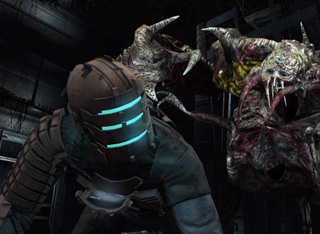 The ‘Fans of the Genre’ Myth: Why I’m Skipping ‘Dead Space’
Somewhere out there is a mythical being, the consummate ‘Fan of the Genre’. As legend goes, this creature will purchase and play anything in his chosen sub-category. This could mean importing every grid-based, anime-inspired JRPG in existence, or playing a constant stream of first-person shooters in which he dutifully commits an endless streak of murders across all of time and space. Presumably there is even a rare breed who has raced his way through the complete decade-long oeuvre of the tireless Need for Speed team.
Also, Sasquatch is on this person’s friends list (Gamertag: BigHairy69), and he knows a guy that ate Pop Rocks and drank a bottle of Mountain Dew Halo 3 Game Fuel™, causing his head to explode the moment before his gamer score cracked ten million.
Which is to say, I’m fairly certain this category of person does not exist in a meaningful way. There are probably isolated cases, just as there are probably isolated cases of amnesia. But like that condition’s overuse in fiction, I have serious doubts about whether the behavior implied by the term ‘fan of the genre’ is common enough to justify the idea’s prevalence.
This is a phrase that runs rampant in reviews, to the point where it’s become a subject of in-jokes on certain podcasts and forums that talk extensively about games. Nor is this is a phenomenon isolated to one medium. The same tendency happens with people who discuss movies, books, or any other form of entertainment that can be said to have definable genres. And across the board the term is used as a euphemism more than anything — an excuse for reviewers to courteously defend lazy creative works falling into the disreputable category of ‘passable’. But habitually painting the mediocre as worth the time and money of genre fans does a disservice to all of us.
……….
To be more specific — as well as to avoid immediate backlash — let me clarify. There are no doubt fans of every genre. Some people enjoy role-playing games more than sports games. I’m much more partial to action games than to driving games myself. Similarly, I love a good gangster movie, but usually can’t be bothered with historical epics, and like rock music with smart lyrics more than bass-pounding instrumental house music. There are also people who enjoy those opposing genres, and with equal enthusiasm. But in the world of reviewing, especially with video games, the phrase ‘fans of the genre’ is all too often succeeded by a sentiment resembling “…will find something to like here, but it won’t change any minds,” or preceded by, “Nothing groundbreaking, but there are a few new elements to appeal to…” you got it, fans of the genre. That’s essentially the same as saying, “Normal people, don’t bother playing this. But if your standards are low, and you’re hard up for a game that’s just like the last one you played only slightly worse, have at it!”
Getting to the root of general behavior is tricky without a massive survey of who actually buys which games, but the implication seems to be that there are ‘racing people’ who will at least consider every racing game released, ‘RPG nerds’ who will do the same, some form of twitching blob who will play any Geometry Wars clone spit onto their hard drive, and so on. Probably, there are a few of those. Most likely though, they are the minority, and the vast number of game buyers, like moviegoers or music collectors, hop from genre to genre for whatever looks most interesting to them. The success of a massively long-running series may not be due to people buying every single Tony Hawk or Burnout game, for example, but because the appeal of those games is wide enough that at some point, everyone’s going to try at least one of them. Then if they like it, maybe come back every few years for another taste. Alternately, individuals may not be fans of an entire genre so much as a specific series within that genre, so they will buy and play the new Final Fantasy every few years, but having received the required dose, ignore any other fantasy RPGs in between.
Games writer and blogger Mitch Krpata tackled a similar issue in a series of posts to his site, Insult Swordfighting, called A New Taxonomy of Gamers. Though his exploration was much more extensive than mine, my favorite deduction was his breakdown of what he called Skill Players vs Tourist Gamers. According to him:
There are two fundamental reasons people play games. They’re not mutually exclusive, but they are separate. Some people play to master a game — to perfect its mechanics, to explore every inch of the game world. Some play to “see the sights” — to hit the high points and not get too caught up in the minutiae. Let’s call these groups “Skill Players” and “Tourists.”
….
“Tourists” is more euphemistic, but I think it carries the right connotations. Imagine somebody visiting France for the first time. They want to see the Eiffel Tower, Sacre Coeur, and the Louvre. They don’t speak the language or know the streets, and they don’t much care. As long as they can get where they’re going, they’re not interested in experiencing what a native might call the “real” Paris. And when the trip is done, they probably won’t be heading back to France any time soon to find some hidden gem of a crêperie. Instead, the tourist wants to go to China to see the Great Wall. The Tourist gamer is the same way: “beating” a game is more about checking off the big moments than earning a 100% completion rate.
Though the analogy might not be perfect (I like to think of myself as a hipper brand of tourist, who’d want to experience at least some of the hidden gems of ‘real’ Paris as well as see the famous sights), the premise is right on. Most gamers aren’t defined by loyalty to a certain category, but want to see cool stuff of all kinds. They won’t subject themselves to Just Cause or Juiced 2: Hot Import Nights just because they’ve liked similar games. In fact, that’s all the more reason to skip those titles. These B-level imitations are essentially the equivalent of tourist traps: less-worthy distractions that survive by catching their share of wayward travelers. These are the game buyers who either aren’t informed enough about their better options, aren’t discriminating enough to just drive past, or have too much time to kill until the next better stop.
Extending the tourist metaphor further: you might also discover a place you love and want to visit again fairly regularly, but not to the exclusion of all other trips. Like playing every installment of Grand Theft Auto, or my annual trips to Las Vegas and San Francisco, I keep going back because I love the experiences I’ve had with them — how else could they sell millions of people a Madden game every year? But that doesn’t mean from now on I’ll play every open-world crime game, or exclusively visit cities with legalized gambling and beautiful bridges.
After all, truly great games are never said to be for ‘fans of a genre’, they’re called masterpieces or must-plays, and without qualifiers. They define genres, create new ones, or transcend existing ones. The genesis of an amazing game like Bioshock came when its team redefined a genre with their ideas in System Shock, and later refined them for a broader console audience. Resident Evil invented the survival horror genre, and really, what other zombie-killing games did we need? That is, until someone like Dead Rising came along to take it somewhere new and different by making it open-world and mission-based — not to mention finally allowing us to impale the undead on an excavator and twirl their blood-splattering corpses in the air. That’s significant progress. That’s something we hadn’t seen before.
……….
Which brings us to Dead Space. The first fall game it feels like everyone is playing until we wait for our respective Fallout 3s, LittleBigPlanets, or Gears of War 2s. Seemingly the perfect, generally well-reviewed game to bridge the few weeks until the heavy-hitters start showing up. EA is to be commended for several reasons here. Not often do they create an original property and support it this heavily. With any luck, this will be at least successful enough to encourage similar risks in the future. There are several things about the game that deserve praise, too; the high-quality visuals and sound provide a suitably creepy atmosphere, and the elegance of their holographic interface is amazing. However, when it comes down to spending sixty dollars and a dozen hours, some spooky sounds in my surround speakers aren’t enough, and I can’t bring myself to play a game for its interface.
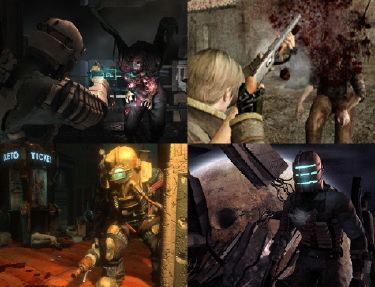
My earlier examples of truly great games were not accidental, because really, what is Dead Space but a Resident Evil game set in an outer-space Rapture from Bioshock? Oh, right, instead of having to aim for the deformed, tentacle-waving head every time, in this game, you have to aim at specific waving tentacles. And instead of being underwater and occasionally having to wade through it, you’re in space and occasionally get to jump through it.
Granted, I haven’t played this game. Maybe I’ll try a demo or borrow a copy and change my tune entirely. But that’s not the point. The point is that this is one of the best-reviewed games of the month so far, and I have no interest in it whatsoever — because from all indications, I’ve already played its better cousins. This is a game built with a ‘fan of the genre’ in mind, and I am not that person. I loved RE4 and Bioshock, so why would I bother with a less thought-provoking, non-bar-raising rehash of their ideas? I also loved Braid and Penny Arcade Adventures. Does that mean a turn-based RPG with time-rewinding abilities and a sense of humor would be a sure download? No, it means the opposite. My tourist sensibilities mean I want to see something new and different, or at the very least something on the level of what has previously impressed me. Once you’ve been to a strip club, the Hooters by the mall doesn’t do much for you any more, and there are better places to get hot wings.
So can we admit that if Dead Space is a big success, it might not be because there are millions of ‘fans of the genre’ who couldn’t wait to go out and play a B-grade release that recycles the ideas of its predecessors? Could we admit to ourselves that maybe gamers are more like tourists, and some of them either haven’t played Bioshock or Resident Evil 4 and were swayed by good marketing, or just had nothing better to play this week? I’m no ‘fan of the genre’ myself, so I’ll be saving my money for the next real Resident Evil game this spring, and waiting for the next truly original idea from EA coming out in a few weeks. That’s progress. That’s something I haven’t seen before.
Leave a commentwatching
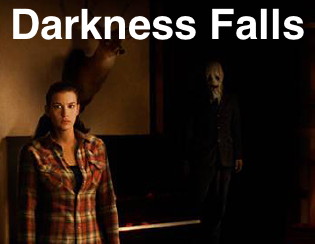 The State of Modern Horror – Part III: Darkness Falls
[This month, we bring you a special four-part series examining the past, present and future of the horror genre, with a new article to be posted each week. Part 1 asked the question, “What Ever Happened To Rosemary’s Baby?” We decided there are two aspects to the decline of modern horror: the absence of great directorial talent (which we covered in Part 2) and the preponderance of terrible, terrible horror movies. Part III: Darkness Falls will discuss the latter aspect, specifically by analyzing, in detail, a well-received horror movie from this year, why it is almost objectively terrible, and what basic rules of horror cinema it breaks.]
I guess in the end what suckered me into seeing The Strangers in the theater was that several people I know, read, and/or respect called it the scariest thing they’d ever seen. I had seen the trailer, which is pretty inarguably great, and that tipped me over the edge into watching this terrible, terrible movie in the theaters.
As a quick refresher from Part 1, Rule #3 reads: “Horror films after 2004 are so different from what preceded them that you can quickly label the former New Horror, and the latter Old Horror.” A better description might be Pre-Saw and Post-Saw. When contemplating which film to vivisect, eviscerate, and destroy to fully showcase the flaws of modern horror cinema, I had an array of potential targets. But I knew, I knew I had to do The Strangers. The reason is that it’s cocky enough to break every basic rule of horror it has the opportunity to, but as opposed to the creative risks taken by superior writer/directors, not a single one pays off. Each one instead detracts from the movie. Shit, by 2:49 in, it breaks four of the commandments, which might be a cinematic record. So now, we’re gonna look at The Strangers scene by scene to highlight each of the rules it breaks, giving examples of how it does that, and why it doesn’t work.
Rule #4: Horror movie sequels are usually a terrible idea, but they’ve got nothing on remakes.
Why? Why? Why? Why does every movie warrant a remake? Remaking a bad movie is usually a recipe for disaster because the core components are so weak; remaking a classic rarely rewards the hubris you had in trying to accentuate something that was already great. I can think of dozens of short stories, novellas, novels, and non-fiction works that should be movies and aren’t. So why are we wasting limited resources to recreate movies we’ve already seen?
“Wait a second,” you’re saying at this point. “What’s all this talk about remakes? The Strangers isn’t a remake.”
The Strangers is definitely a remake. In fact, it’s the second remake of a movie that’s less than 10 years old. The Strangers is an entirely unoriginal, nearly exactly replicated version of Michael Haneke’s Funny Games. Bryan Bertino, who wrote and directed The Strangers, studied cinematography at the University of Texas at Austin. I’m not sure if I’m getting into libelous territory here, and that’s not my intent, but I’m just saying that Funny Games was made in 1997 and had a strong cult following, meaning that as a student, or as someone passionate about movies, Mr. Bertino probably had seen it at some point before he made The Strangers.
For those that haven’t, Funny Games is an Austrian analysis of American violence in films. More a conceptual art piece than a movie, the film’s premise involves two Leopold and Loeb-type youths who arbitrarily invade the home of a vacationing family, and then subject them to various psychological and physical tortures. The basic thesis is to remind the audience of their desire for gore and violence and sensitize them to it, while simultaneously satirizing it and making them complicit in the violence, just by the act of watching it. Whether or not you actually enjoy it, Funny Games is a wildly original and innovative film that attempts to push both the boundaries of the medium of film and the audience’s buttons. Funny Games is also a very bitter film, and an instance of truly dark satire within the medium. However, it was original, in the sense that it was criticizing a type of film, as opposed to a specific movie.
At least, that’s what it did until The Strangers was created. What’s interesting is that Funny Games is one of the few works of art that now qualifies as precognitive satire. By this, I mean it basically said, “Wouldn’t it be stupid if a movie with this concept actually existed?” in order to criticize the worst aspects of similar films, but then someone less intelligent went, “Radical!”, stole that idea, and then made that exact movie in deadly, dumbly earnest. It’s the equivalent of an alternate universe where Mel Brooks created Spaceballs in 1972 and then five years later George Lucas was like, “You know, I should really play that whole thing straight and make a movie called Star Wars…” Except in this other universe, Star Wars is not Star Wars, but is instead a piece of shit.
Despite not officially being a remake of Funny Games, it’s undeniable that everything about The Strangers is identical to a point far beyond coincidence. But as opposed to improving upon its predecessor, it just stripped it of its artistry, intellectualism, and entire point, in favor of constantly cheaply startling the audience. Directors of America: stop remaking movies, please stop remaking new movies, really stop remaking relatively new foreign movies, and definitely stop making remakes dumber than the original source material.
Rule #5: Unless your movie is actually based on a true story, don’t say that it’s based on a true story. If veracity matters that much, you probably should have made a documentary.
“What you are about to see is inspired by true events. According to the FBI, there are an estimated 1.4 million violent crimes in America each year. On the night of February 11, 2005, Kristen McKay and James Hoyt left a friend’s wedding reception and returned to the Hoyt family’s summer home. The brutal events that took place there are still not entirely known.”
This voiceover and onscreen text begins the movie, and with that, we descend into complete, obvious bullshit. First of all, would the McKay and Hoyt families really accept a major studio making a movie that’s basically their children getting tortured and murdered for an hour and a half, made a year after their murders took place? On such a short schedule and with standard pre-production, that would pretty much mean Brian Bertino was there the night of the murders, hiding in the bushes and frantically typing everything he witnessed into Final Draft.
I mean, even if one could make a good movie about a recent murder, which seems like terrible policy, would any studio have the balls to finance it? Axl Rose recorded a cover of Charles Manson’s “Look At Your Game, Girl” twenty-something years after the fact, slapped it on “The Spaghetti Incident” as a hidden track, and the public and critics still don’t hesitate to blast him on it (speaking of which, The Manson Family is the actual “supposed true story” that Bertino claims he used as his source for this movie, but there’s really no connection). Let me repeat that: even at the height of his inconceivable and unjust popularity, they called the rather stubborn Mr. Rose out until even he conceded, and demanded it be removed from future pressings of the album. No studio is going to expose its shareholders to that kind of risk.
So, I’m obviously being a little flip about this, but that’s the problem. When I see a man with a burned-up face and a glove with knives on it chasing kids through their dreams to cut them down, I buy into it. Not as reality, but within the interior logic of the movie. But when you tell me something took place in actual reality, and it’s obviously fake, it doesn’t add to the mystique: the irrationality of it just pisses me off and pulls me out of my viewing experience.
Although false veracity in film has been around for a while, its recent overuse within the horror genre began with The Blair Witch Project, whose $100M+ gross every studio hopes their cheapie horror film will match or surpass. I’m not a fan of the movie, and I entirely credit its success to the consummate skill and inventiveness that went into its hoax, because that showmanship and sensation is what drew attention and audiences. It was the depth of the Orson Welles’ “War of the Worlds”, or Barnum-esque display of hucksterism that made it a must-see sensation, as opposed to the rather forgettable actual film.
Here we are, not even 10 years out from its release; I contend that if you visit a marketing course at a university, and you visit a film course, you are more likely to hear about The Blair Witch Project in the marketing class. But that’s the problem with inventiveness: you can only reap the benefits from it as many times as you genuinely exercise it. Claiming your obviously fake story is true and hoping for that to amplify the movie experience for your audience will not work; in fact, it will just make people remember the long-forgotten Blair Witch.
In fact, if you really did stumble upon a terrifying true story, why fictionalize it when you could make a documentary? Whether in the theaters or on A&E and Discovery Channel, there are tons of well-made, chilling documentaries about actual murders and murderers, and they’re inevitably far more intriguing than those that take place in the realm of fiction. Check out Serial Killers: Profiling The Criminal Mind, the Charles Ng and Leonard Lake episode of Biography, or The Staircase for some haunting true stories.
In short, with so many legitimate true stories being documented and broadcast so accessibly, don’t take something obviously fake and claim it’s real. We’ve seen enough to know the difference.
Rule #6: Tell your story in order. Cutting out of order only reveals what’s going to happen and eliminates suspense.
Real quick, I want you to go back to the start of this article and look at what I did with the first two paragraphs. It would have made more sense to put the first paragraph after the second. Instead, I inverted their order, which started a narrative, and then I had to go to back before that to explain what happened, ruining the flow. Then I did a similar thing right here.
You didn’t gain anything from that. In fact, it was kind of fucking annoying. You can do that if you know what you’re doing and have a point. But if you screw it up, your entire artistic work can be ruined.
By and large, few movies are truly creative. Most instead play to the audience’s expectations. So, if your plot is so well-worn that the only way to make it interesting is to screw with the temporal structure of the narrative, might I suggest instead creating a different plot? Using foreshadowing by showing the end of the movie is lazy and it tells a viewer who possesses any reasoning and applies basic logic exactly what is going to happen.
For example, immediately following the introductory voice-over, The Strangers has a segment that it repeats (shot-for-shot, which is always good to see) at the very end. Cheesy strobe shots of a rural American town cut to two missionary kids surveying the aftermath of a home invasion, while a 9-1-1 call plays. In the call, one of the kids describes the scene, while still-type images are shown: a car window shattered by an object that’s been thrown through it, an open door to the house, a ring holder with rose petals around it, and a blood spatter on the wall. In case you can’t keep up with the imagery, the kid, named Jordan, helpfully describes to you exactly what you are seeing.
“Okay,” I thought when I saw this in the theater. “That’s the whole movie. That’s all I need to see. They’ve literally shown me everything. A guy proposed to his girlfriend and at some point they will be chased to their car, chased out of their car, chased back into their house, and then killed. The next day, some kids will find them. I wonder how they’re going to twist this to subvert my expectations, because otherwise, they have literally shown me the entire movie in the first 2 minutes.”
Of course, there really isn’t anything else to The Strangers. It’s a lazy, lazy film and it did nothing to throw any surprise into the mix. But if it hadn’t shown this introductory scene, it would have been a better movie, because I wouldn’t have been able to clearly identify every major plot point in the film. In fact, there would have been a great deal more suspense, because we wouldn’t have known whether the couple that’s being terrorized gets away, which seems to me to be one of the key components of suspense. If you know they’re going to get killed, you’re just slowly watching someone get killed. No need to get emotionally involved.
If foreshadowing was really necessary for this film, and it probably wasn’t, why not open with the villains terrorizing and killing another couple, a la Scream? The real answer is that, ever since Pulp Fiction came out, a lot of filmmakers that don’t have Quentin Tarantino’s talent feel the need to show the end of the movie at the beginning. Well, unless your movie is the new Pulp Fiction, or you’re actually the slightest bit clever, please stick to telling your story in order, because otherwise you’re just pissing off your audience.
So, we haven’t even passed the opening credits, and if you count that this movie represents everything that sucks about New Horror (Rule #3), we’ve broken four of the Horror Movie 10 Commandments before we’ve even started the narrative flow. The Strangers begins with a couple in a car on a drive home at night. The woman has tears on her cheeks, the man is totally angry; they get home and there are rose petals strewn everywhere. The couple bickers, the guy calls his friend for a ride, etc. Also, remember we saw the little standard box that all wedding rings come in earlier, okay? So it’s obvious he proposed and she said no. Even if you haven’t seen the movie, based on my sentences, you could have figured that out.
Instead, the movie breaks Rule #6 AGAIN and jumps out of its own narrative again to go back to earlier in that night, to show him proposing. Which slows things down, and is a waste of time. In fact, the only interesting thing about it is 8 minutes in, where, for no discernible reason, Scott Speedman picks up Liv Tyler and carries her around. Who does that?
When we cut back to the present, Scott Speedman’s character, James, throws the little wedding ring box on the table. So again, if for some reason you hadn’t figured it all out and they hadn’t shown the flashback, if they’d just shown that, anyone would have put “the story thus far” together in a much more natural way.
They drink a little bit, and then, like it always seems to go down when a woman like Liv Tyler’s character, Kristen, rejects your marriage proposal, they begin to have sex. The natural, zesty kind of sex that everybody has in PG-13 movies, meaning that both parties breathe heavily and remain fully clothed. They are interrupted mid-coitus by some banging on the door. They open it to find…[Reminder of Rule #2: Pick an archetype and run with it]…an attractive girl who seems drunk and has the wrong house. If seemingly-drunk girls are the new face of horror, then surely a videotape of Myrtle Beach at Spring Break will be our generation’s Dead Alive.
I can’t restate how irrational this is strongly enough: attractive people signify all kinds of things, but the only kind of terror they can instill is, possibly, social anxiety. Additionally, the only way that someone evil who is beautiful will work in a horror movie is if they also have a well-mannered façade, which they gradually break down to reveal that they are psychotic (see The Glass House 2: The Good Mother for an underrated example of this). But, at its core, having an attractive girl, who is one of the three real-life professional models that constitute the Terrible Trio that serve as the antagonists, chase me is about the least scary thing I can imagine.
The girl walks off and they come back in and James lights a fire. I mention this only because, at 17:00 in, after we’ve seen it happen, Kristen says, “Thanks for lighting me a fire.” What an odd phrase to say. Especially “a fire” versus “the fire”. And having “me” in there was weird, too. If I had written this movie, Liv Tyler would have said, “Thanks for lighting the fire.” That’s because that’s how people actually talk.
James leaves to pick up Kristen some cigs, and his parent’s old cabin has only a new Lisa Simpson record for her to bump while he’s gone (it’s actually Joanna Newsom, but same difference). She sits around moping for a long two to three minutes, and then we hit another one of those odd directorial milestones that make this film such a train wreck. The diegetic music within the film sings, “Should we go outside?” at the same moment someone knocks on the door, which is such an absurd coincidence that the music should probably be extra-diegetic. I mean, it is literally so dumb, that if that happened to you in real life, you would be intrigued not by the knock on the door, but rather by the awesome old record player from the Twilight Zone that can independently predict the present.
Making the wrong choice, she answers the door and it’s Seemingly Drunk Girl from before, doing the same thing as before. This movie has a tendency to frequently lap itself and show you something you’ve already seen, with little discernible value or nuance. Kristen notifies her that the person she’s asking for does not live at that house and then she walks away. At this point, Kristen could have accidentally put her left foot in a bucket, slipped on a cartoon banana peel, and then made a “boink” noise when she fell on the ground. Instead, Bertino went for the marginally less clichéd alternative of having the flue closed so the fire makes smoke, and then the smoke alarm goes off, and then Kristen has to disable the smoke alarm.
During this time, there’s more knocking, Kristen gets scared, and she calls James and tells him to come home. Now, remember this for later: if your girlfriend was scared, and you had already witnessed a bizarre incident at 4 AM earlier in the night, wouldn’t you treat what she was saying seriously when you returned?
Anyway, at 24:38, the highlight of the movie happens, which is, a dude with a bag on his head slides into focus inside the house as Kristen is going about her domestic duties. I’m watching The Strangers on a bootleg DVD from NY, and I have to say, this is probably the only impressive thing about the movie. The audience goes apeshit! I hate this movie, but I love having an audience tape of this reaction. For 30 seconds after the fact, they’re clapping, whispering, screaming, swearing…it’s probably the one redeeming thing about whatever my brother spent on this fucking DVD.
So anyways, with that, your startle hymen has been broken. Now The Strangers settles into its sole purpose: to constantly startle you for the next hour. Leading us to the next commandment:
Rule #7: Arbitrary is not scary.
The random is not scary. It can be funny. But it’s rarely scary. I watch this commandment constantly violated in a hoary old trope I’ve dubbed the Serial Killer Doll Cliché. Whenever a movie has a serial killer and they show a) his childhood home, b) his attic, or c) his lair, it will have old, broken dolls in it. Yes, it’s cool imagery, but if serial killers were actually happy with dolls, they would just play with dolls, instead of murdering people, which is what they actually do. Stop portraying serial killers as antique doll collectors.
Anyway, one of the hallmarks of New Horror is the arbitrary. Take, for example, the scene in Saw in which there’s the clown-type guy who abducts people. Why is he wearing a clown mask? That would draw more attention than a shirt that says, “I’m a Serial Killer” on it. The clown mask aspect is never explained. It doesn’t need to be. It’s supposedly scary.
Unfortunately, however, the arbitrary is not scary. At first, we’re intrigued, trying to figure out what the mystery is. But the moment we come to the realization that there is no mystery, we lose all interest in it. It’s just dumb. The Strangers is full of this; whether it’s the masks that the models wear as they chase their victims, or the tomandandy soundtrack, which appears to have been composed by letting some cats run around an old junkyard, or even the dashed together plot and central motivation of the antagonists, which is utterly meaningless. As soon as we see that there’s nothing behind any of it other than that it vaguely seems cool, it loses all potential to scare.
Returning to the movie, Kristen starts getting pursued and toyed with by the antagonists, who she is now aware have broken into the house, and we have a previously mentioned violation of Rule #7 at 29:00, when she opens the front door and sees a girl in a Betty Boop-type mask. Meanwhile the antagonists are making random noises and breaking random objects while Kristen hides upstairs and tries to find a weapon. Finally, some footsteps start coming up the stairs, and it’s…James.
James comes in and finds Kristen holding a knife, cowering in the corner, sobbing and on the verge of hysteria. But the thing about Our Jimmy is, when he hits a crisis, he plays it cool. So despite the fact that he’s been gone for a half hour, when Kristen tells him the truth about how she’s been pursued and chased by people in masks, and he has every reason to believe this is the case, he confidently assures her that nobody’s out there. In fact, as she tries to warn him about leaving the barricaded room, he angrily yells at her to “Stop.” Then, after the most cursory examination possible, he informs her that she is ignorant, he was right, and nobody’s out there. I can’t tell you how much of a douchebag James acts like, and how improbable something like this actually occurring in a story even tenuously related to true events is. Even if a stranger I suspected was insane started trying to get me worked up over something like this, I’d at least extend the common courtesy of treating it a little seriously.
They head downstairs to the basement and see that the girl is still out there, right about where James said she wouldn’t be. By 33:50, James has finally gotten outside to find that “nobody and nothing to worry about” have totally vandalized his car. The logical response, especially since his girlfriend’s earlier claims have now all been validated: jumping in the car without checking the backseat to make sure there are no murderers lurking in it. So, of course, within 10 minutes of having started, the Startle Factor is way overdone, and at 34:45 in, a spooooooky hand reaches from the backseat to lightly tap James on the neck.
I just want to note that, when I saw this in the theater, at this exact point my friend Josh turned to me and said, “They should have called this movie, ‘Behind You’.” That’s probably the best single-sentence criticism of this movie you’re going to find.
James gets out of the car, stands around, and then Seemingly Drunk Girl is standing in the road, unarmed. Instead of chasing her down and getting some information out of her, James spends a long time looking at Kristen and ordering her inside. By the time she goes in, Seemingly Drunk Girl has vanished. James goes back inside, grabs Kristen, and they regroup to get in the car to try to leave. Which seems more logical than ordering her back inside. They try to leave but find that the Betty Boop Killer is blocking their way and getting ready to ram their car. They stop and that’s when they see Paper Bag Head directly in front of their car. Why they don’t run him over is beyond me, but they just act scared until Betty Boop slams their car with her truck. Why they don’t chase her down, pull her out of the car, and kill her is beyond me, but they again act scared and run inside.
James finds a gun, and they experience more arbitrary startles (i.e. the windows having “Hello” painted on them) until the killers start trying to break the door down with an ax. In my mind, a gun beats an ax, and they should just let them come in and start shooting them down, but alas, that is not the approach they take.
Skipping ahead, James’ friend Mike shows up, and despite seeing bullet holes, carnage, and wrecked cars and receiving no response to his calls and yells, he doesn’t call the police, but instead goes inside. Mike’s about to be killed by Paper Bag Head who is ever so behind him, but then James accidentally pops with his shotgun Mike instead. Despite the fact that they’re in a War Zone, this leads to a bunch of guilt, whining, remorse, etc. and prompts James to try to get to another cliché: the old radio in the shed. Of course, he has a gun, so it will be much safer if they split up and Kristen stays unarmed and defenseless back at the cabin. 51:40 in, James has Betty Boop in his gun sights outside, but doesn’t fire, which leads to him getting captured by Paper Bag Head. As you listen to how these sentences read, don’t you see why it’s better not to have arbitrary masks, but instead create something actually scary?
Kristen eventually goes through some more startles and makes her way to the shed, where she gets on the old radio. Betty Boop destroys the radio with an ax, startles ensue, the old car is set on fire, and Kristen reenacts that old chestnut: The Scene Where The Heroine Hides In A Closet And The Killer Is Right There. This being The Strangers, one of the most repetitive and boring horror movies ever, that scene lasts for over TWO minutes, and culminates with a startle as Seemingly Drunk Girl starts shaking the closet. Kristen finally comes out, James oddly appears in the middle of the room from out of nowhere, and then the professional models let Kristen run away again. Finally, she comes out of her room and Paper Bag Head drags her to the living room, where they tie her and James up and wait for daylight.
The end begins when James and Kristen wake up, just in time to rebreak Rule #4 (“Why are you doing this to us?” “Because you were home.”). The movie then rebreaks Rule #2 as the killers pull their masks off and you realize there’s no central archetype unifying the movie’s themes, but just some bored models. Finally, the movie begins to break some new ground:
Rule #8: Violence and gore are encouraged, to an extent. There is a point of diminishing returns, at which showing torture reduces not only the suspense, but the quality of the film. Stay on the other side of that line.
With Saw, a new horror subgenre dubbed “torture porn” was created. It basically exists to ask the age-old question: how much pain can people be shown in before my movie gets an NC-17 rating? The answer is, apparently, a lot. Over the last couple of years, we’ve seen people’s heads smashed in bear traps, eyes melted out of their sockets and then clipped off with scissors, a guy get killed and then have a giant fish tail attached to him, and a woman fall into a bed of hypodermic needles. In short, we’ve seen shit so dark and crazy that even the Spartans would tell the directors that maybe life’s not so bad and they can take it down a notch.
And yet, it was never entertaining, impressive, or anything other than just plain shocking. And it wasn’t even shocking with a capital-P Purpose behind it; it was just the sort of mild shock of, “Oh, you can show that in a movie?” Followed by the second question, “Why would you?”
In short, as the rule states, excessive violence and gore are fun (especially gore), but when you cross over to showing drawn-out and excruciating torture, you better handle it with care if you still want your movie to be watchable. In the hands of a director like Greg McLean in Wolf Creek, I thought it worked, but more often than not, people tell me that it didn’t for them. So of course, it doesn’t work in the culmination of the The Strangers, which is basically a tied-up James getting stabbed a whole bunch while the camera close-ups on his face as he makes “Oof! I’m getting stabbed!” noises.
The film laps itself again as the killers drive off and see the missionaries from the first slow-shutter scene in the movie. Seemingly Drunk Girl babbles with the missionaries for a second, and then they give her a pamphlet. She hops in the car and Betty Boop tells her “it will be easier next time”, opening up the door for them to break Rule #4 again, if this initial installment has high enough box office returns. We loop again onto the exact same scene from the beginning, shot-for-shot, where the missionaries stumble through and see the carnage from the previous evening. They go up to Liv Tyler’s corpse…and…she is suddenly alive and screams, for one final, blessed startle.
And with that, the nightmare is over.
Read other articles in this series:
Part I: Whatever Happened to Rosemary’s Baby?
Part II: The Lost Boys
Part III: Darkness Falls
Part IV: The Shining
watching
 The State of Modern Horror – Part II: The Lost Boys
[This month, we bring you a special four-part series examining the past, present and future of the horror genre, with a new article to be posted each week. Part 1 asked the question, “What Ever Happened To Rosemary’s Baby?” In short, what has happened to quality and craft in horror movies, and why is there such a lack of both, presently? There are two aspects to the decline of modern horror: the preponderance of terrible movies (which I’ll cover in Part 3) and the absence of great ones. Part II: The Lost Boys will focus on how the most promising writer-directors in the field stopped making horror movies.]
The early 90’s. Sigh.
As far as I can tell, that’s the last time that we had fresh voices in horror, at the peak of their game, ready to unleash their twisted visions upon the world. Although many were talented, all of them followed the same path. This article will begin with a survey of the two most consistent: Sam Raimi and Peter Jackson.
It’s worth noting that the movies they made were a far cry from the horror classics of the past. Jackson and Raimi’s had far more comedy, and tended to riff on horror archetypes as opposed to employing them in the way discussed in Part 1. Nevertheless, the movies succeeded because they had it both ways, by simultaneously subverting and amplifying the touchstones of horror movies. Bringing it to the realm of the postmodern, they skipped the well-worn clichés of the genre to instead combine horror with disparate genres (slapstick, procedural thrillers, classic lit) and then cranked the comic-book gore quotient to 11.
In short, the rules mentioned in Part 1 can be broken, and to good effect, but there has to be a payoff: Part 3 will look at the flip side of this and examine a movie that breaks all the rules and instead falls apart.
……….
Sam Raimi’s The Evil Dead (1981) was the first noteworthy entry from the group. It was subversive, exceedingly gory, and produced for cheaper than dirt. The execution and direction weren’t perfect, but that just gave Raimi the chance to basically reuse its brilliant concepts to create the much shtick-ier and superior Evil Dead 2 (1987).
The third entry in the Evil Dead series, Army of Darkness (1992), is what sealed Raimi’s status in the Cult Horror Hall Of Fame. Compared to its predecessors, it amplified the slapstick comedy, quality of special effects, and viewer’s immersion in the world of the Dead-ites. Unlike a lot of the mainstream horror fare from the time, it was not intended to be scary, nor approximate realism, and that was the point. The entire thing was a joke, but a ridiculously excessive joke with so much replay value that you couldn’t help but love it.
What’s great about this cartoonishly violent, faux-medieval masterpiece is how clear its inspirations are, and how effectively it combines and riffs unrelated genre elements off of each other. The flick blends Gulliver’s Travels, gratuitous violence, Romero-inspired zombies, old-school B movies, a John Carpenter-type over-the-top badass protagonist, and The Three Stooges in a way that sounds terrible on paper, and could only work with someone as imaginative and talented at working within so many genres at the helm. With this oddball release, Sam Raimi became the center of the cult horror universe.
And that’s when his more mainstream work began to overshadow his horror tendencies. Although Raimi always alternated between directing Evil Deads and dark crime noir [like the Coen Brothers’ co-written Crimewave (1985) or Darkman (1990)], at this point he began producing Hercules: The Legendary Journeys, the syndicated television juggernaut. Although the cheesy special-effects and fantasy universe were reminiscent of his earlier work, there was no horror movie on-deck for Raimi fans. The wait continued as he took on more non-horror projects [The Quick and The Dead (1995)], expanded his role as a syndicated television producer (Xena: Warrior Princess, Young Hercules), and even had his first mainstream success with his crime noir/”What would you do?” adaptation of A Simple Plan (1998).
To date, Raimi’s last entry in the horror genre was The Gift (2000). The Gift isn’t a bad horror movie, but while it’s definitely the best cast Raimi’s directed within the genre, the execution, plot, and final result lack substance. At the same time, Raimi began switching more and more of his energy towards producing projects, and gearing up for the series he’s now most associated with: Spider-Man. In many ways, this was the fate of every talented horror director from that time frame, so we’ll analyze the series and the questions that it prompts in-depth.
After one of cinema’s most tangled pre-production histories, Spider-Man was released in 2002 to incredible success. Written by the popular (and terrible, terrible) David Koepp, Raimi’s film brought Spider-Man’s origin story to life on the big screen. Spider-Man launched Marvel’s film production subsidiary to the stratosphere, led to a flood of similar comic book adaptations at the cinema (many of which were also quite successful), and shattered box office records. It was followed in 2004 and 2007 by sequels, with the third being the most financially successful film of 2007 and the strongest opening weekend ever, until The Dark Knight.
This is the pattern that both Raimi and Jackson fell into. They initially created original and subversive films that thumbed their noses at traditional studio fare; once they established a rabid fan base, Hollywood brought them into the fold, indulged their personal, geeky, expensive pet projects, and gave them the opportunity to produce big-budget popcorn flicks. The two, in turn, left the horror genre and shifted from being mainly writer-directors to instead focusing on time-intensive production roles. Due to the scope of the projects they worked on, their products were released on a much larger scale, but they also became far less prolific; take, for example, Spider-Man 3, which required years of production and remains the most expensive film ever made, at $350 million.
But, the important part is this: Spider-Man doesn’t require a director as inventive or talented as Sam Raimi. Spider-Man just takes goofy, antiquated comics, treats them as storyboards, and then uses special effects to faithfully recreate them on film. If the producers made an inspired choice for the screenwriter (someone like Christopher Nolan, or Charlie Kaufman, or even Raimi himself) and were committed to making a creative product, it might have necessitated Raimi directing. But instead, they hired David Koepp, whose main attribute as a screenwriter seems to be taking established properties and then writing the most generic imaginable screenplay, with a level of quality that anyone in the audience could probably match and possibly surpass.
So it doesn’t come down to whether the Spider-Man movies are good or bad (the second one was good, the third was terrible, FYI); the frustrating element is that such heavy directorial artillery was wasted on such a disposable commodity of a film. Years of Raimi’s energy that could have been spent creating hilariously grotesque camp masterpieces have been applied towards such a polished product, it’s impossible to care about it one way or the other. I’m not suggesting that just anyone could have produced/directed Spider-Man and achieved the same history-making box office financial results: what I am stating is that, no matter who directed that specific Spider-Man screenplay, I would care about it equally, which is to say, not at all. Also, Raimi deserves a better collaborator than David Fucking Koepp.
……….
The other former leader within the genre is Peter Jackson, who wrote and directed some of the most innovative horror movies of the 1980’s and 90’s. Beginning with his alien invasion flick Bad Taste (1987), which was filmed for only $25k over four years, Jackson quickly became iconic for two of his films’ characteristics: their unbelievable gore/violence, and their pitch-black senses of humor. Jackson’s follow-up to Bad Taste showcased both; Meet The Feebles (1989) was a way-beyond-black-parody of the Muppets. It’s not horror, but it is regarded as a cult classic, and the content is so extreme that you really should see it if you haven’t by this point.
The same year Army of Darkness was released, Jackson secured his own spot in the Cult Horror Hall of Fame with Dead Alive. Sweet, sweet Dead Alive. Dead Alive is considered by most aficionados to be the goriest horror movie ever made; it’s also one of the greatest. A comedy within the horror genre, the film focuses on a zombie virus spread by the bite of the Sumatran Rat Monkey. The main joke of the movie is the excessive levels of gore and violence; although that doesn’t sound particularly funny, the execution is astounding. Dead Alive’s razor-sharp comedy combines with that disgust factor to indelibly burn so many scenes into your mind: the priest’s graveyard karate battle; the death-by-squashing of the Sumatran Rat Monkey; the pudding scene; hell, probably the entire last forty-five minutes of the film.
After Dead Alive, Jackson took a rather unpredictable step into the world of legitimate, arty filmmaking. Heavenly Creatures was a dramatization of the story of Parker and Hulme, who were basically the New Zealand version of Leopold and Loeb (in that they were the same type of symbiotic murderers and had the same level of media notoriety). The two teenagers were best friends who murdered Parker’s mother when she attempted to separate them from each other. The most notable aspect of this film for the purposes of this article was that it proved that Jackson could apply his skill as a writer and director to create more sophisticated and potentially mainstream films.
In 1996, Jackson returned to supernatural horror with the cult comedy The Frighteners. His first major Hollywood picture, the film was a box-office dud. Re-examining The Frighteners and comparing it to its clearest horror-comedy predecessor, which is Tim Burton’s Beetlejuice, it’s easy to see what made one a smash with general audiences, and the other a failure. Although Beetlejuice’s actual concept of the afterlife is infinitely darker than The Frighteners’, the overall tone and presentation are so cartoonish and light that the entire thing becomes palatable. The Frighteners, while innovative and funny, is relentlessly dark in its tone and comedy.
Researching The Frighteners, I learned that Jackson was aiming to receive a PG-13 rating, but that the MPAA was so confused by the constant tonal shifts between violence and comedy that it instead gave it an R. I personally despise the MPAA and feel that it frequently misses the mark with ratings, limits the quality of what audiences get to watch, and unfairly dooms genuinely artistic films to financial failure. That said, I can envision no version of The Frighteners that would be as good as the current DVD release and also deserve a PG-13 rating.
The Frighteners succeeds for me because of that blend of Hard-R gruesome violence and quirky humor; the combination of the two contrasting forces breaks down your mental barriers of disbelief to quickly draw you into the movie. And that’s probably The Frighteners’ main achievement. Despite the many supernatural elements, the film maintains a consistent interior logic that allows you to simultaneously appreciate and absorb the creative elements that constitute the high concept, as well as the complexities of the mystery at the center of the plot. In less than two hours, the movie combines the development of new myths with the recontextualization of existing ones in a particularly effective display of horror-movie-world-building shorthand. Tossing aside the sentimentality associated with its status, to date, as Jackson’s final horror project, I feel The Frighteners succeeds on its own merits, and is definitely worth watching.
Following The Frighteners, Jackson spent the next eight years working on The Lord of the Rings trilogy. Little needs to be said other than that it’s one of, if not the most, successful movie adaptations of all time, and the final result was well-worth his absence from the horror genre. However, I would like to say that it differs from Spider-Man, in that it actually did require Jackson as its main creative force, unlike Spider-Man’s waste of the talents of Raimi. Apart from the special-effects wizardry that Jackson’s Weta Digital provided, his dedication to bringing as much as possible from the book to the screen and his ridiculous quantity of post-production work (to the point of releasing the extended versions of the film on DVD, which added another two hours to the total length) crossed the line from mere fanaticism to the point of sheer, unbridled insanity.
After the billions grossed by Lord of the Rings, Jackson set his sights on remaking King Kong. This is when he reached the stage that I refer to as “Living The Big Dumb Dream”. Basically, this is the point where the studio tells you they’ll give you any amount of money to create anything you want, and you choose some goofy idea that you had when you were six and have wanted to do forever, even if it’s entirely unnecessary, or just a terrible idea. You could also call this “The George Lucas Stage”.
To further explain via the example of Raimi, Spider-Man has existed in picture-heavy, easy-to-read comic format for over 50 years, with most randomly selected issues easily being superior to two of the three movies. Taking up seven years of Sam Raimi’s life to turn pre-existing comics into movies was a really shitty use of his time. Same with Jackson remaking King Kong.
In fact, aside from Jackson, I’m not sure what it is about King Kong that necessitates it being constantly remade, especially when the definitive version remains the 1933 original. It’s basically the cinematic equivalent of going to the karaoke bar and hearing a group of girls singing “Don’t Stop Believing”. It always happens and it always sounds shitty. In fact, the only conceivable remake of King Kong I could possibly take at this point would be Gus Van Sant doing a shot for shot remake of the 1976 version.
……….
As I stated at the beginning of this article, so very long ago, although I’m focusing on Raimi and Jackson, a host of other talented directors sprung up and then switched to making lucrative mainstream movies that left the horror genre depleted of strong leadership. For example, Guillermo Del Toro wrote and directed Cronos, Blade II, and The Devil’s Backbone, three strong cult horror entries. But in the last four years, he’s also made two Hellboy movies and won’t have another film coming out until 2011. While that movie is the film adaptation of The Hobbit, which, similar to Jackson’s situation above, is kind of above reproach, one definitely has to question why Del Toro is doing it, especially since he claims he doesn’t really even like Tolkien. Of course, a better question would probably be, “Why the fuck did you make two Hellboy movies?”
Another great example would be Jeunet and Caro. Creators of the brilliant sci-fi, gory, cannibalistic comedy Delicatessan and the nightmarish urban fantasy fairy-tale City of Lost Children, the two were amazing contributors to the horror world in the early 90’s. Their work was clever, inventive, and amazing to behold visually: it was basically like if Tim Burton created non-cartoonish horror. After writing and directing the fourth (and second-worst entry) in the Alien series, Jeunet switched it up and made Amelie. Again, I’m not arguing about whether or not Amelie is an adorable little film that melted even the heart of critics who specifically go out of their way to analyze the most inhumane and gory horror flicks, I’m just observing that another one of our former best and brightest hasn’t made a horror movie in 11 years (and counting).
And that’s been the pattern. The consistent, consistent pattern. And the real insult-to-injury portion of this whole clusterfuck is that we probably had the best generation of horror writer-directors ever. While I can’t begrudge wildly talented people their rightful paychecks, I can hate the sub-par material the studios paid them to make instead. It’s why we have yet ANOTHER remake of King Kong instead of a mainstream grossout on the level of Dead Alive. It’s why there’s no Melville-referencing Evil Dead 4, but there’s a waste of a Spider-Man 3 that features a ridiculous jazz club scene that gives you more douche-chills than a Wonder Years marathon. Fuck it: it’s why there’s not two, but one Hellboy movie.
……….
Currently, horror cinema has two real problems. The first is the ubiquity of schlocky garbage like Saw which is a) poorly made and b) not scary. The other is the absence of brilliant writer-directors like the legends described above. Lately, nobody has stepped in and made a horror movie on par with Sam Raimi or Peter Jackson…more unfortunately, that includes Sam Raimi and Peter Jackson.
At what point did horror cinema become the equivalent of baseball’s minor leagues? In the sense that you get good within the field, make larger budget but generic mainstream fare, and then never return ever again? In the past, directors superior to even these guys (i.e. Hitchcock, Kubrick, Polanski) made horror movies throughout their careers, revisiting horror when they had material worth exploring.
It’s critical to remember that horror is just a genre, not a stage that one grows out of, or better than. I’m not sure why so many of these amazing talents have stopped making horror movies, but I really hope that they start up again. Because any hack off the street can direct CGI-intensive mainstream fare that’s entirely devoid of artistic merit. I mean, we live in a world where terrible directors like Michael Bay and Brett Ratner are celebrated instead of punished, as they should be. But horror is harder. It takes a Sam Raimi to make Army of Darkness. Only Peter Jackson could have made Dead Alive.
So, on behalf of all horror fans: to everyone mentioned in this article, please come back. You’re now a bunch of millionaires and you’ve played the studio systems like fiddles. You’ve won. Come home and take a victory lap. Bring your gibberish incantations, slapstick humor, and arterial spray. Keep in mind that horror films are now like the automobile industry, and you’re going to have to compete with all the fucked up Japanese shit we’ve been watching during your absence.
Additionally, there’s a bunch of homegrown whippersnappers that need to get schooled. They make asinine movies that ignore the basic rules of horror and instead focus on maximizing the number of ways they can show a hammer hitting a tooth. In many ways, watching their shameful oeuvres get destroyed by your new movies will be the best part, but as elder statesmen of horror, you’ll have to pretend like you’re totally above it.
But not us fans. We’ll be able to smile, and gloat, and say, “Finally.”
“The Lost Boys finally came home.”
……….
P.S. There’s a light at the end of the tunnel, as of late. Sam Raimi is returning to writing and directing within the horror genre with his current project, Drag Me To Hell, which is filming as of the writing of this article. Scheduled for release in 2009, the movie’s first draft was written around the same time as Army of Darkness. Raimi has been described as making the film as a gift to a certain subset of his fans (read: snobby horror dorks like me, or perhaps ones like me that are more polite), to return to his horror roots, and for the joy of making a low-key, non-studio interfering movie after the complicated production of the Spider-Man series. As far as I can tell, the development of this project is the most exciting news in the world of cult horror; hopefully, it will re-spark Raimi’s interest in writing and directing within the genre.
Read other articles in this series:
Part I: Whatever Happened to Rosemary’s Baby?
Part II: The Lost Boys
Part III: Darkness Falls
Part IV: The Shining
watching
 The State of Modern Horror – Part I: What Ever Happened To Rosemary’s Baby?
[This month, we bring you a special four-part series examining the past, present and future of the horror genre, with a new article to be posted each week. This special feature debuts with Part 1: What Ever Happened to Rosemary’s Baby? — A Manifesto Regarding The Slow, Suspenseless Death Of Horror.]
Rule #1: Any genre can have a bad movie. But the worst movies will always be sci-fi or horror.
It’s widely accepted that there are no good comedy films anymore.
I know, I know.
My saying that prompted you to think of two movies this year that contradict that. Well, my real point is that: there were only two. Max. But we can accept that, and the reason why is because we know comedy is hard. We all practice it in our daily lives, and it’s challenging. Good comedy is endlessly inventive; it’s universal, but also cerebral. A good comedy film appeals to you, but also to a seventy year old grandfather, and an eighteen year old high school student. To see it at its best is exciting not just because of the actual quality, but because of that scarcity.
In contrast, horror should be easy for movies to duplicate. “Should” being the operative word. In real life, we feel nervous walking alone down the wrong street. A sudden electrical blackout can kick our adrenaline in on high. Just going through life, we watch incomprehensible, unfathomable events outside anybody’s control happen to those around us, to those we love. In short, horror surrounds us everywhere, and when we don’t see it, our imaginations frequently invent it.
And this is probably why, in general, the most recent crop of horror movies is failing so abysmally. When movies try to instill fear and fail, they magically jump genres and enter the realm of comedy. Right now, we’ve reached a sad state of affairs: you stand a much better chance of going to the theater and actually laughing if you see a horror movie as opposed to a comedy.
Going back to Rule #1 of this multi-part exploration of the many flaws (and comparatively fewer triumphs) of modern horror cinema, the worst movies will always be sci-fi or horror [we’ll leave sci-fi out of the discussion from here on out, but you can generally assume that it’s implied]. Being dry, super-technical, and probably obnoxious about this, the reason is that other genres solely require empathetic imagination (imagine you met that girl/guy, imagine your mom died, etc.) whereas horror and sci-fi require empathetic imagination, situational imagination, and the adoption of a nonrealistic interior logic.
Movies can easily match your empathetic imagination, and even frequently outdo it, through your body’s uncontrollable response to music, dialogue, and plot clichés/cues/tropes. But, with respect to the average supernatural, fantastic, or futuristic situation, your imagination will often be left disappointed, because it can so easily outdo what you’re seeing. Additionally, the film’s world-building has to draw you in; you have to accept its self-contained interior logic, or the absurd incongruity between what you see on the screen and the actual world you’re accustomed to will leave you laughing at the film’s portrayal of its own reality.
In short, all movies are dumb and your brain knows it, but it’s more likely to let movies that happen within a world approximating ours slide. Not so for the fantastic. And that’s why, even though we know that Debra Messing having to hire a male prostitute as her date to a wedding is totally absurd, it still seems less ridiculous to us than when Kirsten Baker hears spooky noises and responds by stripping and jumping in a lake to skinny-dip in Friday the 13th, Part 2. Both events are actually only equally unlikely, but our innate bullshit detector tells us that the second one is faker, because of the supernatural murdering nonsense surrounding it.
Rule #2: Pick an archetype and run with it.
But, when they’re done well, nothing can match a great horror film. And there are plenty of great ones. But, the sad fact is, more than any genre, horror has some basic rules that must be obeyed. And, unlike in other genres, when the rules are messed with or subverted in horror, the results are frequently terrible.
Horror, done well, is mainly about archetypes. You can take whatever modern concern you have and make a horror story around it (c’mon Pulse…cell phones?), but it will generally suck compared to an effective reinterpretation of an ancient myth or fundamental human or storytelling concern. The reason is that horror, being primitive, works best on a primal level.
So, all classic (and most good) horror films pick one key cultural archetype to terrify you with and work the rest of the proceedings around that. Take a tired example like “The Haunted House” and think about the genius films that antiquated concept has inspired. Skipping the obvious, you have more innovative riffs like a) Haunted House in Space (Alien), b) Haunted House in multiple houses (Halloween), or c) Haunted Hotel (The Shining). A successful and more recent counterpart is d) Haunted Multifamily Complex (Session 9).
Every great horror movie can be summarized in this way: you cannot find an exception. They convey and generate intimate fears via big concepts. Nightmares (Nightmare on Elm Street), Satan (The Exorcist), the sea (Jaws), and even the very idea of horror archetypes (It) have been used to create the most effective horror films. Tweaking this and switching the “Big Picture” to something new, ephemeral, or arbitrary typically results in total failure, because there is no way you can impact the viewer identically using, say Gingerbread Men (The Gingerbread Man), a fear that nobody has, versus dark, confined spaces (The Descent), a fear that many people have.
Rule #3: Horror films after 2004 are so different from what preceded them that you can quickly label the former New Horror, and the latter Old Horror. If you’re trying to see or make a good horror movie, shoot for Old Horror.
The awareness and popularity of horror films is always cyclical, hitting the general public in waves. While horror movies might currently be prominent in the public consciousness, they’re also reaching a nadir with respect to quality. Yes, excellent new horror movies are being released, and will be celebrated and discussed in a later portion of this series; but right now, they are far overshadowed by the absolute dreck that’s being released and rewarded at the box office.
If I have to pick a big flaming zeppelin of a franchise that inspired this manifesto, I’d probably say that it’s Saw. The average viewer watches it and simply observes that it’s a piece of shit, without feeling the need to stop to think and wonder why. Investigating deeper, it’s easy to see that the real reason why it (and its predecessors, sequels, precursors, etc.) sucks so ridiculously is that it blithely breaks so many rules with no specific intent or possible benefit to be gained.
Even on a superficial viewing, Saw:
a) is unrelentingly modern
b) involves no archetype
c) features a “themed” serial killer (a trend so ridiculous that it probably deserves its own article)
d) leaves no threat to the imagination
e) inspires no suspense by revolving solely around explicit torture, and
f) has a tacked-on twist ending that adds nothing to what preceded it
Its sequels add the following infractions by:
g) committing a-f again
h) turning the first movie into a formula, as opposed to the first part of a story, which might happen to be different from events that follow it
i) not learning from mistake e and insisting on amplifying the gore, further reducing the element of suspense
Of course, instead of being treated with the disrespect it deserves, the Saw series has been incredibly successful, generating over half a billion dollars worldwide. But, more alarmingly, Saw has become the inspiration to the new breed of horror movies, which currently constitute the majority of new releases.
During the last phase when horror was popular (1996-1999), Scream, which was a very good horror movie, inspired any number of shitty teen slasher flicks that, when watched, could instantly be labeled as Scream derivatives. But at least they were trying to rip off something worth emulating; now we’re just watching poor imitations of something that sucked to begin with. Basically, these movies have totally lost touch with, have no connection to, and cannot claim to be inspired by legitimately good horror films. [Another approach would have been for them to be both original and good, but why ask for French Toast when you can’t even order a freezer waffle?]
So the real question that this series will ask is, What Ever Happened To Rosemary’s Baby? But not just Rosemary’s Baby. Whatever happened to The Shining? Whatever happened to Psycho?
Prior to the rise of the slasher film, many of the best directors of their generations (Speilberg, Polanski, Kubrick, and Hitchcock to name a few) cut their teeth on or made masterpieces within the horror genre. So, what happened in the early 1980’s that caused legitimate directors to decide to completely eschew it? Forget exceptional voices; why are there so few adequate voices in horror? And how many fucking years in a row can they release a new Saw movie on Halloween?
Part 1 of this series, which you just read, made the cursory argument and then stated the case:
horror movies are currently broken. Part 2 asks how we’ve gotten here, and tries to assess the dearth of talent working in the genre. Part 3 will be an analysis of common mistakes that serves as a guide for what not to do (and on what not to see). Part 4 will be the voice of optimism and observe that, even though most new horror releases are terrible, there are notable exceptions and some highlights of the genre have been created within the past few years.
In the end, my hope is that if we can better articulate what horror fans want and don’t want, we have a better chance of getting to watch higher quality movies. Derivative, mindless horror requires the same amount of financial resources to produce as exceptional, innovative horror; it’s just that the first one is missing direction and creative spark. Here’s to hoping Hollywood takes notice and we can add momentum to a return to form for the genre we love.
Read other articles in this series:
Part I: Whatever Happened to Rosemary’s Baby?
Part II: The Lost Boys
Part III: Darkness Falls
Part IV: The Shining
side notes
 Hertzfeldt on Tour, Kring on ‘Heroes’, Hollywood on Palin
Animation aficionados, like myself, are no doubt huge fans already, but those who aren’t may not know Don Hertzfeldt by name. Casual viewers may have stumbled across his brilliant shorts such as Rejected, a twisted stick-figure take on marketing gone horribly wrong, or Billy’s Balloon, a delightfully dark battle of balloons versus babies. Those less avid followers have probably never had the opportunity to catch his longest and most accomplished work, Everything Will Be Ok (only here in trailer form, as the full film clocks in at almost 20 minutes), or aware that it won the Jury Prize at Sundance not in an animation category, but for Best Short Film. If you’ve never heard of or seen it, it’s certainly worth tracking down.
I saw it myself back at a previous installment of The Animation Show, the bi-annual touring festival of animated shorts started by Hertzfeldt along with Mike Judge, also worth following if you’re a fan of the medium. But Don has since struck out on his own, leaving that festival to focus on his own work.
Now his latest, I Am So Proud of You, is ready for the public, and he’ll be taking it on a tour of his own in the coming months, each stop with a post-film Q&A. It crosses all over the country and should be high on your list of to-do’s for the fall. I know I will absolutely not miss the Los Angeles stop; too bad it’s the last one, and that I’ll be out of town and unable to drive up to see the Santa Barbara kick-off next week. Check out the full poster with dates below.
……….
Hey, remember that show Heroes? It was so enjoyable for the first year, lost it’s way a bit the second time around, and has been off the radar for so long it’d be easy to forget what a huge hit it was at one point. Even loyal fans will probably have to refresh their memories a bit before the new episodes start up next week.
For those deciding whether or not to rejoin them for the third season, this great interview with creator Tim Kring should get your nerd juices flowing again.
One of the goals of this season was, because we will have been off the air for nine months, we didn’t want to drag a lot of story behind us. We didn’t want it to feel like you had to have watched two years of this show to catch up. So we wanted things to move really quickly so that you could move forward on this volume and have a kind of clean path in front of you. So there are really not a lot of lingering questions that you will carry with you from before.
The goal for us from now on with these volumes is to try and answer literally ninety-five percent of the questions that are posed in the beginning of the volume and answer them by the end of the volume.
This is exactly the right thing to say in this situation. The cliffhanger endings and big mysteries are great for keeping up the tension from one episode to the next, but when nothing ever ties up, it starts to feel like we’re being teased and abused. That last 5% unanswered keeps people guessing about some of the big over-arching secrets, but at least there are some nice satisfying climaxes along the way to prevent edge-of-your-seat fatigue.
And for the faithful who just want a quick refresher, NBC has two-minute recaps of all the episodes from last season on their Heroes site, so it won’t take more than twenty minutes to get back in gear. Oddly, several of the two-minute recaps are three minutes long; I guess ‘roughly-two-to-four-minute recaps’ just makes a less snappy name.
……….
Finally, the tale of two adorable Hollywood elitist types who had the guts to sack up and call the Palin selection for vice president what it is: a terrible joke.
First, Roger Ebert of all people writes a column calling her out as the American Idol candidate. What a perfect way to capture it:
I think I might be able to explain some of Sarah Palin’s appeal. She’s the “American Idol” candidate. Consider. What defines an “American Idol” finalist? They’re good-looking, work well on television, have a sunny personality, are fierce competitors, and so talented, why, they’re darned near the real thing. There’s a reason “American Idol” gets such high ratings. People identify with the contestants. They think, Hey, that could be me up there on that show!
Now, Roger Ebert is a pretty perceptive film critic, but I’ve never even heard of him writing a political piece before. He’s retired from his TV show now, so maybe he has more spare time to write. Or this election season has become so ridiculous he couldn’t help himself.
And to further the ridiculousness, an AP interview with Matt Damon, who uses and even more apt metaphor: a “really bad Disney movie”:
She’s facing down Vladimir Putin using the folksy stuff she learned at the hockey rink… It’s absurd.
Little does he know that if they get elected, McCain passes away and she moves into the oval office, she’s already in talks with Air Bud to be the next VP (to coincide with the direct-to-video release of Air Bud: Country Furst?).
watching
 Egregious Kill
Talent is a funny thing. A fortunate few — born with some innate gift, as if Jesus and Apollo high fived at their conception to birth natural genius — make brilliance look effortless. A few more are able to gain mastery through a lifetime of dedication most mortals cannot match. They tend to end up hermits living in the south of France to avoid contamination from the morass of humanity, surfacing only to present efforts that blow the rest of us out of the water. Anyone else who pursues creative work eventually has to face the fact that, most likely, they do not fit into either of these groups, and will at some point hit their natural talent ceiling. Not everyone can write the great American novel, record a timeless song, or make The Godfather Part II. It just isn’t going to happen.
Al Pacino and Robert De Niro did make The Godfather Part II, probably the best movie ever. Between them they’ve starred in at least a dozen other outright classics on top of that. Both are unquestionably a part of that top one percent with unparalleled talent — which is why it’s so baffling how unbearably bad they both are in Righteous Kill.
Success has many fathers, which is why no one would give them sole credit for making their past movies so successful. They’ve worked with greats like Coppola and Scorcese to make a lot of their best work; even Anthony Anderson was pretty good in The Departed. Equally true is that failure is an orphan, and blaming these two entirely for the utter lifelessness of Kill would only be half right. Writer Russel Gewirtz and Director Jon Avnet necessarily share some of the blame. Gewirtz’s Inside Man was solid if a little stiff, and without much else to his name, expectations can’t be too high going in. Avnet has more credits as a producer than a director, including the luminary Mighty Ducks trilogy, so his vision is what you might call unproven. With the universally panned 88 Minutes being his only other time at the helm of a major film in ten years, the lion’s share of the blame should fall on him for getting such lackluster performances out of two of the greatest living actors.
Pointing the finger misses an important point, though. This movie isn’t just disappointing in a ‘they could have done better’ way. It’s terrible. As in, they should be ashamed of themselves. As in, fighting the urge to walk out in the first hour was difficult, despite free admission and Sour Patch Kids, which normally make movies better. Even Tenacious D and the Pick of Destiny, by no means a masterpiece, was pretty enjoyable with low expectations, no entry fee, and delicious candy.
For this De Niro and Pacino have to bear part of the burden. These are actors known for lifting movies up, not dragging them down. Totally average movies like Meet the Parents or The Devil’s Advocate were not fantastic, but were improved by talented actors making the most of their roles. In Righteous Kill, even without competent direction, these two should have been able to make their characters strong within the confines of a clichéd and flat cop story. Instead, they phone in their roles, not even bothering to play the caricatures of themselves the film called for. They deliver bad dialog as if punching the clock until they can go home and get back to reading the paper on the porch of Scowling Acres Home for Elderly Actors.
Because more than anything else, that’s what this film feels like: passing time until retirement. Both are probably too old to be playing hardened cops, but are starring together here to cash in on their years of machismo. A scene in the precinct’s weight room makes you feel sorry for the De Niro of today having to pass off as a weightlifting enthusiast, obviously decades past his Cape Fear physique. Pacino trying to create sexual tension with Carla Gugino (De Niro’s implausible love interest, which I’ll get back to) is laughable because of the visible lack of attraction. Nothing fits the way it should, because the two of them shouldn’t have taken this movie in the first place.
Older actors do their best work when they act their age. If these two put themselves into something akin to Nicholson’s About Schmidt, Eastwood’s Unforgiven or Million Dollar Baby, they could still be making the best movies of their careers. Even Bill Murray reinvented himself to reflect the reality that he’s not a loveable young goofball anymore, but a quirky, insecure older gentleman, and has delivered his most standout roles at this stage. The aging tough guy is a terribly interesting character — see Tony Soprano’s recuperation from his gunshot — and this movie was not about that at all. They pass themselves off as grizzled without acknowledging they’ve obviously passed their prime, and by waving off that fact, the movie falls even flatter.
Which is not to say that it would have been saved by casting two younger, tougher cops in these roles. Not to spoil a movie you should never bother seeing, but the story takes unnecessary sidesteps throughout. Gugino’s character is a crime scene forensics agent with a fetish for rough sex, which adds nothing whatsoever to the story except squeamishness when focused on the elderly De Niro. The two young cops trying to uncover the crooked deeds of the older two are essentially waved off before the climax, after chasing down red herrings that were openly identified as such before being allowed to serve their purpose as diversions. And the big ‘twist ending’ would only have redeemed the movie if the preceding hour and a half were not so intent on making you not care how it ended, as long as it ended soon.
The real disappointment isn’t that this is an utterly garbage movie though; shitty cop movies come out every year and are easily ignored by everyone except the suckers who see movies starring rappers (oh, wait, 50 Cent was the bad guy in this one too, in a real soul-searching role as a drug-dealing club owner). The letdown is that two talented, respected actors chose to essentially disregard their gifts and take a poorly written, lazily directed project instead of something that challenged and utilized their abilities.
It’s a simple fact that the world doesn’t have an abundance of actors of their caliber. We can only hope that for their next projects, as they wind down lifetimes of achievement, they pass on whittling away time in favor of making their final lasting marks.
Leave a commentlistening
 Madison Avenue Rock City
Sponsorship of art is not in itself a bad thing. Though in the eyes of some an artist has more street cred if he funds his work without the help of The Man, this argument breaks down quickly. After all, it takes time and equipment to make art. If not paid for by some benefactor, then the artist himself has to waste hours on lowly non-artistic things like burger-flipping in order to support his creative process. His only real choices are either to work directly for The Big Man and dedicate his time wholly to a craft with adequate sponsorship, or spend half his life working for some Smaller Man in order to spend the other half doing what he really loves. The difference between the two is really only a matter of degrees — of whether a distinct line is drawn, or not — as long as either Man doesn’t control or restrict the end result.
This has been the case throughout the ages. Medieval bards played for food and shelter. Renaissance painters had patrons. The classics of early television were all “brought to you by” someone, and radio and TV depend on ad minutes to this day through the indirect middlemen of the networks — a system of necessary evil that funds our entertainment. But as current technology has made it easier to cut out the sponsor and go straight to the tasty bits of enjoyment, today’s patrons are inventing new ways to get a better return on their involvement.
The deal-with-the-devil moment comes when companies have to make a choice between subversion or cooperation. They can work around their audience’s tendency to edit them out, or make an effort to overcome that tendency by earning their attention. The two approaches, and their opposing results, were both perfectly demonstrated this summer by two brands trying their hand at pop music sponsorship.
In the win column goes the project put together by Converse, called ‘Connectivity’, for their 100 year anniversary. To show how their iconic shoes have been embraced by all types of artists through the ages, they brought three diverse talents together to collaborate on an original song: Santogold, Julian Casablancas from The Strokes, and Pharrell Williams of N.E.R.D. The track is free to download from the Converse site, so the shoemakers can’t be accused of forcing fans to pay for their commercial. The song itself may not be groundbreaking, but it is a catchy, dance-worthy tune that combines a trio of interesting musicians who may never have teamed up otherwise. Most importantly, the corporate backing did not interfere with the work. Listening on your iPod or watching the video, it would be difficult to tell, if not for the logo at the end, that this idea originated from a team of sneaker marketers.
Whatever your opinion of the song itself, Converse did everything right that they could. They provided something of interest for free in exchange for a visit to their website. The concept had a relevant connection to their place in popular culture, but the execution wasn’t a shameless work of commercialization. There’s nothing to get mad about here; in fact music bloggers all over were re-posting the song and getting excited about the fact that three buzz-worthy artists had a chance to work together for the first time. In short, Converse respectfully asked for our attention and offered value in return. Everyone wins.
Contrast that with the artistically challenged team at Wrigley’s gum. Having no coolness of their own to draw from, they thought it would be easier to pay a marginally talented radio-friendly hit maker to create some for them.
[Chris] Brown is one of a trio of pop stars enlisted by ad agency Translation Advertising, a unit of Interpublic Group of Cos., to update the images of three of Wrigley’s best-known brands.
…
First, Mr. Brown updated the jingle and recorded it with hip-hop producer Polow Da Don. Then, during the same Los Angeles recording sessions in February, paid for by Wrigley, Mr. Brown added new lyrics and made a 4½-minute rendition of the tune, titled “Forever.”
In April, Mr. Brown’s record label, Jive, released the song to radio stations and digital download services as a single. After the song became a hit, Jive added it to his 2007 album, “Exclusive,” and re-released the album in June. “Forever” reached No. 4 on Billboard magazine’s Hot 100 chart…
…
The campaign was conceived and executed by [Translation Chief Executive Steve] Stoute, a former senior executive at Interscope Records who counts rapper Jay-Z as a partner in his business. The idea was to connect the hit song and the jingle in listener’s minds. That way, Mr. Stoute says, “by the time the new jingle came out, it was already seeded properly within popular culture.”
When CEO’s of anything start throwing around phrases like ‘update the image’ and ‘seeded properly within popular culture’, artistic integrity is obviously not a high priority. And surprise, surprise, people were pissed off. Upon finding out the details, the smirking powers that be at Gawker even called for a boycott — the catastrophic business effects of which can only be imagined.
Now some people may not think this is a big deal, with the argument being that if it’s a good song, it doesn’t matter who paid for it. Again, setting aside whether you enjoy the song itself, there is definitely a major shade of difference in these two cases. Assuming Wrigley’s did what Converse did, and tried to offer something of value in exchange for your interest in their brand, it’s simply a case of doing everything wrong that Converse did right.
For starters, the single debuted as a standalone release. People paid for it through iTunes and in record stores around the country. It was being played on radio stations, even coming close to chart topping status, before anyone knew the connection. In the months preceding the matching commercial jingle, no one was aware that they were being ‘seeded’ with its tune, and happily forking over cash for the privilege to boot. Even if the two had coincided, it would have rankled less — no one feels bad paying to download the latest ‘song from the iPod commercials’. We expect the salesman to put on his song and dance, and we’ve all learned to put up with that in our lives. But if there’s one thing people like even less than being sold too, it’s being tricked.
Additionally, this was not a case of appropriation of a popular tune. The jingle came first, and was expanded into a full song for the express purpose of this trickery. It’s a clever idea: get the catchy tune from an ad stuck in your head before it’s even an ad. But the fact that it was done covertly not only rubs us the wrong way, it retroactively demeans a song people may have grown to like on its own merits. Wrigley’s won’t get credit for inspiring a great tune; they’ll get tagged as corporate shills. Chris Brown didn’t have a unique creative opportunity; he had a good hook someone else paid him to write, and a manager with an idea on how to make even more money off of it. Add to that a bunch of fans who lose faith in him and their Doublemint gum. Nobody wins.
To top it off, the commercial his jingle appears in is an equally derivative mix of iPod and Sprint ads already on TV, which underlines the whole problem. Everyone knows someone has to pay for the entertainment we all enjoy. We’ll fork over cash for CD’s and DVD’s, sit through some annoying commercial breaks, even put up with rampant product placement in our reality shows to a point, which is teetering dangerously close to the edge of acceptable. But when the patrons have too heavy a hand in the final art works — when they go Wrigley’s instead of Converse — we end up with a flavorless wad stuck to the bottom of our favorite old pair of Chucks. And everyone hates when that happens.
Leave a commentplaying
 A Case Against Turning Bad Ideas into Awful Franchises: Three Tips for Xbox Originals
Roughly a month ago, around the time of Comic Con, Kotaku ran a press release from Microsoft promoting a panel called “Horror Meets Comedy Xbox Original Short Film Pilots“.
Aside from a title more jumbled than an eBay auction, the panel promised a look at another step in the 360’s expanding downloadable content lineup. Going only by the keyword-heavy name of the panel, this could have been a good idea. Horror and comedy are both fun to watch. We’ve seen them mixed successfully in things like Evil Dead II, Shaun of the Dead, even the remake of Dawn of the Dead, which wasn’t bad. Maybe this is a sensible, well-thought-out initiative from the Xbox clan. As long as the word ‘dead’ factors in somehow, it just might work. But as the full shape of their plan made itself clear, further reading only lead to laughter, then confusion, then disgust and disappointment.
Microsoft Corp. today announced that a set of original short film pilots will be coming to Xbox LIVE this fall, free to all members around the world. The unique concept of Masters of Horror Taking on Comedy, conceived by filmmaker James Gunn (“Slither,” “Dawn of the Dead”) and producer Peter Safran (“Scary Movie,” “Meet the Spartans,” “Disaster Movie”), will see some of the world’s greatest horror directors bring their comedic visions to life.
Where to even begin with the issues in this statement? For starters, applying the label “Masters of Horror” to the makers of films like Saw or the remake of The Amityville Horror is incredibly generous. Especially when their proposed ideas for this project are called Doggie Heaven (Woof!) and Meatdog: What’s Fer Dinner, respectively. Apparently dogs are the next big trend in horror, now that torture’s kinda been done. Or the best way to mix in some comedy with your horror is to include a dog, allowing for the inevitable (and hilarious!) scene where it humps someone’s leg.
It took another story to point out the most terrifying aspect of this concept, which might have gone unnoticed: the word pilot. Oh no, the visionary behind Meet the Spartans isn’t content with subjecting Xbox Live users to the tossed-off experiments of mediocre film-makers. Safran makes sure to point out that:
While created to stand on their own, the hope is that one or several clips prove successful enough to warrant expansion. “In their minds, these directors were thinking of them as franchise properties.”
Because everyone knows the world needs more cheaply-produced, half-hearted pablum on their Xbox hard drive. No, these are not “Masters”, and they are not mixing Horror and Comedy in ways that we need. That has already been done, it was called Grindhouse, and it was a fun little project for what it was. You don’t see real masters working on the level of Youtube videos for a game console audience.
……….
Before anyone cries foul at what may sound like close-mindedness, please take a moment to see these ideas in motion, and notice the obvious laziness all around:
XBox Masters of Horror Do Comedy Sizzle Reel
Which brings up the main problem with this whole initiative, outlined perfectly by a Microsoft exec in charge of original programming:
The clips have been conceived to appeal to Xbox’s Live’s core 18-34 year old male audience, which has embraced paid downloads of comedy series like South Park and movies like Saw since the platform’s launch.
Thus, when creating original programming, a blend of these genres made sense.
It’s a classic case of boardroom creativity. “People like X and Y, so if we combine them, we’ll have a sure-fire hit!”
That kind of thinking is condescending to the millions of users that would love to see new and interesting things provided for free, or even ad-supported, on a service they’re already paying a monthly fee to access. Xbox Live is not the internet, where the recent trend is to dump anything you can slap together with a camcorder and iMovie and see what sticks. It is, or should be, a premium service meant to differentiate them from their competition. Going by focus-tested formulas will only get them so far, and probably not in the direction they need.
If you take the premium cable channels as an example — ignoring the fact that they’re owned by the same company — they do illustrate two very different ways to operate. HBO uses their status for good: high-quality, sophisticated dramas that wouldn’t be possible on network television. They reap rewards for their originality with a flood of Emmy nominations and a healthy subscription base, which Showtime has been trying to catch up to for years. Take the other case of Cinemax, who uses their lack of restrictions to little effect: mostly showing soft-core b-movies. Granted, the latter can be useful to some in 10-minute increments. But the former is a legitimate brand of entertainment you can’t get anywhere else, and a solid return on your monthly investment. Hence a loyal base of fans who will gladly pay the extra fees for continued access.
……….
So in the spirit of contributing positive feedback instead of just ranting and raving about how lame ‘Humanzee’ looks — we’re in this together, after all — the following are some tips for the people at Microsoft on how to better serve their audience and better build their service. (If any MS operatives would like to further consult with the Under Culture staff, contact information is below).
It should be noted that these are content suggestions, but if there’s one over-riding suggestion that would immediately up their value, it would be a change to the fee structure. Either make the service free, or offer more to those of us who pay. A monthly download allowance for Gold level subscribers to be put toward video purchases would be a huge step. Or exclusive access to original content for free once the monthly dues are paid. Especially considering the competition doesn’t charge at all for the privilege of online play. All that subscription money has to get us something. As to what that could be, here are a few possibilities.
Three Ideas for Better Xbox Original Content:
1) Give the Fans More In-depth Gaming Coverage
If there’s one certainty about Xbox owners who pay for Live service, it’s that they’re pretty into gaming, so using the platform to deliver game news and videos has always been a no-brainer. They already have the ball rolling on this one, but there’s a lot more potential here; the current options are pretty much limited to the standard canned footage trailers. And getting to see new promos in HD on a big TV screen is definitely nice. But why, when it comes time for “Inside E3” or “Inside Comic-Con”, are the clips mostly brief montages? Bring us whole panels, or longer-form interviews with the people who make our favorite games and shows and movies. Bring us inside the process instead of just advertising to us. Give the fans something more than the same trailer they already saw online that afternoon.
Even better, take it further. An honest discussion from within the industry, along the lines of Politically Incorrect for gaming, would be a lot more interesting than PR from ‘Major Nelson’. Gather some of the opinionated semi-celebrities in both development and journalism, people who are expressive and not afraid to disagree — similar to how Maher intentionally books both liberals and conservatives to have healthy debates — and let them talk about current games and industry happenings. A great roster could include a rotating cast of designers like David Jaffe (God of War), Cliff Bleszinski (Gears of War), Jonathan Blow (Braid), Ken Levine (Bioshock), possibly Denis Dyack (of Too Human infamy), or even Will Wright (Spore, Sims) if you can get him. Let them face off with serious critics like the Penny Arcade guys, Garnett Lee or Shawn Elliot from 1up, Michael Abbott of Brainy Gamer, as well as the professional appreciator types like Brian Crecente from Kotaku, or Gamespot pariah Jeff Gerstmann, currently of Giant Bomb . Maybe hosted by the always-thoughtful N’Gai Croal from Newsweek or the lively Geoff Keighley from GTTV. The round table format would give a broader perspective than a single review and a lot more insight than a Metacritic score or news feed.
Of course, this second idea would be too good to be true, because Microsoft would have to allow them the freedom to say unfavorable things about their games from time to time instead of quickly canceling at the slightest provocation. But then, that’s part of the burden of becoming a real network; taking a step back from editorial control and letting the programming live on its own.
2) Support Great Work with Nowhere Else to Go
As the world’s largest distributor of HD on demand, they’re signing a lot of deals with big studios and networks to rent or sell content that’s already popular, like the South Park‘s and Saw‘s mentioned above. But there’s also a wealth of things out there for entertainment buffs which are less obvious. Striking deals for more niche programming would make the service more indispensable, and be a boon to creators who don’t have an easy distribution channel.
One thing that comes to mind are short films, which are woefully under-represented in theatres or on cable, and would fit right in with their ‘bite-sized entertainment’ menu. Every year a dozen filmed or animated shorts get nominated for Oscars, and everyone sits at home wondering about them while an award goes to something no one’s ever heard of. Film fanatics with Xboxes would love to be able to download a six-pack of short films leading up to Oscar night, and see the best of a category they’d never get to see otherwise. This was part of the reason Don Hertzfeldt and Mike Judge started their annual tour, The Animation Show — to give a venue to an overlooked form. Try partnering with this sort of pre-existing organization for a weekly feature, all in high-quality downloads instead of pirated internet videos.
Not to mention another potential gold mine in anime, which American audiences have to wait to be translated and shown somewhere like Adult Swim. That is if they don’t go the other route, and download them from bittorrent, then either watch on a computer screen or stream to a TV (possibly through their Xboxes). Why not strike an international deal to save the otaku a few steps in the process, and up your traffic numbers at the same time? After years of playing games, they could hardly complain about the subtitles.
3) Don’t Just Sign Deals, Help Break New Talent
Lastly, take a page from your new friends at Netflix. As detailed in an excellent Wired article from 2006: once they’d built their base of viewers, they moved from just offering movies to helping get them distributed in the first place.
In the last seven years, the company has amassed 5 million subscribers and now mails 7 million DVD rentals each week… The company also has quietly become the exclusive distributor of more than 100 indie films, and it’s even starting to produce original movies.
Netflix’s move into distribution and production calls to mind early Miramax… Netflix is pursuing a similar model, and in just a few years it has distributed as many exclusives as Miramax did in its first 15 years of existence. “Last year we acquired four new titles from Sundance, and this year we’re working on about 12 deals,” says Ted Sarandos, chief content officer of Netflix. “Eventually we’ll be coming to Sundance and saying, ‘We can buy everything.’ There’s a deal for every film.”
Instead of just making sure they had the most content available, they started going out to find new hits of their own. Building a reputation is easy when you’re just signing every big name in the book, but real visionaries also help make big names.
And if the Netflix partnership has the the rising film stars covered, keeping it small could work just as well. Let them scoop up talent from the Sundance festival, while Microsoft goes out and offers deals to the best of the vast world of internet shorts. They could even rely on existing communities like Channel 101 to help vet for quality, then sign the best candidates on the cheap. There are thousands of creative people who’d gladly sign on for just enough money to keep them from going broke, so instead of trying to make shows on weekends and nights, paid for by their day jobs, they actually get a shot at exposure. And there are even more people who would have loved to see short-lived classics like Yacht Rock or House of Cosbys stick around longer than they did. Imagine what those shows could have done with a budget.
……….
On top of the stack of games to play on our Xboxes, there are already millions of hours of film in the world worth watching. Great new things are being made every day, some of which we might never even find out about. So why on earth should a giant, wealthy, powerful company, with presumably intelligent people at the helm, waste their time putting out a pilot about a deformed-looking human-chimp hybrid and his hilarious-but-also-horrifying adventures? They can do better, and we should expect better.
If by some miracle one of these happens to turn out well, they’ll deserve congratulations for trying something new. In the more likely scenario where these are terrible, or even so bad they get canned and never see the light of day, the real concern is whether this project is indicative of their plans moving forward. If that’s the case, and all their execs are looking to do is cash in instead of building something of real value, these pointers might go a long way toward improving their standing. And if they don’t follow them, perhaps their competitors will.
6 comments Subscribe to Posts
 Subscribe to Podcasts
 Become a Facebook Fan